

You type a few words into a search bar. In seconds, Google scans billions of pages. This online giant answers 13 billion queries each day. It is a key part of our lives. Google has far more layers than you think. Today, I will look into this tech giant from all angles.
This guide is not just a list of terms. I share my 15+ years of tech experience. I saw how we danced with algorithm updates. On the other hand, I watched AI break the rules of the game. I will tell you what to watch for in data privacy. On this journey, I’ll be data-driven, firm, and friendly.
In its early years, Google was a PhD thesis project. Today, it is the heart of a trillion-dollar parent company called Alphabet. So what exactly does Google do? It is more than just searching. We all know that. Now let’s explore how Google works, its hidden sides, and its future.
What Is Google? Basic Definition and Its Role in the Digital Age
Google aims to organize the world’s info and make it open to all. Its core job is being a search engine. But Google is much more than that. Above all, it is the modern person’s external memory and work partner. Almost our entire online presence touches Google.
Google’s mission hasn’t changed since day one. It wants to organize the world’s knowledge. It does not stop at web search alone.
From academic papers to images, it makes sense of every bit of data. Google gets smarter every single day. Now it predicts not just your question, but what you really want to ask.
What Does Google Mean? The Origin of the Name and the Googol Concept
The name Google comes from the math term “googol.” This term is a huge number: a 1 followed by 100 zeros. The founders chose this name to show their mission. Specifically, they wanted to organize all universal knowledge. This was not just a marketing trick. It reflected a philosophical stance.
Interestingly, the name Google is the result of a spelling mistake. In their Stanford dorm room, the founders meant to write “Googol.” But during a domain name check, they wrote “Google” instead—a historic error.
This mistake made the brand unique and easy to recall. Today, when we hear the name Google, we think of vast piles of data. That aligns perfectly with the math joke.
We type letters into the search bar. As a result, Google brings life to the googol concept. We don’t get lost in the web’s mazes. We reach the right info in an instant.
This organic link between the name and mission is the brand’s greatest strength. Each time you run a search, you step into an endless digital library.
What Is a Search Engine? Accessing Info on the Internet Before Google

A search engine is software that indexes and ranks web pages. The world before Google was like wandering a dark forest with no compass.
Pioneers like AltaVista, Yahoo, and Lycos existed. But they could do little more than match keywords. Spam often filled these search results. They were also useless for user intent.
Especially in the mid-90s, finding a specific document was pure torture. People manually sorted directory-based systems.
This created a chaos that could not scale as the web grew. Right at that point, two young men from Stanford University stepped in. They developed a radical idea built on link analysis. That idea was a ranking algorithm called PageRank.
Today’s web search experience was shaped by these two young men’s PhD thesis. They did not measure a page’s value only by the words on it.
They also looked at the number of backlinks pointing to that page. So, they adapted the academic citation system to the digital world. So information discovery stopped being a chaotic process. It became a science based on math. Since that day, Google has managed humanity’s relationship with information.
Why Is Google Important? Can We Imagine a Google-Free Internet in 2026?
In the modern economy, building a life without Google is nearly impossible. Businesses find their customers through the search engine. Students reach their sources this way. In short, even patients search for cures on Google.
In many emerging markets, Google is the sole gateway for small businesses. Throughout my SEO career, I have seen dozens of companies. They managed to stay alive solely thanks to organic search results.
Google is not just an ad tech giant. It is also the biggest supporter of the open-source software world. With products like Android and Chrome, it forms the backbone of the internet.
When we arrived in 2026, things changed completely. AI-powered search features transformed the way we access information. Instead of clicking links, answers now come straight to us.
But we must not forget that this much power creates a monopoly. That is why antitrust and data privacy debates are heating up.
Still, as digital marketing professionals, we must learn to survive in this ecosystem. We must keep creating value for our clients. Not being able to go a day without Google is the modern person’s greatest comfort. Yet it is also their biggest dilemma.
Google’s Founding Story: From a Stanford Dorm to a Trillion-Dollar Empire
Most Silicon Valley legends start in a garage. But Google’s story began in the dusty halls of Stanford University.
Larry Page and Sergey Brin were two geniuses who didn’t get along at first. Luckily, their intellect and shared vision brought them together. They formed a partnership that would change the course of history.
That is how the foundation of one of the world’s most valuable companies was laid. Google was born from a disagreement, followed by incredible harmony.
The duo worked on a project that analyzed backlinks between web pages. Their goal was to bring the citation system of academic papers to the internet. This simple yet powerful idea turned into the most profitable business model in computing history.
Who Founded Google? Portraits of Larry Page and Sergey Brin
Larry Page had a genius-level mind for computer science. He grew up in a home full of computers and tech magazines.
His father was also a computer scientist. So, he had a natural gift for solving problems. At the same time, he fit the profile of a quiet, introverted leader.
Sergey Brin came from a math-oriented family. He was the son of a family that emigrated from Soviet Russia to the US. Frankly, unlike Page, Brin was more social, energetic, and outgoing.
When they started working together, these opposite characters formed a perfect balance. Brin’s boldness and Page’s attention to detail became Google’s greatest asset. Thanks to this duo, the internet giant was born.
While creating Google, the two founders hated hierarchy. They infused the company culture with a creative spirit they called “Googleyness.”
Employees spent part of their time on their own projects. They kept innovation alive with the famous 20% Time policy. Thanks to this policy, revolutionary products like Gmail were born.
When Was Google Founded? The Transformation from Backrub to Google (1996-1998)
Google’s foundation was laid in January 1996. Back then, its name was not Google, but Backrub. This first name was a direct nod to backlink analysis.
The first prototype ran on Stanford’s internet network. It almost drained the university’s bandwidth. The system was so successful that it became a legend on campus.
By 1997, the duo realized that the name Backrub held no commercial future. During a brainstorming session, their friend Sean Anderson suggested the word “googol.”
While checking the domain name, they accidentally typed “google.com.” Both founders liked this misspelled word. The brand was born that way. Later, on September 15, 1997, they formally registered the domain name.
The real turning point was a $100,000 angel investment in 1998. Sun Microsystems co-founder Andy Bechtolsheim listened to the idea in a meeting. He wrote a check right away.
This check allowed Google to move into a garage and incorporate. Afterwards, on September 4, 1998, they filed the official founding papers. That day, history truly changed!
What Year Was Google Founded? Milestones in the Company’s First 5 Years
The founders started Google in 1998. At that time, nobody wanted to invest big money. Its first office was Susan Wojcicki’s garage in Menlo Park.
The nights spent in that garage laid the foundation for today’s Googleplex. The team was just a few people at first. But everyone was incredibly passionate.
The year 1999 saw the big bang. They secured a $25 million investment from giant funds like Sequoia Capital and Kleiner Perkins.
That same year, they began processing 3 million search queries per day. Now everyone in Silicon Valley was talking about Google. This small search engine was better than Yahoo. Even though its servers were built from standard computers, it offered incredible speed.
In the early 2000s, a deal with Yahoo made a huge splash. Google’s site was simple, but its results were highly accurate. Rivals began to panic.
When it went public in 2004, it reached a valuation of $1.67 billion. Yet this was only the beginning. Within five years, Google became much more than a search engine. It became the king of the data economy. As a result, it connected the world like a knowledge graph.
How Does Google Work? The Technical Infrastructure of the Search Engine
You might see instant search results as pure magic. In reality, Google runs a massive three-stage operation. Crawling, indexing, and ranking.
The system completes these three steps many times before you press Enter. Google is one of the world’s greatest software engineering marvels.
In truth, Google draws its power from a huge cloud computing infrastructure. It can handle millions of operations per second. When you type a word, it first tries to grasp what you mean.
Now AI models manage this task. Thanks to advances in natural language processing, it understands you even when you mistype. In short, Google actually works with a very large semantic web.
Googlebot and Web Crawler: How Does Google Browse the Internet?
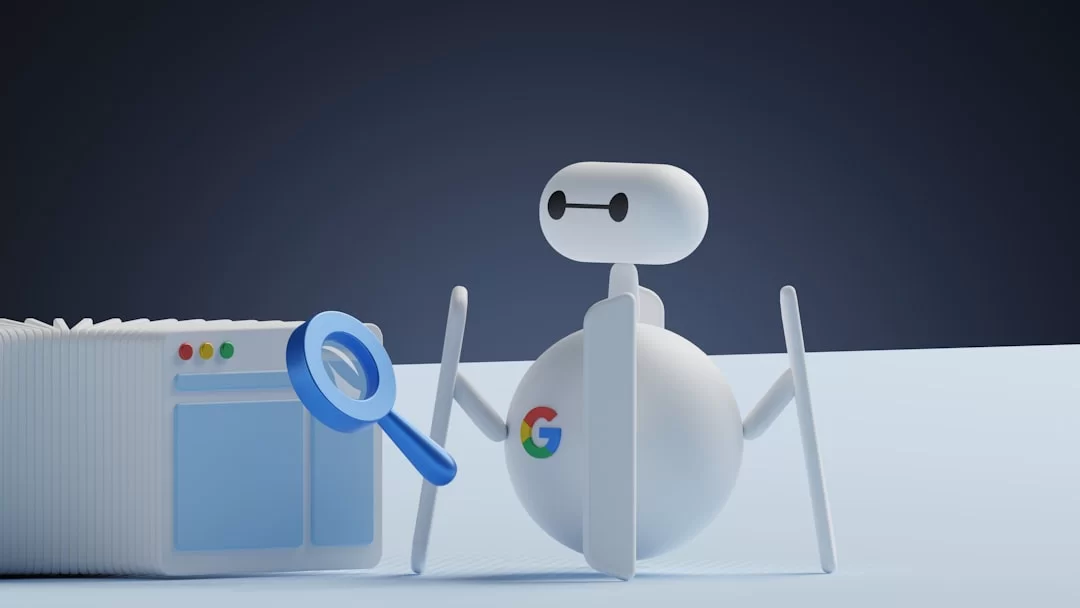
Googlebot is Google’s footprint on the internet. Like a virtual spider, it jumps from link to link, crawling billions of pages.
This crawler doesn’t just read the page’s content. It also collects hundreds of signals like page experience, mobile-friendliness, and speed. If you examine your server logs, you’ll see how often this bot visits.
Search engines use a specific tool called a crawl budget. The bot does not give unlimited time to every site. That’s why it visits big news sites nonstop.
But it might stop by a small personal blog once a week. As your site’s authority grows, this honored guest knocks on your door more often. My advice is to become friends with Google Search Console to fix crawl errors instantly.
The modern web is no longer just HTML. Content loaded with JavaScript was a big problem for Google in the past.
Luckily, Googlebot can now render pages like a web browser. Still, you should not waste your render budget. Prioritize server-side rendering. That speeds up indexing and helps you rank higher in organic search results.
What Is the Google Algorithm? Evolution from PageRank to Gemini
The Google algorithm is a set of ranking formulas. It competes to find the best answer to the user’s query. It is a mathematical intelligence.
In the early years, the core secret was a calculation method called PageRank. This method counted links to a page as votes of confidence. More votes meant higher authority.
Over time, looking only at links fell short. In 2015, RankBrain came into play. This was the first major leap based on machine learning.
It could make sense of never-before-seen queries. It ran mathematical operations in vector space. I recall the day RankBrain was announced. That day I knew ranking with keyword stuffing had become impossible.
The BERT update in 2019 created a revolution. It made a breakthrough in natural language processing. Now even prepositions like “for” could change a search’s fate.
By 2026, multi-modal deep learning models like Gemini entered the picture. The Google algorithm now reads text and looks at pictures. Furthermore, it understands video simultaneously.
Google is no longer just a ranking engine. It has become a direct answer engine. Figuring out the searcher’s intent is now child’s play.
How Did the Google Algorithm Evolve? Timeline of Major Updates (2011-2026)
Google’s algorithm journey is full of sharp turns. Updates over the last fifteen years reshaped the entire industry. Here are the milestones that made me sweat the most:
- 2011 — Panda: It wiped out content farms and low-quality pages. Until then, ranking with backlinks alone was possible. Panda taught us the value of producing quality content.
- 2012 — Penguin: This was the big war on spam links. I saw many rivals who bought links vanish overnight.
- 2013 — Hummingbird: The first big step toward grasping conversational language. Entity-based search entered our lives with the Knowledge Graph.
- 2015 — Mobilegeddon: Mobile-friendliness was no longer a choice. It became a must. During this period, mobile search traffic overtook desktop traffic.
- 2015 — RankBrain: The moment AI formally stepped into the algorithm. Semantic network and user intent took over everything.
- 2019 — BERT: A revolution for contextual search. Google began to understand pronouns and prepositions.
- 2021 — Page Experience: Page experience became a direct ranking signal with Core Web Vitals.
- 2022 — Helpful Content: It targeted AI content written only for clicks.
- 2024-2026 — Gemini and AI Overviews: The era that completely changed search engine optimization. Now we are in the age of zero-click search.
How to Search on Google? Operators and Advanced Search Techniques

The vast majority of people simply type a couple of words and press Enter. To be an expert like me, you must know special commands.
These techniques give you incredible speed in information discovery. With advanced search operators, you can find a needle in a haystack among billions of pages. Here are the steps I’ve used for years that always work:
- Exact match search: Put the phrase you want inside quotes (” “). This returns only pages with that exact wording.
- Site search: To search within a specific website, type
site:localhostand then add your keyword. - File type search: Use the
filetype:pdfoperator to find only PDF files. You can also find files of other markup languages like XML this way. - Exclusion: Place a minus (-) sign before a word to remove it from results. For example,
jaguar -car. - Time range: From the Tools menu, choose the last 24 hours or a set date range. Focus on the latest news.
- AI search: By 2026, you can search by asking a direct question. Voice search with natural language questions gives the fastest results.
inanchor: and intitle: operators are my biggest weapons when doing competitor analysis. I filter linking pages this way while checking a rival’s backlink profile. This trick still works great in 2026.Google’s Biggest Transformation in 2026: AI-Powered Search (AI Overviews and Gemini)
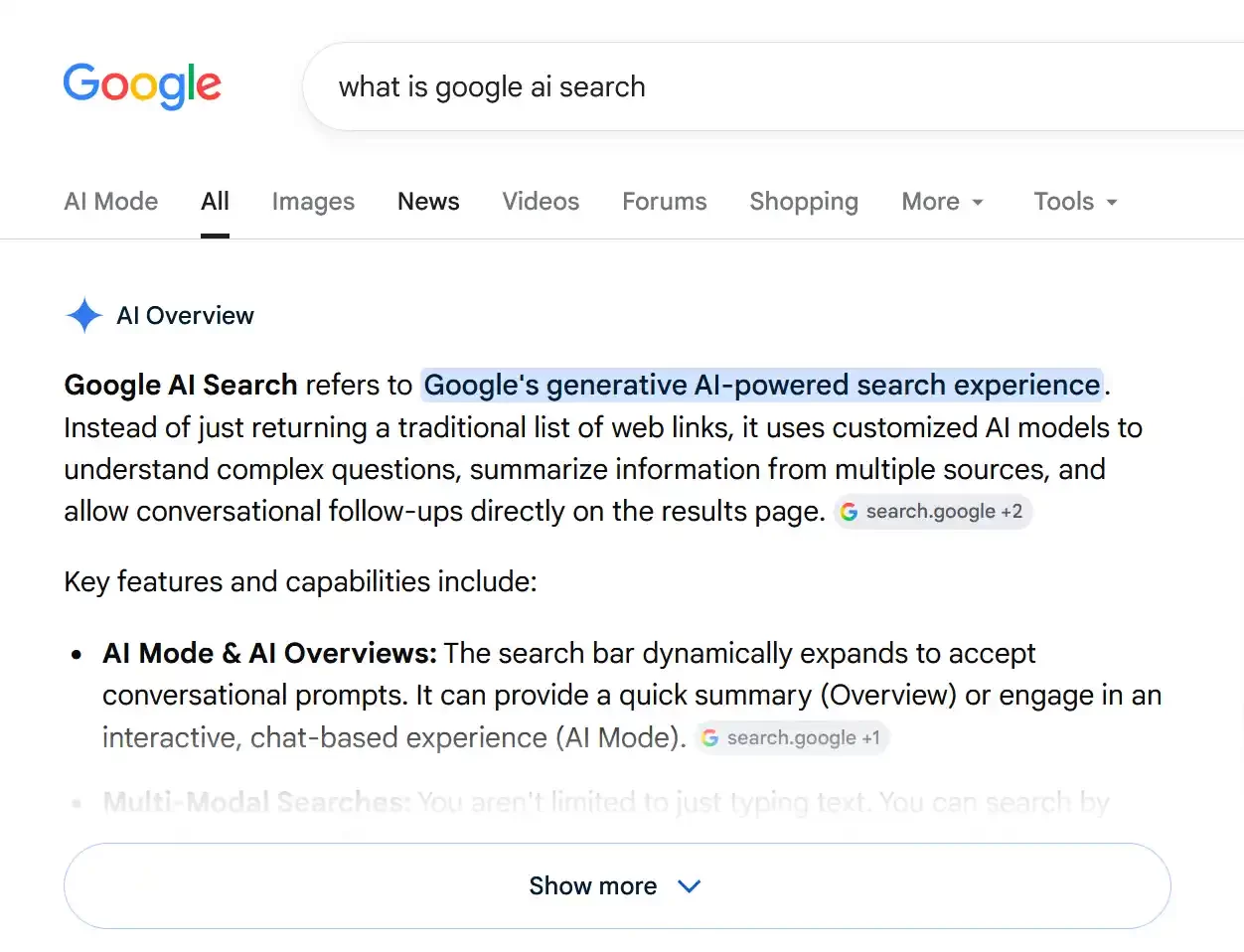
From 2024 onward, the search world changed radically. Traditional blue links are becoming history. Direct answers and AI summaries are taking their place.
This Search Generative Experience lets users reach info without clicking sites. For Google, this shift is both a threat and a big chance. Publishers and SEO experts like us are also affected.
Today, when a user types a complex question, the system serves them custom content. You will especially see an AI summary at the very top of the results page. Google scans multiple sources and builds the summary in its own words.
So, Google no longer just lists information. In addition, it recreates information and forces content creators to do deeper work.
What Are Google AI Overviews and Are They Active in the US? (2026 Update)
AI Overviews are auto-generated info summaries shown at the top of search results. They give the user an instant answer without clicking any pages.
This is actually a far more advanced version of rich snippets and the Knowledge Graph. Google rolled out this feature widely in the US in the second half of 2024. By the end of 2025, it opened it to more than 100 countries, including the US.
My own tests proved a key fact. Specifically, people actively use this feature in the US. It is especially successful for information queries and “how to” searches in English.
When you run a search, you see a summary fed by multiple English sources. This situation brought with it a traffic loss risk for US publishers. Yet there is still some click chance for sites shown as sources.
We must write authoritative and clear content. So, Google can use it in these summaries. If your writing is complex and messy, Google ignores it.
For this reason, clear headings and Q&A formats became the winning strategy in 2026. You must build clear authority to survive the zero-click search era. Specifically, prove it completely.
What Is Google Gemini? From Old Bard to Next-Gen AI
Gemini is the fully renewed, multi-modal version of the old Bard assistant. Announced in February 2024, this model can process not just text but also images, audio, and video.
This AI works directly integrated with search results. The biggest feature that sets it apart from rivals is its real-time access to Google’s massive database.
As an SEO expert, I often use Gemini in my daily workflow. When analyzing competitor strategies or finding content gaps, this digital assistant works wonders.
It especially offers a speed that multiplies human intelligence in long, complex search query analysis. The Gemini era is the clearest proof that Google has transformed. Specifically, it moved from a search engine to an information processing platform.
The scariest part of Gemini is how much it over-personalizes search results. It can process your past searches, flight info from Gmail, and documents from Drive instantly.
This creates huge ease from a user experience standpoint. Yet it raises new question marks about data privacy. Especially having this much personal data gathered under Google’s roof is thought-provoking.
Zero-Click Search: Finding Answers on Google Without Visiting a Site
A zero-click search is when a user finds the info on the results page and clicks nowhere else. This trend became the biggest nightmare for site owners in 2026.
For queries like the weather, celebrity ages, or game scores, nobody was clicking links anyway. Now AI Overviews even summarize complex “how to” guides.
This caused a serious drop in organic search result traffic. Blogs producing informational content took a heavy hit.
But in my experience, transactional and commercial queries still drive strong traffic. Users want to buy products or sign up for services. So, they feel compelled to click your site. Therefore, you must build an excellent SEO strategy. Furthermore, focus on driving real website conversions instead of just sharing basic facts.
In the zero-click era, structured data markup is vital to survive. You must optimize your meta description and snippet appearance.
You must give the user a reason to click. Being visible on platforms like YouTube is also a must. Remember, Google now ranks not just sites but also videos and apps in its own ecosystem.
Who Owns Google? The Alphabet Parent Company and Management Structure
Today, the owner of Google, whose market cap exceeds trillions of dollars, is actually a publicly traded company. The largest shareholders are the founders and big investment funds.
The company made a radical decision in 2015. As a result, the company reorganized Google. Specifically, they created a parent brand named Alphabet. This move aimed to separate core business from side projects. They wanted to offer more transparent reporting to investors.
This restructuring allowed Larry Page and Sergey Brin to step back from operational duties. Now, while they dream big, professional managers took over the daily work.
This way, Google could keep innovating without drowning in bureaucracy. This structure also inspired other tech giants in Silicon Valley.
What Is Alphabet? Why Did Google Form a Parent Company?
Alphabet is a holding company that is Google’s parent organization. The company grouped core business lines under the Google division. These included search, ads, maps, and YouTube.
Self-driving cars (Waymo) and health tech (Verily) are risky projects. Therefore, the company positions these as separate companies. This unbundling increased each project’s accountability.
Financially, Alphabet clearly shows investors where money is spent. Ad revenue funds Google.
That way, we clearly see how many resources other companies consume. So, markets priced company shares more accurately. Even the stock ticker codes on stock markets split into two (GOOGL and GOOG).
From a legal viewpoint, this structure acts as a shield in antitrust cases. In short, this structure forces regulators to view Google apart from other ventures.
In his founding letter, Larry Page said companies would be “cleaner and more accountable.” This prediction truly held up. Alphabet became one of the world’s most valuable holding companies.
Who Is Google’s CEO? The Sundar Pichai Era (2015-2026)
Sundar Pichai is a humble world leader who rose from Chennai, India. After studying metallurgical engineering, he attended Stanford and Wharton.
He joined Google as a product manager in 2004. His first big success was creating Chrome in a browser market rivals ignored. Chrome is the world’s most popular web browser today.
When he took over the Android operating system, he managed to conquer the mobile world. With the founders stepping back in 2015, he sat in Google’s CEO seat.
Pichai’s management style is far from aggressive; it is conciliatory and calm. In crisis moments, he makes data-driven decisions instead of emotional reactions.
His biggest test in recent years was the AI wars. Facing the rise of OpenAI, he declared a “code red” inside Google. He responded quickly by integrating the Gemini model. In 2026, he still holds his seat.
His critics sometimes say he is too cautious. Still, he managed to carry Google to record profits. In my opinion, he could have been bolder about protecting user data.
Who Runs Google? The Board of Directors and Decision-Making Mechanisms
Sundar Pichai doesn’t run Google alone. Behind him is a giant board of directors and a shareholder assembly. Founders Larry Page and Sergey Brin use special stock structures.
Thanks to this, they still hold the majority of voting power. So even though Google is public, the founders pull the strings. This makes it easier to make long-term, radical decisions.
The board of directors includes huge names from the worlds of tech, finance, and academia. This board oversees the CEO and ensures Google stays true to its mission.
They especially act as a pressure element on issues like data privacy and sustainability. In 2026, AI ethics became the board’s hottest agenda item.
An engineering culture dominates the decision-making mechanisms. No executive can push through an idea not backed by data.
Former Google employees say that even the most senior engineer could disagree with the CEO in meetings. This freedom is the biggest cultural difference that sets the company apart from rivals.
How Does Google Make Money? A Detailed Analysis of the Revenue Model
How a company becomes so rich while users enjoy Google for free is always a curiosity. The answer is simple: targeted advertising.
Google has the world’s most advanced data collection and targeting mechanism. Your searches, location, and interests turn into data points. Thanks to this data, advertisers show their products to the exact person in need.
However, by 2026, Google is diversifying its revenue models even more. They no longer want to depend solely on search ads.
Cloud computing and subscription models are growing day by day. YouTube’s ad and Premium revenues are also increasing their slice of the pie. Still, those tiny ads that appear next to that famous search bar are Google’s heart.
Google Ads and the Digital Advertising Platform: How Does Pay-Per-Click Work?
Google Ads is an auction system where businesses bid on certain keywords. When you search a word, the system starts an ad auction in milliseconds.
This system rewards not only the highest bidder but also the highest quality ad. We call this the “Quality Score.” I’ve managed hundreds of accounts throughout my career. An ad with a high Quality Score appears in higher positions while paying less.
What makes Google’s ad model special is its complete focus on performance. Businesses pay only when their ad is clicked (CPC) or viewed (CPM). This prevents budgets from going to waste.
Also, the targeting options are incredibly sharp. You can filter by age, gender, interests, and even what sites someone visited in the last week. This digital marketing ecosystem gives small businesses a chance to compete with giant corporations.
But this targeting ability has been at the center of privacy debates in recent years. The removal of third-party cookies changed this game a bit.
Still, Google more than fills this gap with its own first-party data. So it remains unmatched in ad tech. Especially since AI-powered campaigns have sent conversion rates soaring.
Why Is Google Free? The Data Economy Behind ‘Free’ Services
You don’t pay a cent for Maps, Gmail, or Drive. That’s because the product is you. Your data is the fuel of Google’s online ecosystem.
The saying “If you’re not paying for the product, you are the product” fits perfectly here. The system collects behavioral data. It then anonymizes this data and turns it into ad profiles. Thanks to this profile, advertisers pay Google to reach you.
This exchange is the foundation of the modern internet. While users get free services, Google creates a massive data economy. In fact, this makes Google accountable to advertisers.
If one day users completely refuse to share their data, this business model collapses. Luckily (or unfortunately), people are quite willing to give up privacy in exchange for free services.
The company offering the open-source Android operating system for free serves the same purpose. The goal is to touch as many users as possible.
I always explain it this way: Google is not a charity. Every free service it offers is actually meant to expand its ad inventory.
It charges for enterprise products like Google Workspace. It aims to add individual users to the ad pool. This strategy is so successful that it managed to become one of the world’s biggest companies.
Google’s Revenue Model: Cloud, YouTube, and AI Revenues Are Rising
Though the ad pie is still big, Google no longer wants to depend on a single revenue stream. Google Cloud Platform (GCP) competes head-to-head with Amazon AWS and Microsoft Azure.
They have a big edge especially in offering AI infrastructure. Thanks to their self-developed TPU chips, they rent out deep learning model capabilities to businesses.
YouTube is a media empire in its own right. Besides ad revenues, YouTube Premium and YouTube Music subscriptions are a serious income gateway.
The billions paid to content creators makes this platform grow even more. In 2026, the short video format YouTube Shorts is at the center of competition with TikTok. This continues to multiply Google’s ad revenues.
AI APIs are also emerging as a new revenue door. Businesses pay per use to access Gemini models.
These cloud computing and AI investments are Google’s future growth engines. Truly, ten years from now, we won’t be mentioning Google solely as a search engine. It is already much more than that.
Which Country Is Google From? The Geographic Footprint of a US-Based Global Empire
Legally, Google is based in the United States. Its headquarters is in Mountain View, California. But it operates physically in nearly every country in the world.
Due to its tax strategies, countries like Ireland and the Netherlands are also critically important financially. Nevertheless, Google shapes its corporate culture and management approach with the Silicon Valley tradition.
This global footprint is not just about offices. The most critical building blocks are massive data centers. These facilities are the physical proof of the internet.
When you search, your data travels to and from these centers at the speed of light. Google considers local climate and energy sources when building these centers. In line with sustainability goals, many data centers run on renewable energy.
Which Country Is Google From? The Company’s US Headquarters: Googleplex
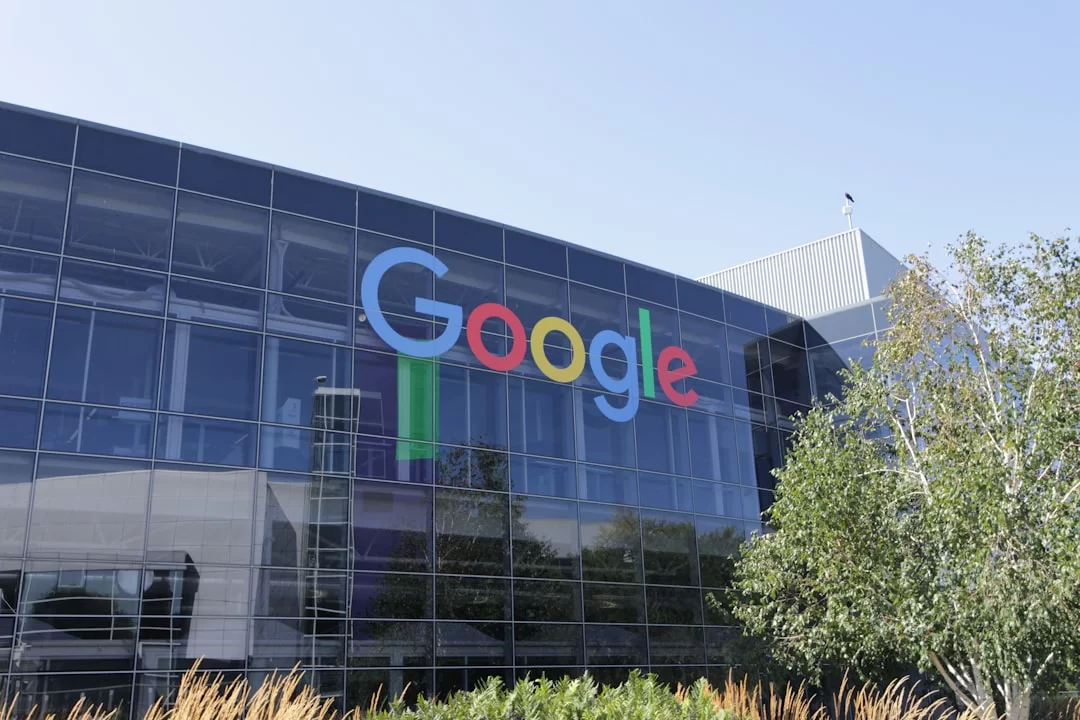
Googleplex is a legendary place located in Mountain View that resembles a university campus. This is not just an office; it’s a living space.
It’s famous for free meals, gyms, and nap pods. The goal is for the employee to write code without any worldly worries on their mind. This concept has also set an example for many other tech giants in Silicon Valley.
The campus energy captivates everyone who visits. When I first saw Googleplex, colorful bikes and outdoor meeting areas caught my eye.
You hold meetings not in boring conference rooms but while taking a walk. This setting sparks creative thought. The Googleyness concept comes to life right here. It is a slightly crazy, slightly intellectual, and fully results-focused culture.
But Googleplex is not just about fun. From what I hear, security protocols are incredibly tight. After all, this is where the world’s most strategic technologies are developed.
Employees make revolutions in this free environment. Along with that, they feel a heavy competitive pressure. Because getting into Google is hard, but staying here is much harder.
Google Data Centers: A 24/7 Server Army Working Around the World
Google’s real power lies in its concrete data centers spread across the globe. These facilities house millions of servers and consume an incredible amount of electricity.
That is why Google invested billions in renewable energy. As part of its carbon footprint policies, it aims to run completely on carbon-free energy by 2030.
The location of data centers is vital for speed. When you search in New York, your data preferably goes to servers in Finland or the Netherlands.
This cuts latency down to milliseconds. The speed and security of Google’s networks are its biggest trade secret. The company uses custom-designed network switches in these centers. Besides that, it also prefers AI chips.
As an SEO expert, testing how these data centers affect results from different locations is fascinating. When I check results from different countries using a VPN, I clearly see this. In fact, they can rank the same query very differently.
That is why, if you want to be a global brand, you must not focus on just one country. Google’s data centers open the door for you to reach the local user.
Google Turkey: Istanbul Office and Services for Turkish Users
Google’s presence in Turkey is not just a remote operation. Its office in Levent, Istanbul, is the heart of regional strategies.
This office works especially in advertising and business development. They develop special solutions for Turkish users. For instance, Turkish Lira payment systems and local business profiles are entirely the work of this team.
The Turkish market holds strategic value for Google. The young population and high mobile search usage make this place a testing ground.
Based on my own experience, I can say Turkish users adapt to new technologies very quickly. That is why services like Google Assistant and Google Wallet reached Turkey early. They also show great care in complying with local regulations.
Along with this, Google’s taxation policies in Turkey have been a topic of debate from time to time. Digital service taxes and competition authority investigations make the Istanbul office’s job harder.
However, Google remains the digital marketing gateway for Turkish entrepreneurs. Moreover, it opens new export routes for them. Thus, Google plays a big role in the growth of e-commerce in Turkey.
Google Products and Services: An Ecosystem Beyond the Search Engine
Google’s power comes from its product diversity. Many users unknowingly use more than five Google services a day.
In the morning, they open Chrome, check Gmail, view traffic with Maps, and watch videos on YouTube at night. This integrated online ecosystem keeps the user in its own universe. Each product is a data source that feeds the others.
This product range shows Google’s entrepreneurial spirit. Google doesn’t shy away from investing in new areas constantly. However, this also led to many failed products.
Successful products are as much a part of Google’s history as the failed ones. Because they are a natural result of the risk-taking culture.
What Are Google Products? The 15 Most Popular Google Services (Table)
Listing Google’s products is like writing a city’s phone book. Here are the most critical and most frequently used Google services as of 2026:
| Product Name | Category | Core Function |
|---|---|---|
| Search | Web Search | Scanning for information on the internet |
| Chrome | Browser | Viewing web pages |
| Gmail | Electronic mail management | |
| YouTube | Video | Video hosting and watching |
| Maps | Navigation | GPS navigation and discovery |
| Drive | Storage | Cloud storage and file sharing |
| Android | Operating System | Mobile device operating system |
| Play Store | App | Digital content and software distribution |
| Photos | Media | AI-powered photo storage |
| Workspace | Enterprise | Office software suite for businesses |
| Gemini | Artificial Intelligence | Chat and productivity assistant |
| Ads | Advertising | Digital advertising platform |
| Cloud | Computing | Enterprise cloud infrastructure |
| Meet | Communication | Video meeting solutions |
| Calendar | Productivity | Time management and scheduling |
This table is just the tip of the iceberg. Each of these Google services is constantly updated with a focus on user experience. AI integrations especially have made these tools incredibly powerful.
Android and Chrome: Google’s Mobile and Browser Dominance
Android is an open-source beast running on roughly 70% of smartphones worldwide. Google offers this system for free to ensure its own services are installed on billions of devices.
This strategy means absolute kingship in mobile search and in-app advertising. Without Android, doing digital marketing today is next to impossible.
Chrome is an unrivaled web browser on desktop and mobile. It’s not just a window; it’s also a password manager, translator, and firewall.
Chrome’s biggest strength is its flawless sync with the Google ecosystem. It sets standards by interpreting web page code the fastest way.
As an SEO expert, I always test my sites in Chrome first. That’s because the vast majority of users are there. Moreover, search engines gather page experience signals from here.
Both products are flawless tools for collecting user data. The system tracks which sites you visit or which apps you use and for how long. Frankly, it uses this data to serve you personalized search results.
Even though this dominance bothers competition watchdogs, users can’t give up this comfort. That is exactly why these two products are the strategic fortress of Google.
YouTube and Gmail: Google’s Content and Communication Empire
When YouTube was bought for $1.65 billion in 2006, many saw that number as madness. Today, the platform’s value alone exceeds hundreds of billions of dollars.
This is not just a video site; it is the new generation’s television. It is a huge income source for content creators. Moreover, the second biggest search engine users query is YouTube itself.
Gmail is the cornerstone of our digital identity. It has around 2 billion users worldwide. Gmail’s spam filtering technology is a masterpiece of machine learning.
It doesn’t just read your incoming emails. It also adds flight tickets to your calendar and sends invoice reminders. Each of these services ties the user tighter to Google. Once you get a Gmail address, you link your entire digital life to it.
These two platforms offer an incredible data pool on user behavior. The videos you watch and the emails you receive directly affect the ads shown to you.
Privacy advocates criticize this. Yet the user experience is so good that most people don’t mind. We, myself included, are voluntary members of Google’s vast online ecosystem.
What Are Google’s Failed Products? The Graveyard of Discontinued Services
Google never feared failing while innovating. There is even a website called “Killed by Google.” Even though we loved some projects, the company ruthlessly terminated them. Here are the most notable Google services that shut down over the years:
- Google Reader (2005-2013): It was a legendary tool for following RSS feeds. People saw its shutdown as a big blow to internet freedom. However, there is still no alternative.
- Google Plus (2011-2019): It was an unsuccessful social network launched as a rival to Facebook. It made headlines with data leak scandals, and forced integrations drove users crazy.
- Google Glass (2013-2015 Consumer): It was an augmented reality headset. It was great technology, but society rejected it over privacy concerns. The price was also quite high.
- Stadia (2019-2023): It wanted to make a cloud gaming revolution. It couldn’t convince gamers due to lag issues and a weak game library. Its hardware went to waste.
- Google Podcasts (2018-2024): The platform couldn’t hold on in audio content. So the company moved this service under YouTube Music. Users faced great difficulties during this transition.
Google, User Data, and Privacy: ‘What Does Google Know About Me?’
Asking this question gives most people the creeps. Because the answer is far more detailed than you think. Google knows where you go, what you wonder about, and even when you sleep.
The system processes your location history, search history, and YouTube watch habits in a giant database. Despite this, much of this data does not aim to expose you personally. Yet the system uses this data for profiling purposes.
As a digital marketing expert, I marvel at Google’s data collection mechanism. Moreover, this system is very advanced. On the other hand, as a user, this sometimes bothers me.
Luckily, European Union rules and Turkey’s KVKK (data protection law) give us protection. Thanks to them, we have some control over this data. Now, we all must be aware of our digital footprints.
How Does Google Use User Data? The Mechanism Behind Data Collection
Data collection in Google starts the moment you accept the agreement. Cookies, fingerprinting, and account sync are the main methods.
Every search query, every map route, and every watched video creates a log entry. The system anonymizes these logs. Despite that, AI processes this data instantly. Then it tries to predict your intent and next step as a user.
Google uses this data for three main purposes. First, to serve you a better experience. Second, to do ad targeting. Third, to train AI models.
Developers specifically train large language models like Gemini on anonymized search data. This makes it the world’s smartest assistant. That is why it is nearly impossible for a rival AI to reach the same amount of data.
However, Google’s track record on data privacy is not entirely clean. Authorities caught it red-handed in the past when Street View cars were collecting Wi-Fi data. Along with that, many lawsuits were filed regarding location history.
In my view, the biggest issue is that the data management settings are still complex for users. Although auto-delete options exist, many people don’t know how to manage them.
Is It Possible to Completely Delete Yourself from Google? KVKK and the ‘Right to Be Forgotten’ Guide
Completely deleting yourself from Google is still a very tough process even in 2026. Yet it is not impossible. Especially Turkey’s KVKK and the European Union’s GDPR rules grant you this right.
Thanks to the “right to be forgotten,” you can demand the removal of sensitive information from search results. This request is not always granted, but it’s worth trying. Here are the steps you must follow:
- Download your account data: Use the Google Takeout tool to back up all your photos, emails, and Drive data.
- Start the account deletion: Go to “Data & Privacy” in account settings and delete your account. This process destroys everything, including your YouTube channel.
- Content removal request: If there is content about you on someone else’s site, file a legal request to have it removed from search results.
- Update old pages: For indexed pages that won’t be deleted, contact the site owner and ask them to remove the content. Then use the remove outdated content tool in Google Search Console.
Google’s Environmental Impact: Carbon Footprint and Sustainability Goals

The environmental impact of such a massive Google operation is also huge. Google announced it was carbon neutral in 2007. In 2017, it became the world’s biggest buyer of renewable energy.
But energy consumption exploded in the AI era. Training a single AI model uses as much power as hundreds of homes do in a year. This made Google’s carbon footprint goals harder to reach.
Google uses AI in its data center cooling systems. By partnering with DeepMind, Google lowers cooling costs. So this is truly an admirable achievement.
At the same time, Google pours billions into geothermal energy and battery storage projects. Google is trying to build the carbon-free internet of the future.
Yet these efforts are not enough for some environmentalists. That is because Google sells AI solutions to oil companies. Moreover, it helps these companies extract more fossil fuels. This fuels the “greenwashing” debates.
In my opinion, instead of being hypocritical, Google should end its contracts with the fossil fuel sector. The company has a strong enough reputation in the tech world to handle this contradiction. Yet people should question this on moral grounds.
Google and SEO: Why Is Search Engine Optimization Still Important?

I just laugh at those who say “SEO is dead” in the AI age. SEO hasn’t died; it just changed its skin. Now simply sprinkling a few keywords on a page no longer works.
You need to be a real authority. Search engine optimization is a broad field from technical infrastructure to content quality. Especially in the zero-click search era, it has become even more strategic.
Today our goal isn’t just to get clicks. We must prove to Google that we are a trusted source. If Google sees you as an authority, it will cite you in AI Overviews. That is a golden chance for brand awareness.
I always say: stop trying to fool Google; help it instead. Make your site easy for it to understand.
What Is Google Search Console? How to Introduce Your Website to Google
Google Search Console is a free dashboard every site owner should use. This tool shows how your site gets crawled and indexed by Google. It spots errors, reports manual penalties, and offers performance reports.
Throughout my SEO career, this tool has been my biggest lifesaver. Here are the steps to introduce your site to Google:
- Add a property: Add your site address to Search Console and verify it via DNS or an HTML file.
- Submit a sitemap: Create your XML sitemap and send it through GSC. This helps bots discover your site faster.
- Review the coverage report: Check pages that are crawled but not indexed. Solve “noindex” tags or crawl budget issues here.
- Track performance: Analyze which queries bring traffic, your click-through rates, and your average position. This data shapes your content strategy.
This panel is the most reliable way to keep your finger on your website’s pulse. Over time, your instincts develop by looking at this data. You instantly see which type of content ranks faster on Google. If you ignore it, you miss big chances.
How Are Google Search Results Manipulated? Black Hat SEO and Its Penalties

There is always a dark side trying to boost rankings with tricks. We call this Black Hat SEO. Hidden text, keyword stuffing, and fake backlinks are the best-known methods.
In the past, these tactics really worked. I recall those days; gambling and pill sites played for the top spots on Google with fake link networks. But an algorithm update ended that game.
The most common manipulation method is redirects that fool the user. The user expects one piece of content, but the system sends them to a totally unrelated ad page.
Another danger is hacked sites. Someone sneaks into your site without you knowing and adds links. When Google detects this, it slaps your site with a manual action penalty. I’ve seen companies struggle for months to lift this penalty.
In 2026, AI made detecting these tricks much easier. Now building a spammy backlink profile is almost equal to getting an instant penalty.
My advice is to put aside dreams of getting rich quick. Building a quality site, grasping the foundation of the algorithm, and working patiently is the only way. Moreover, this path also protects you from any algorithm change.
Google and SEO in 2026: Organic Traffic Strategies in the Age of AI Overviews

In 2026, the SEO strategy is built entirely on authority building. Now you can’t just write a blog post and wait. A multi-channel approach is a must.
YouTube videos, podcasts, and social media signals affect your ranking on Google. That is because it sees your brand being talked about everywhere as a trust signal. So you must build your digital marketing strategy holistically.
In content production, “depth” has become the keyword. Shallow and generic info now gets lost in AI Overviews. Readers only click on content that holds unique data based on your own experiences.
Personally, I always include screenshots of tests I ran myself in my writing. This makes the user say, “a real expert is here.” In short, expertise and experience are the biggest ranking signals.
Also, structured data markup is more critical than ever. If you don’t translate your content into a language machines understand, Google ignores you.
Send clear signals to the search engine using product, article, or event schema. The rules of the game changed, but the winners are still the same: those who give the user the best answer. SEO never ends; it simply evolves.
Google’s Competitors, Legal Troubles, and Future
No empire can stay without rivals forever. Especially in the AI age, Google’s throne is shaking more than ever.
On one side, there is the Microsoft and OpenAI partnership; on the other, privacy-focused startups. Besides that, governments around the world are filing lawsuits to break Google’s monopoly power. Especially the antitrust case filed by the US Department of Justice could change the course of history.
I follow this competition closely. Having more options as users is always good. But I must admit, for now, no rival can surpass Google in search quality.
Still, falling into complacency would be a big mistake. Our coding and research habits are changing fast. Now many people start product searches directly on Amazon or social media.
Who Is Google’s Biggest Competitor? The Competitive Landscape in 2026
The biggest rival in 2026 is, without a doubt, the Microsoft and OpenAI partnership. Microsoft revolutionized search by integrating ChatGPT into Bing’s infrastructure.
This partnership ignited a long-simmering competition in the search market. Bing’s interface now doesn’t just list links. It also answers questions directly with AI. This has taken the user experience to a whole new level.
Another serious competitor is Apple. Apple holds a massive user base with its Safari browser and Spotlight search. Apple currently uses Google as the default search engine. But the parties could break this agreement at any moment.
Rumors have existed for years that Apple is working on its own search engine. If this happens, Apple could instantly shake Google’s dominance in the iOS ecosystem.
Along with that, social media platforms like TikTok and Instagram have turned into search engines as well. The young generation now searches for restaurant tips or news on TikTok instead of Google.
This shows that information discovery behavior is changing radically. Still, for now, Google maintains its lead with its massive data and ad infrastructure. Yet it can no longer run without looking back.
Alternative Search Engines to Google: Privacy-Focused Options (2026 Comparison)
For users who care about their privacy, many Google alternatives exist. These alternatives promise not to track you.
People debate the search quality of these alternatives, but the systems offer peace of mind on personal data. Here are the standout Google alternatives in 2026:
| Search Engine | Strength | Weakness |
|---|---|---|
| Bing (Microsoft) | AI (ChatGPT) integration, reward system | Result quality low in some regions |
| DuckDuckGo | Strict privacy policy, no tracking | Can’t offer personalized results, weak on local businesses |
| Brave Search | Uses its own index, fully independent | Image search and map integration lag behind |
| Ecosia | Plants trees with ad revenue, eco-friendly | Uses Bing as infrastructure, results are the same |
| Yandex | Very successful in Russia and CIS countries | Limited Turkish support, under political pressure |
None of these engines can fully replace Google for now. Still, making DuckDuckGo your default search engine is a good step. So, it shrinks your digital footprint.
I especially use Brave for sensitive research. But when it comes to SEO, I have to return to the real world, meaning Google’s results. That is because 90% of users are there.
What Does the Google Antitrust Case Mean? Historic Lawsuits Filed by the US and EU
An antitrust case questions whether Google abused its market power. The US Department of Justice filed a historic lawsuit in 2020.
In the case file, prosecutors make a key claim. Google pays billions to companies like Apple and Mozilla. Frankly, this is how the company remains the default search engine. Experts say this unlawfully blocks competition.
In late 2024, the court ruled that Google built an illegal monopoly in the search market. This decision was one of the biggest legal tremors in internet history.
People are debating the remedies in 2026. The most radical scenario is forcing Google to sell Chrome or Android. Also on the table is sharing data collection licenses with rivals.
The European Union is much tougher on this matter. With the Digital Markets Act (DMA), Google can no longer favor its own services in search results. They cut fines worth billions of euros. All these lawsuits will directly affect Google’s future business model.
My personal view is that breaking up Google would harm users more than help them. If the integration breaks, service quality could drop. Still, something must change for fairer competition.
Further Reading Resources About the Google Company
I base the topics in this article on my experience gained in the field. In fact, official publications also support the narrative. If you want to dig deeper into the topic, here are the most reliable sources I used. These documents let you verify everything from Google’s financial state to its technical infrastructure.
- Alphabet Investor Relations and Earnings Reports: You can download Google’s official financial statements and annual earnings reports from here. I verified all the financial data I presented from this source.
- Google Search Central Official Documentation: This is the most authoritative guide on how Google’s search engine works. I shape my SEO strategies according to the technical standards here.
- Google Sustainability Reports: The company shares Google’s carbon footprint data here. Moreover, you can see its renewable energy investments in an up-to-date and transparent way.
The 10 Most Asked Questions About the Google Search Giant
What is the search giant Google, and is it just a search engine?
Beyond the search engine, what other areas does it serve?
Which algorithm determines search results, and how does it work?
What is the company’s revenue model, and how does it make money?
Its first name was Backrub, why did it get today’s name?
How did the founding story start, and was it really in a garage?
Does it have an office in the US, and what is its role in our market?
Who owns Google, and what is its relationship with Alphabet?
How does it protect user data, and what is its privacy policy like?
What are Google’s eco-friendly practices and sustainability goals?
Conclusion: Is a Future Without Google Possible?
To give a clear answer to this question: in the short term, no; in the long term, maybe. Today, the internet rises on Google’s backbone.
But nothing in the tech world lasts forever. Remember Nokia or Yahoo, once giants. A single big mistake or a disruptive innovation could shake Google’s throne.
Google’s biggest strength, and also its biggest weakness, is its dependency on ads. If people completely refuse to share their data, the system collapses.
In the AI age, Google is turning into a brain that thinks on behalf of users. This makes it even more indispensable. This is the most critical transformation I’ve witnessed in my career. And this transformation is still in its infancy.
The task for us users is to act aware of this power. We must increase our digital literacy and know our options.
Google is a wonderful tool, but we must not let it turn into a master. Now I take another sip of my coffee and leave you alone with this massive digital universe. I am here if you have questions.

1 Reader Comment
I agree with you