

You press a key to send a signal. On the other end, this action becomes a click. So humanity gains the ability to communicate at light speed for the first time. In fact, this simple but revolutionary mechanism is the most critical invention. It laid the foundation for the modern internet. The telegraph is the first digital communication tool. Moreover, it converts electrical signals into meaningful messages.
Today we send instant messages with our fingertips. However, this luxury began in the 19th century. Back then, direct current signals flowed along copper wires.
Moreover, the concept of data transmission hadn’t even been born yet. Nevertheless, the system connected the world with sequences of dots and dashes.
In this article, we examine every detail from hardware architecture to network protocols. Also, we offer a wide range. This range extends from the strategic role on battlefields to Arduino projects. Understanding this device means grasping the birth of modern computer networks.
Whether you are a network engineer or a history buff, this guide will give you a unique perspective. Specifically, we link the hardware-layer workings to modern network ideas. In addition, we list the parts you need to build a simple telegraph circuit.
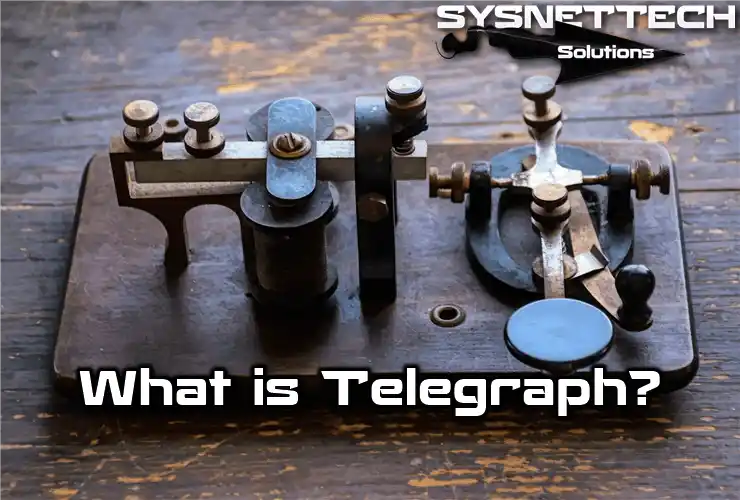
What Is a Telegraph? The Hardware Ancestor of Digital Communication
The question “What is a telegraph?” questions the foundation of the digital age. This device is the first telecommunication system. It carries written messages to distant points using electrical signals.
Samuel Morse’s version changed world history as a communication tool. In its simplest definition, it is a serial communication platform based on an on-off signal.
When we dig deeper, impressive hardware architecture appears. The system includes a switch called a manipulator. A battery-powered source provides the power. Additionally, there is an electromagnet receiver unit.
These three basic parts move meaningful data over thousands of miles. The core lies in binary logic: current on or off.
On the other hand, this mechanism is not just hardware. Behind it works an ingenious coding system called Morse code.
The system represents each letter with combinations of dots and dashes. Thus, operators send messages with short and long presses on the key.
Technical Definition: Serial Communication with On-Off Signal
The same principle lies at the heart of digital electronics. Operators transmit information as direct current signals on a telegraph line.
When the operator completes the circuit, current flows through the line. When the operator breaks the circuit, current drops to zero. These two states correspond to the 1 and 0 values in modern computers.
Therefore, this structure works as a kind of serial communication protocol. The system sends data bit by bit. On the receiving side, the electromagnet converts these pulses into mechanical movement.
The resulting clicking sounds turn into meaningful letters for a trained operator. Over time, devices like paper tape recorders automate this process.
In fact, you find surprising similarities with today’s UART protocol. Both use a start bit, data bits, and stop bit logic.
The baud rate of this device depends on the operator’s skill. Still, you can transmit about 30–40 words per minute over a standard line.
The Historical Journey of the Telegraph: From Optical Towers to Submarine Cables
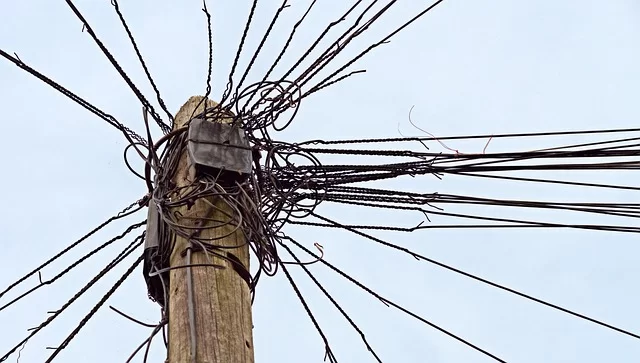
The passion for data transmission began long before electricity. In 1790s France, Claude Chappe developed a revolutionary idea.
He transmitted signals between towers lined up on hills using moving wooden arms. This mechanical data transfer system could cover hundreds of miles in seconds.
However, the optical method had serious limits. At night and in fog, the system became completely unusable. Also, keeping a watchman at each tower was very costly. Data transfer speed remained limited by human factors.
With the arrival of electricity, everything changed. Advances in battery technology and discoveries in electromagnetism started a whole new era.
Scientists began researching ways to send signals through copper wire resistance. As a result, communication technology transformed radically.
What Is an Optical Telegraph? The Peak of Mechanical Data Transfer
The optical telegraph is the first organized network system. It provides long-distance communication via visual signals.
In this tower-based structure, each station repeated the signal from the previous one to transmit it. Operators positioned movable semaphore arms at different angles. Each angle represented a specific letter or code.
The first line in France stretched between Paris and Lille. This network with 15 stations covered about 143 miles.
In fact, Napoleon Bonaparte heavily used this system to transmit military orders. For example, a message took only two minutes under ideal weather conditions.
On the other hand, the biggest disadvantage was a security flaw. Anyone could see the towers on the hills. Therefore, unless you encrypted your messages, the entire communication infrastructure was exposed.
Indeed, for this reason, governments of the era developed complex encryption books.
| Feature | Optical Telegraph | Electric Telegraph |
|---|---|---|
| Energy Source | Human power and daylight | Battery or galvanic cell |
| Data Transmission Speed | 2–3 characters per minute | 30–40 words per minute |
| Weather Dependency | Completely dependent | Independent |
| Network Topology | Point-to-point chain | Star and mesh topology |
The Birth of the Electric Telegraph and the Evolution of Morse Code
In 1837, when Samuel Morse filed his patent application, the world stood on the verge of change.
Morse’s electromagnetic telegraph used an electromagnet for signal transmission. Thanks to this approach, signals could now travel at light speed. The dot-dash coding system had ingenious simplicity.
Morse code assigns the shortest codes to the most frequent letters. For example, the letter “E” in English is just a single dot. In contrast, we represent the rarely used “Q” with a longer dash-dot sequence. This optimization made data transmission incredibly fast.
Moreover, this coding system became a universal standard. Under ITU-T telegraph standards, international rules governed it.
Maritime and aviation industries used this alphabet for emergency signals for many years. In fact, the famous SOS signal (three dots, three dashes, three dots) is a product of this system.
Intercontinental Submarine Telegraph Cables: The Ancestor of fiber optics
In 1858, engineers laid the first cable under the Atlantic. Human history hit a turning point.
Thanks to intercontinental submarine cables, message delivery between Europe and America dropped from weeks to minutes. However, this first cable lasted only a few weeks.
Conductivity and insulation material problems plagued engineers for a long time. Signal attenuation was so severe that reading messages became nearly impossible.
Famous physicist Lord Kelvin solved this problem by using a galvanometer. With sensitive measuring devices, engineers could detect even weak signals.
The second cable laid in 1866 brought permanent success. It marked the first step toward fiber optic ancestry.
Today, undersea fiber cables follow the same routes. Thus, the answer to how telegraph wires crossed the ocean is crucial. It forms the basis of modern internet infrastructure.
Telegraph Types: Comparison of Optical, Electric, and Printing Models
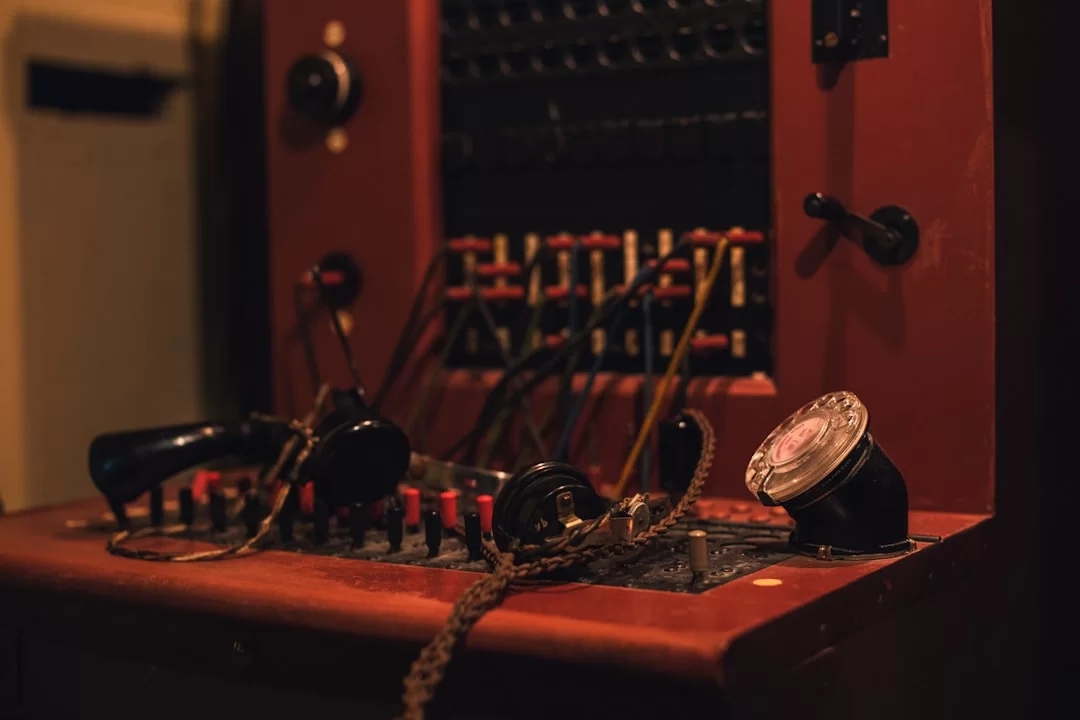
Throughout hardware history, this device took many different forms. Engineers designed each model to meet a specific need.
Some focused on speed, others did not compromise reliability. Military applications especially needed durable and simple mechanisms.
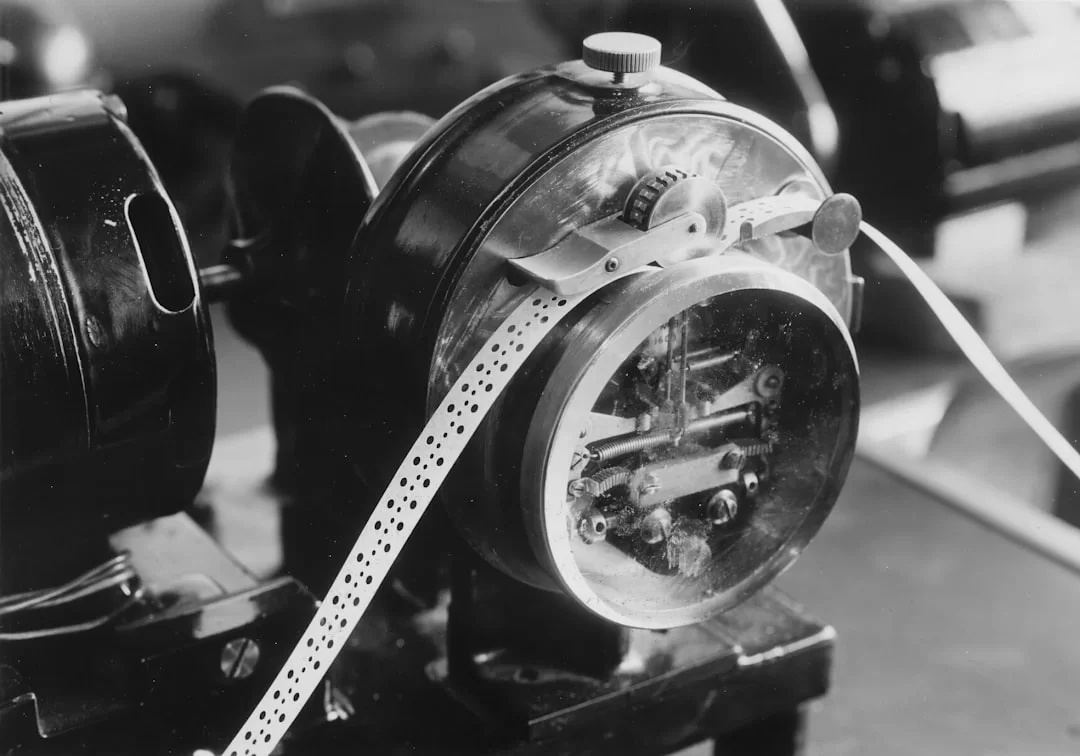
On the other hand, accuracy and record-keeping stood out in commercial use. For this reason, paper tape recorder systems were in great demand.
Thus, messages could be archived without the operator’s constant attention. Still, sounder models became the most widespread.
Today, old telegraph machine parts hold great value for collectors. Each part is an engineering marvel of its time. Also, these parts find new life in projects like using old telegraph relays in modern circuits.
Technical Differences Between Optical and Electric Telegraphs
The main difference between these two systems comes from the signal transmission medium. The optical version relies on light waves passing through air. On the other hand, the electric version carries direct current signals over copper conductor wire. Therefore, the former belongs to the pre-analog-digital crossroads era.
In terms of data transmission speed, the electric one is undisputedly superior. Plus, in the optical system, each character requires physical movement by tower operators.
In the electric model, signals travel at light speed. So, as the line length increases, the gap grows exponentially.
Regarding reliability, the electric system also stands out. Conditions like night, fog, or rain completely stop optical communication.
In contrast, the electric line continues to work in all weather conditions. Only physical breaks or insulator failures can cut communication.
| Criterion | Optical System | Electric System |
|---|---|---|
| Transmission Medium | Air (light waves) | Copper wire (electric signal) |
| Speed | Very low | Near light speed |
| Cost | High (personnel intensive) | Medium (infrastructure investment) |
| Energy Consumption Analysis | Zero electricity | Battery voltage required |
Single-Needle, Double-Needle, and Printing Telegraph Machines
Single-needle models developed in England worked on a fairly simple principle. An electromagnet deflected a needle to the right or left. Based on the deflection direction, the operator read the corresponding letter from a chart. The system was slow but extremely reliable.
Double-needle versions used two separate electromagnets and two needles. This made it possible to produce more combinations at the same time.
The decoder logic here was more complex but faster. Still, the need for a trained operator continued.
Printing models were truly revolutionary. The system directly printed messages on paper tape with dot and dash patterns.
Thus, users obtained a permanent record. Also, errors from operator fatigue greatly decreased.
Hardware Architecture of Telegraphic Communication: Basic Circuit Components and Working Principles
In this section, we explore the hardware side in depth. From an electronic circuit perspective, the system is surprisingly simple.
A power source, a switch, an electromagnet, and a transmission line are enough. However, beneath this simplicity lies tremendous engineering genius.
The basic circuit diagram is actually a series circuit. Current from the battery positive terminal enters the line through the manipulator.
The current traveling along the line reaches the relay coil on the receiver side. Finally, it completes the circuit via the ground return line or a physical return wire.
The biggest problems in practice were signal integrity and contact bounce. Fortunately, engineers developed creative solutions for these issues.
For example, Schmitt trigger-like mechanisms clean the signal. Also, line impedance calculations are critical for maximum range.
Types of Telegraph Keys (Manipulators) and the Contact Bounce (Debouncing) Problem
The manipulator is where the operator communicates with their fingers. In the traditional straight key model, a metal arm rests up by spring tension.
When you press with your finger, it touches the lower contact and completes the circuit. This simple mechanism carried millions of messages over decades.
However, every switch closure creates an electric arc. This arc starts a wear mechanism on the contact surfaces. Even worse, a phenomenon called contact bounce occurs. At the moment of mechanical contact, the contacts vibrate for a few milliseconds.
The receiver perceives this vibration as noise pulses. As a result, the system produces a series of false signals instead of a single dot.
Engineers developed the debouncing process to solve this problem. They cleaned this noise with a simple RC suppression circuit or a software delay.
| Key Type | Advantage | Disadvantage |
|---|---|---|
| Straight Key | Simple and cheap | High contact bounce |
| Semi-Automatic (Bug) | Fast dot generation | Complex mechanism |
| Electronic Keyer | Zero bounce | Requires external power |
How Does a Telegraph Relay Work? The Hardware Ancestor of Routers
The telegraph relay is an indispensable component of long-distance lines. A weakened signal triggers a fresh local power source. Thus, it acts as a signal repeater. It is basically an electromagnetically operated switch.
The weak current passing through the coil creates a magnetic field. This field pulls an armature, closing a second circuit. Fresh battery voltage feeds the second circuit. Therefore, the system amplifies the original signal and transmits it to the next line.
The similarity to modern routers is truly striking. Both take incoming data, process it, and forward it to the best output. In terms of routing logic, a relay station is essentially a primitive router.
In fact, nodes using a message switching system are the ancestors of today’s switches.
Sounders, Recording Devices, and Oscillator Circuits
A sounder is an electromechanical device that converts incoming signals into audible clicks. When the electromagnet pulls the armature, it hits a metal screw head.
This impact produces the “click” sound. When the armature releases, a spring pushes it back. The operator hears the “click” again.
Experienced operators understand these sounds fluently, like a language. The rhythmic dance of dots and dashes turns into words in the ear.
Recording devices automate this process. They leave permanent marks on paper tape using ink spray or needle engraving methods.
Also, instructors widely used the telegraph oscillator circuit for training. This circuit produces a specific resonance frequency.
This setup is known as a telegraph sound generator circuit. Specifically, this circuit outputs a near-square wave instead of a sine wave. Thus, operator candidates can practice without a real line.
Telegraph as a Network Protocol: Evolution from the Physical Layer to Packet Switching
This section may surprise you, but this old system is actually a full-fledged network protocol. It has its own addressing scheme, flow control, and even error detection methods. The birth of modern computer networks took shape on these copper wires.
Communication between nodes followed specific rules. Each station had a call sign. These codes were quite similar to today’s IP addressing logic. Also, concepts like message priorities and emergency signals existed.
Over time, this structure evolved from circuit switching to message switching. This evolution paved the way for packet switching and the birth of the TCP/IP protocol family. Therefore, understanding this old hardware is the surest way to grasp current network technologies.
At Which OSI Model Layer Does the Telegraph Operate?
Network engineers around the world often debate this question. A classic telegraph system primarily operates at the physical layer. The electrical signal on the copper wire is exactly this layer. Voltage levels, connector types, and signal timing belong here.
However, the system also performs data link layer functions. The call signs in the system act just like a MAC address.
Start and stop bits serve as framing. Even a re-read protocol for error detection exists.
Interestingly, we also observe network layer features. Nodes using a message switching system can perform routing.
Each relay station forwards the incoming message to the next appropriate line. This behavior matches the modern router function exactly.
Circuit Switching vs. Message Switching: Telegraph Network Topology
Early systems worked on circuit switching logic. Before sending, you established a physical connection to the receiver. This connection stayed open for the entire message. Consider a phone call; the line remained dedicated to the caller.
Message switching was a more efficient approach. The operator sent the message as a whole to the nearest node.
This node stored the message and forwarded it to the appropriate output line. This method, called store-and-forward, increased line usage efficiency.
Looking at the network structure, we generally see star and mesh models. Major cities served as central nodes.
This structure is an early prototype of today’s internet architecture. Concepts like collision domain management and latency optimization were important even then.
| Feature | Circuit Switching | Message Switching |
|---|---|---|
| Line Usage | Low efficiency | High efficiency |
| Latency | Minimum | Variable |
| Routing Logic | Fixed path | Dynamic path |
UART, RS232, and the Telegraph: The Roots of Serial Communication
The similarity between the UART protocol and this old system is no coincidence. Both use asynchronous serial communication. There is no common clock signal between sender and receiver. Instead, start and stop bits frame each data frame.
The similarity between RS232 and the telegraph becomes especially clear at voltage levels. In RS232, you use negative voltage for logic 1.
In this system, the presence or absence of current is fundamental. Ultimately, in both cases, you carry information with a two-level signal.
The concept of baud rate is central in both worlds. In this device, speed depends on the operator’s skill.
In modern UART, precise crystal oscillators set the speed. Still, the basic principle remains: it’s the number of symbols sent in a time slot.
Advantages and Disadvantages of the Telegraph: Why Did It Fall Out of Use?
Like every technology, this system had certain strengths and weaknesses. Its biggest advantage was undoubtedly speed. It was thousands of times faster than physical mail delivery. It also offered unmatched reliability in critical infrastructure like railway signaling.
On the other hand, it also had significant disadvantages. The need for trained operators was a serious cost item. Line breaks completely stopped communication. Moreover, the per-message pricing model could be expensive.
With the spread of the telephone, this system quickly became obsolete, because voice communication suited human nature much better.
Also, the direct conversation experience without needing an operator was revolutionary. Finally, fax and email completed this transformation.
Technical Competition Between Telegraphic Communication and Telephone
With the invention of the telephone, fierce competition began between the two technologies. While the telephone carried voice signals, this system only transmitted coded pulses.
Since voice was directly understandable, it required no special training. This simple fact alone guaranteed the telephone’s victory.
However, some advantages of this device persisted for a long time. Its ability to leave a written record was critical for official transactions. It also transmitted understandable signals even on weak lines. The telephone, on the other hand, became useless on noisy lines.
In terms of bandwidth, the telephone carried more information. Yet the data speed comparison can be misleading. Morse code encoded English text quite efficiently. As a result, both technologies served different usage scenarios.
| Criterion | Telegraph | Telephone |
|---|---|---|
| Transmission Type | Digital (binary code) | Analog (voice signal) |
| Operator Need | Mandatory | Not needed |
| Record Keeping | Natural (written) | Requires external device |
| Line Quality Tolerance | High | Low |
Differences Between the Telegraph and Other Communication Methods
Communication technology has continuously evolved throughout history. Each new invention aimed to surpass the limits of the previous one.
In this context, comparing it with mail, telephone, fax, and email can be enlightening. Each has its own unique advantages and use cases.
Mail is slow but personal. It carries the warmth of handwriting. This system is fast but mechanical and cold. There is a clear difference in emotional conveyance. Yet in emergencies, speed would undeniably win.
We can view the fax machine as a natural evolution of this device. Both work with electrical signals. However, fax can also carry image signals. This ability makes it a much more flexible tool.
Similarity Between Telegraph and Email: The Evolution of Message Switching
The similarity between email and this old system is surprising. Both are based on message switching logic. The sender transmits the message to a node. This node forwards the message until it reaches the recipient.
You also find parallels in the addressing scheme. The username and domain name separation in an email address resembles the call sign system.
Also, in both systems, you can store messages on intermediate servers. The store-and-forward principle is the foundation of today’s email infrastructure.
There is also an interesting continuity in data security. In both this system and email, encryption methods are critically important.
Experts have discussed end-to-end communication security on both platforms. Ultimately, information transfer always needs protection.
What Is the Relationship Between the Telegraph and the Modem?
The word modem already comes from modulator-demodulator. This system also essentially performs a modulation process.
The operator’s hand movements turn into electrical signals. On the receiving side, the system converts these signals back into meaningful symbols.
Telegraph modulation works as on-off keying. Modern modems use much more complex modulation techniques.
Nevertheless, the basic operating principle is the same. Both adapt digital data to suit the transmission medium.
Therefore, we can say the first modems directly derived from this technology. In fact, early acoustic modems directly transmitted Morse code sound signals over the phone line. This historical link forms the origin of today’s broadband technologies.
Data Security and Encryption Methods in Telegraphy
Data security concerns are not unique to the modern age. In the 19th century, diplomats and soldiers had the same worries. Anyone could intercept messages passing over open lines. For this reason, cryptography saw great development.
Governments protected military and trade secrets with special encryption books. These books matched specific words or phrases with random codes. Someone intercepting the message could not understand anything without the book. This was an approach quite similar to today’s symmetric key encryption.
The concept of the encryption rotor also matured in this period. Mechanical or electromechanical rotors automated the letter substitution process.
This technology later inspired the Enigma machine. Therefore, you should search for the roots of modern cybersecurity in these copper wires.
Telegraph Encryption and Diplomatic Codes in the United States
The United States adopted this technology very early. During the Civil War, both sides strung thousands of miles of wire. This revolutionized military communication.
However, line security immediately became a critical issue. Tapping a telegraph line was dangerously easy. Both Union and Confederate forces feared eavesdropping.
The War Department set up special cipher bureaus. It regularly changed the code books and ciphers.
Important messages passed through multiple encryption layers. In diplomatic cables, the State Department used complex mixed-code systems.
The National Archives holds thousands of encrypted messages from this period. Today, these documents are priceless for historians.
Thanks to digital archiving projects, we protect these records. Thus, we pass this critical chapter of communication history to future generations.
Error Correction and Flow Control in Telegraphy
You could never guarantee signal integrity on the line. Interference, weak connections, and atmospheric noise constantly threatened communication.
Operators especially developed their own error correction protocols. The most common method was to re-read critical parts.
Flow control relied more on the human factor. If the sender was fast, the receiver sent a “wait” signal. This signal was usually a specific letter or code sequence. It was an approach quite similar to modern software-based flow control.
Error correction methods in telegraphy became more sophisticated over time. Engineers added automatic repeat systems and parity-check-like mechanisms.
We can consider these early examples of today’s CRC and checksum methods. Indeed, we cannot overstate this system’s role in the evolution of data communication.
Electrical Depth: Signal, Voltage, and Impedance
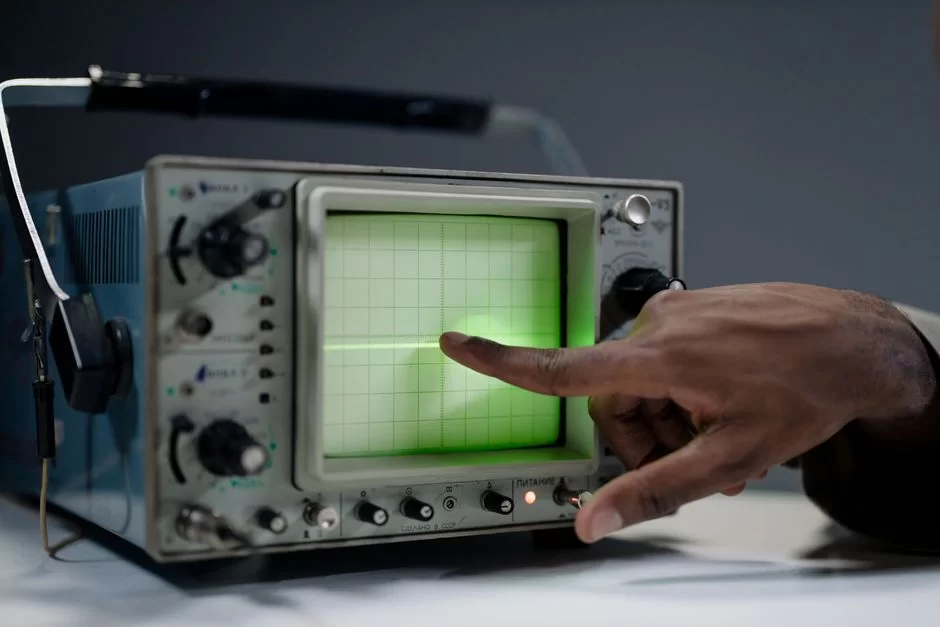
Now we explore the electrical details in depth. Knowing these details as a network engineer sets you apart from your competitors.
Knowing these details sets you apart because you solve physical layer problems even today with the same principles. Signal behavior on copper wire has never changed.
Voltage levels, current direction, and impedance matching are key. If you miscalculate them, your signal won’t reach the other side.
Especially on long lines, signal attenuation is a serious problem. Engineers set up mountain-top repeater stations precisely for this reason.
When you examine old signals with modern oscilloscope analysis, you obtain surprising results. Square wave forms are distorted due to contact bounce.
Schmitt trigger circuits are ideal for cleaning up this distortion. Therefore, the meeting of old technology and modern electronics is fascinating.
Is the Telegraph Signal Digital or Analog?
The definite answer is: this signal is digital by nature. The signal exists in only two states: current on or off. This feature makes it a pure binary system. Intermediate values have no meaning for communication.
However, physical reality is a bit more complex. The voltage on the line is not an ideal square wave. Inductance and capacitance effects create rise and fall times. For this reason, the signal actually has an analog waveform.
Still, from the information-carrying method, it is completely digital. The receiver interprets above a certain threshold voltage as 1, and below as 0.
This behavior is exactly the same as the working principle of modern digital circuits. Therefore, it is a hybrid structure standing at the analog-digital crossroads.
Ground Return Line, Line Impedance, and Telegraph Signal Voltage Level
The ground return line was a brilliant invention that cut costs. It allowed completing the circuit using a single copper wire, with the physical ground serving as the return path. Copper plates buried in the ground at both ends completed the circuit.
Line impedance was a factor directly affecting signal quality. Resistance and capacitance effects accumulated on long lines.
This distorted pulse width and led to erroneous readings. Engineers developed impedance matching techniques to mitigate this problem.
Telegraph signal voltage level was typically between 50 and 200 volts. This high voltage provided detectable current even over long distances.
Operators adjusted battery voltage according to station size and line length. Also, lower voltages sufficed for short distances.
| Parameter | Typical Value | Modern Equivalent |
|---|---|---|
| Operating Voltage | 50–200 V DC | 3.3–5 V (TTL) |
| Line Impedance | 100–600 Ohm | 50–100 Ohm (coaxial) |
| Maximum Range | ~31 miles (without repeater) | ~100 m (Ethernet) |
The Invention That Changed the Course of Wars: Military Use of the Telegraph in the United States and the World
Information has always been more valuable than gold on battlefields. The telegraph radically changed this situation.
Commanders could now instantly send orders to units hundreds of miles away. This ability completely transformed the concept of strategy.
The Mexican-American War became an early test of this power. For the first time, field reports reached Washington, D.C., within hours.
Later, the United States built a vast network during the Civil War. Thus, the first truly strategic military telegraph network in the country was born.
The American Civil War was the conflict where this technology saw the heaviest use. President Lincoln communicated directly with front commanders from the White House.
This decentralized communication model changed the course of the war. Indeed, this system played a large role in the Union’s victory.
The Civil War and the First Strategic Telegraph Networks in the United States
The American Civil War of 1861–1865 was a turning point. Moreover, the Union Army established the U.S. Military Telegraph Corps and laid thousands of miles of wire across the battlefields.
After the war, the government grasped the strategic value of this technology. It quickly launched a national network construction program.
By the 1870s, the transcontinental telegraph connected New York to San Francisco. This network bound the nation’s most remote corners to the center.
The telegraph network was also a symbol of modernization. Integrated with the postal service, this system accelerated bureaucracy.
Tax collection, troop deployment, and law enforcement became much more effective. In the 19th century, the telegraph functioned as the nervous system of the modern American state.
The American Civil War and the Telegraph’s Decentralized Network Architecture
The American Civil War of 1861–1865 was a war of technology. Union armies laid over 15,000 miles of telegraph lines.
They sent over a million messages over this network. President Lincoln spent hours reading these messages in the war room to determine strategy.
The decentralized communication model matured in this war. Each corps laid and managed its own lines. Yet all these sub-networks communicated via a common protocol. This structure was a distributed system resembling today’s internet architecture.
They also developed collision detection-like protocols on the telegraph line. Multiple stations sharing the same line took turns transmitting according to rules.
This method is an early example of peer-to-peer communication. Therefore, war became the greatest driving force advancing technology.
Is It Possible to Send a Telegram Today? USPS and Online Alternatives
Yes, in 2026, you can still use this service. You can officially send one via USPS.
Moreover, you can now choose online channels without visiting a branch. People prefer this service especially for special occasions and condolence messages.
Thanks to digital platforms, the process has become very easy. You write your message and enter the recipient’s address on the website.
Then the system routes your message to the nearest USPS branch. A USPS employee delivers it physically in a special envelope to the recipient.
This is the clearest answer to whether you can send a telegram today. The system now works over digital networks instead of electrical signals.
However, the output reaching the end user is still the classic printed message in that yellow envelope. This tradition continues to preserve its nostalgic value.
USPS Telegram Sending Fee and Steps (2026)
As of 2026, the USPS telegram sending fee is quite reasonable. For a standard domestic message, you pay between $1.50 and $3.
If you wonder how to send an online telegram, the steps are quite simple. Here is the current process:
- Go to the official USPS website or open the mobile app.
- Click the new message option from the telegram service menu.
- Enter the recipient’s full name, address, and phone number completely.
- Write your message text; the character limit is usually 500 characters.
- Complete the payment with a credit or debit card.
- A confirmation message and tracking number arrive via SMS.
Alternatively, you can do the same by visiting any USPS branch. The clerk fills out the form for you and takes your payment.
The clerk delivers your message the same day or by the next business day at the latest. Also, the recipient must show ID at the time of delivery.
Modern Hardware with an Old Soul: Telegraph Projects with Arduino and Phone Cable

Reviving old technology with modern tools is a fascinating experience. The Arduino platform offers a perfect foundation for such projects. You can build a working system with a few simple components. Moreover, the cost is extremely low.
These projects are not just for hobby purposes. They are also great tools for teaching network fundamentals. Students experience the physical layer concept concretely. They also learn coding systems and signal processing hands-on.
Similar projects are often seen at maker fairs. The Arduino telegraph project category becomes more popular every year.
People enjoy bridging the past and the future. This interest keeps hardware history awareness alive.
Building a Simple Telegraph Circuit and Morse Code Decoder Circuit Diagram
What you need to build a basic system is quite simple. An Arduino Uno, two buttons, two LEDs, a buzzer, and a few resistors suffice. The circuit diagram is also very clear. Here is the step-by-step setup:
- Connect a button to Arduino pin 2 for the sender side.
- Connect the other end of the button to GND, and the pull-up resistor to 5V.
- For the receiver, connect an LED to pin 13 with a series resistor.
- Connect a buzzer to pin 8 to add audio feedback.
- Include the Morse code decoder library in the Arduino IDE project.
- After uploading the code, watch the decoded messages on the serial monitor.
The Morse decoder algorithm relies on pulse width measurement. It interprets short presses as dots, long presses as dashes.
The silence duration between characters determines separation. This simple logic produces surprisingly accurate results.
Sending Telegraph Signals with Phone Cable and Oscilloscope Viewing
If you have an old phone cable, a great experiment awaits you. Sending telegraph signals with a phone cable is quite educational.
The twisted pairs inside the cable are ideal for signal transmission. Additionally, you can access the inner wires by disassembling RJ45 connectors.
When you view telegraph signals on an oscilloscope with Arduino, you discover fascinating details. You clearly see the signal’s rise and fall times.
You also observe noise from electromagnetic interference. This analysis provides invaluable lessons on signal integrity.
Open-collector telegraph connection logic comes into play here. Arduino output pins cannot directly handle high current.
Therefore, you must drive a relay through a transistor. Wired-OR topology allows multiple stations to share the same line.
Using an Old Telegraph Relay in a Modern Circuit and Schmitt Trigger Cleaning
An old relay from a flea market is a great project component. Using an old telegraph relay in a modern circuit offers a unique nostalgic experience.
However, these relay contacts may have oxidized over the years. Clean the contact surfaces with fine sandpaper before use.
You need a transistor switching circuit to drive the relay coil. Connect the Arduino output pin to the transistor’s base.
When the transistor conducts, it energizes the relay coil. In this way, you control a high-voltage circuit with a low-voltage signal.
Cleaning telegraph signals with a Schmitt trigger is a critical step. The signal from relay contacts is not always clean.
Especially in aging mechanisms, contact bounce is intense. The 74HC14 IC solves this problem perfectly and produces a clean square wave.
International Further Reading and Academic Resources on the Telegraph
We recommend the following prestigious resources to explore the topics we covered in more depth. Each is a publication from an institution considered an authority in its field.
- International Telecommunication Union (ITU) – Overview of ITU’s History: The official archive of the ITU, which regulates global communications, is quite rich. For example, this archive documents telegraph standards and the evolution of technology since 1865.
- Library of Congress – The Invention: This special article from the Library of Congress describes Samuel Morse’s process of inventing the telegraph. It also includes technical details of Morse code. Moreover, we see the establishment of the first official telegraph line in 1844 through primary sources.
- Encyclopaedia Britannica: History, Invention & Technology: This guide examines the working principles of the electric telegraph at an academic level. It also details the transition period from optical systems to electric networks. Furthermore, we clearly see the technology’s impact on global communication.
- U.S. Department of State: The Office of the Historian at the U.S. Department of State prepared this publication. This study examines the transformative impact of the telegraph and transoceanic cables on diplomacy. We also see the global relations of the 19th century in detail.
The 10 Most Honest Questions and Answers About the Telegraph
What is a telegraph, and what does it do?
When and by whom was the telegraph invented?
How does a telegraph work?
Is the telegraph signal digital or analog?
What are the types of telegraphs?
Is the telegraph still used today? How do you send one via USPS?
What is a ground return line, and why is it used?
How do you prevent contact bounce (debouncing) in a telegraph key?
What is the difference between a telegraph and a letter?
How were encrypted messages sent via telegraph?
Conclusion: The Indelible Signature of the Telegraph in Communication History
At the end of this journey, we face a clear truth. The foundations of the modern digital world were laid in the 19th century. Every message we send is a grandchild of those dots and dashes on copper wires. Understanding this legacy lets us grasp today’s technology more deeply.
The hardware similarities, parallels in network protocols, and continuity in coding systems are no coincidence. This invention is truly the first spark of the information age. Therefore, we should give this modest device the respect it deserves.
See you in the next network fundamentals article. Until then, keep wondering and keep learning, because those who know their technology’s past build a better future.

Be the first to share your comment