

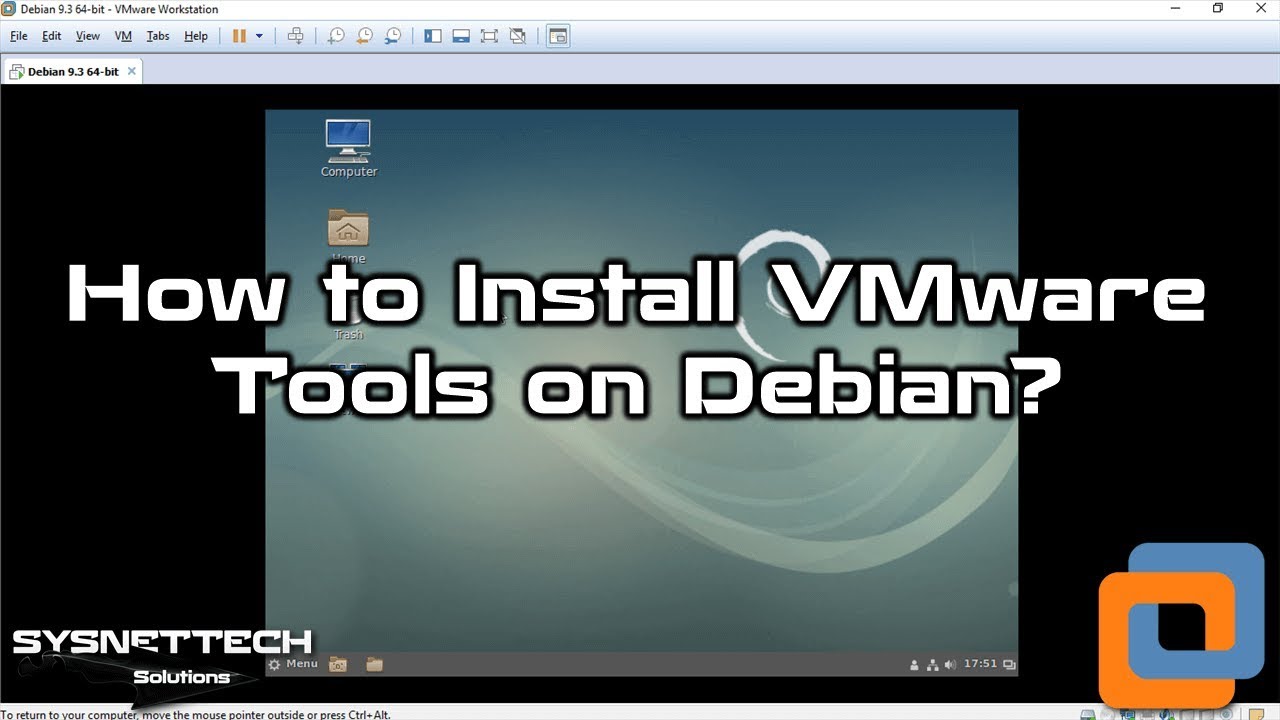
In this article, I will discuss a Debian system that we installed with VMware Workstation. In fact, I will show you step by step how to install VM Tools on this virtual machine. I will also touch on the advantages that increase performance during the installation.
Thus, I have added screenshots to make the setup process easier. I also shared its commands with you so that you can easily optimize your virtual machine.

How to Install VMware Tools on Debian 13 OS
If you are using the Workstation, you should do one more thing right after installing the operating system. You should definitely install VMware Tools on the virtual machine. This way, you will make your system work more appropriately with your host. You will also activate features such as file sharing and screen resolution.
VMware Tools help your virtual machine use hardware better. In fact, it works like a bridge between your real PC and the virtual system. So, it also makes everything faster and easier to use.
For example, you can change the display of your VM to full-screen mode. However, you can enable file sharing. You can move files between the host machine and your virtual system.
You can quickly drag and drop files from your physical PC to your virtual system. So, you can speed up file transfers and do your work more efficiently.
In addition, you can use USB 3.0 devices in your Debian VM. That is, you can use these devices directly.
Installing VM Tools on a Debian Virtual Machine
Let’s say you installed Debian OS with VMware before. But you didn’t do anything else in your virtual system. So the first thing you’ll do is install the VM tools. Let’s follow the steps below and do the installation together!
1. Mount VMware Tools Image & Extract to Folder
Step 1
First, find your Debian VM system and open it. Then, from the tool menu, find VM > Install VMware Tools and press it.

Step 2
On the screen that appears, double-click on the .tar.gz file.

Step 3
When you see the compressed folder with the tar extension, press Extract this time.

Step 4
On the Debian VM desktop, double-click on the Distrib folder to see it.

2. Open Terminal in Distrib Folder & Install VMware Tools
Step 1
Let’s right-click on the folder to open the command tool on the Debian VM. At this point, we select the “Open in Terminal” option.

Step 2
Let’s start installing VMware Tools for the Debian VM. Now, on the command tool screen, apply the commands listed below in order.
- su
- Type your root password.
- Look at the files in the folder with the “ls” command.
- Execute the ./vmware-install.pl command.
- Type Yes & press the Enter key to begin the setup.
- Complete the VM Tools installation by answering the questions that will be asked again.

Step 3
Click Yes to keep installing the virtual machine drivers. Then, choose to install the binary files too.

Step 4
We have successfully installed the drivers for the Debian virtual PC. Now let’s restart our virtual system with the command below.
shutdown -r now
Step 5
Finally, after rebooting, you can now start using your VM in full screen.

Troubleshooting Steps if VMware Tools Fails
At times, issues can happen even when you do the setup steps right. You might face problems when you try to install VMware Tools on your Debian virtual machine. Here are some steps to fix these common problems:
1. See If Your System Will Work With It
First, make sure your Debian version will work. This is for the VMware Tools you want to install. Always check the VMware guides for what works together.
2. Verify the VMware Tools Installation File
Next, make sure you downloaded the setup file correctly. Confirm that it isn’t damaged. If you think it is, reconnect the VMware Tools file. You can do this from the VMware menu by selecting VM > Reinstall VMware Tools.
3. Look at the Error Notes in the Terminal
When you run commands, look very carefully at the error notes. These notes often tell you what the problem is. Common issues can be missing parts or permission mistakes.
4. Make Sure You Have Installed the Necessary Packages
Some parts are needed for VMware Tools to work correctly. Make sure the required building tools and files are on your system. You can use this command:
sudo apt-get install build-essential linux-headers-$(uname -r)This command installs the packages needed to compile the modules.
5. Run the Installation Script with Sudo
If you see a “not allowed” error, run the script with more power. Put “sudo” at the start of your command:
sudo ./vmware-install.pl6. Check the Logs for Installation Errors
The VMware Tools setup notes can give you more details. Look at these notes. They are usually in the “/var/log/vmware-installer” folder.
Review these logs for error codes or messages that may help you troubleshoot the issue.
7. Restart the Debian Virtual Machine
Sometimes, a simple restart can fix setup problems. If you have tried many times, restarting your virtual machine might help.
8. Look for Community Solutions
If these steps do not fix your problem, look on the Internet. The VMware help groups are instrumental. Other people may have had the same problem, and their answers might help you.
By doing these steps, you can find and fix problems when you install VM Tools on your Debian machine. If you still have trouble, you should ask for help from the VMware support team.
Installing Debian Virtual Machine Drivers ⇒ Video
A video guide is also ready to show you how to put the VM program on Linux. Plus, if you find our video and article content helpful, consider subscribing to our YouTube channel. To be honest, this will motivate us even more and help us create valuable content!
Frequently Asked Questions (FAQ) About Debian Guest Tools
- Why do I need VMware Tools for Debian?
- Which Debian versions can you install VMware Tools on?
- Do I need to prepare my Debian environment?
sudo apt update
sudo apt upgrade
sudo apt install build-essential linux-headers-$(uname -r)- How can I verify that I have installed Guest Tools correctly?
Conclusion
To finish, putting VMware Tools on your Debian computer is essential. This will make it work better and be easier to use. Also, by following the steps in order, you can make your computer work its best.
For example, you get better screen pictures. Also, your file sharing gets better. You even use your USB devices in a better way. In the end, all these good things make the setup very useful.
Also, it is essential to know about everyday problems. This will help you fix setup issues. When you put VMware Tools on the right, you can use all the power of a virtual machine.
In short, you can know that your Debian virtual machine will do a lot more. This way, you make your VM into a helpful tool. By using all the good things this software gives, you can make your work much faster and better.
Would you like to optimize your virtual machine in Linux Mint as well? In that case, I recommend checking out our guide on “How to Install VMware Tools in Linux Mint.” First of all, it is similar to the installation I described for Debian. Once you apply it, you will be able to run your Mint VM smoothly and make it more efficient!

Be the first to share your comment