

Enabling virtualization scares many users. After all, you can get lost in the BIOS screen. Plus, you fear picking a wrong setting. However, with the right guide, this task is easier than you think. Today I will walk you through Intel and AMD platforms step by step.
First of all, let me say this: by turning on this feature, you let your CPU run virtual machines. So Windows can run Linux, test setups, or Android emulators without issues.
You will learn more than just BIOS settings. Also, I will cover Windows check steps. What’s more, I will address common errors and their fixes.
For years I have set up this tech on servers and desktops. In fact, the biggest real-world issue I see is users getting stuck in the wrong BIOS tab.
Ready to dive into CPU architecture? Let us first grasp hardware-assisted virtualization. Next, let us clear up Intel VT-x and AMD-V differences. Finally, let us wrap it up with a few clicks in the BIOS screen!
Why Does Virtualization Matter?
Virtualization technology lets one physical machine run many operating systems. This is a huge win for software developers. You can test Windows 11 and Linux at the same time. Best of all, your main system stays safe.
In the past, we used slow emulation methods to set up virtual machines. But today hardware-assisted virtualization has changed the game. A guest OS now runs at nearly native speed. So you must turn on CPU virtualization extensions in the BIOS.
Modern operating systems also rely on this tech. For example, Windows 11 uses a hypervisor for certain security features. Tools like WSL2, Docker Desktop, and Windows Sandbox build on this base too.
Hardware-Assisted Virtualization: VT-x, AMD-V, SVM Explained
Hardware-assisted virtualization speeds up VM management with special CPU instruction sets. Intel calls this tech VT-x. AMD calls it AMD-V or SVM mode. Both terms serve the same function.
A hypervisor creates a privileged layer on the CPU with this tech. The guest OS runs safely in that layer. So performance loss drops to a minimum. The hardware also supports memory management.
In my experience, many users mix up these terms. For instance, seeing “SVM Mode” in the BIOS confuses them. But that is the enable switch on AMD CPUs. Intel systems show it as “Intel Virtualization Technology.”
| Technology | Vendor | BIOS Name | Function |
|---|---|---|---|
| Intel VT-x | Intel | Intel Virtualization Technology | CPU virtualization |
| Intel VT-d | Intel | Intel VT for Directed I/O | I/O virtualization |
| AMD-V | AMD | SVM Mode | CPU virtualization |
| AMD-Vi | AMD | IOMMU | I/O virtualization |
As you can see, each vendor has its own terms. Still, they all serve one goal. You just need to find the right option and turn it on.
Virtualization Use Cases: Virtual Machine, WSL2, Docker, Android Emulator
This tech is a must in many scenarios. Below I list the most common use cases:
- Virtual Machine (VM): Install different operating systems with VMware Workstation, VirtualBox, or Hyper-V.
- WSL2: Run a full Linux kernel on Windows. So it is ideal for dev setups.
- Docker Desktop: Container technology uses a hypervisor behind the scenes.
- Android Emulator: Tools like BlueStacks, LDPlayer, and Nox Player need hardware support for high performance.
- Windows Sandbox: Starts an isolated Windows session, keeping your main system safe.
For software developers, these tools are essential. However, they all share one need: hardware virtualization must be on in the BIOS. Otherwise, they run slowly or fail to start.
Hardware Requirements for Virtualization: CPU and Motherboard Support
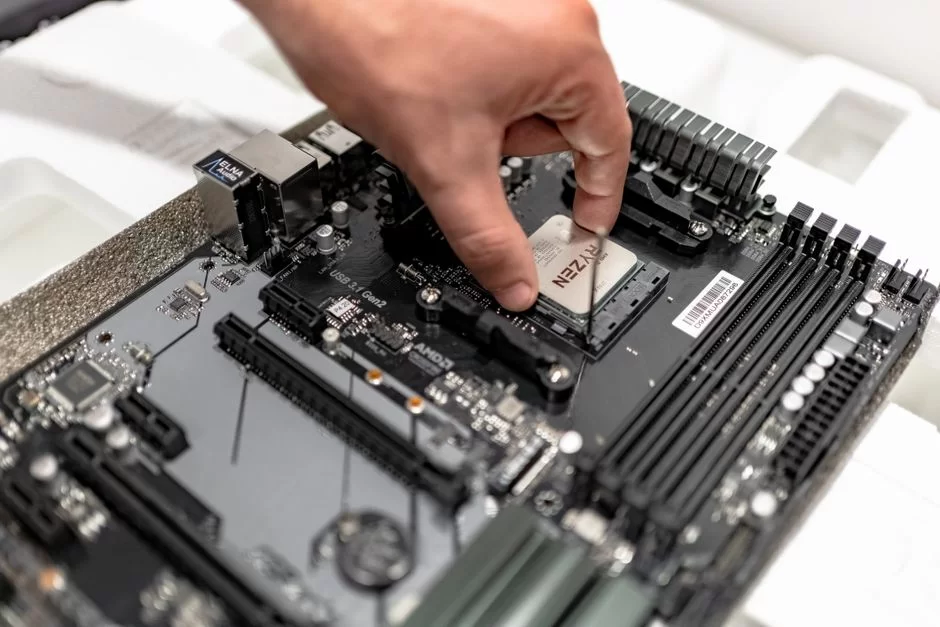
Not every CPU supports this feature. Very old or entry-level chips may lack this capability. So you must check your hardware first.
Most modern CPUs support this tech. But some motherboard BIOS versions keep it off by default. Also, some low-power laptops hide the option. You may need a BIOS update or a special key combo.
We can sum up the hardware needs as follows:
- 64-bit x86 architecture processor
- Virtualization extension support in BIOS/UEFI
- At least 4 GB of RAM (we suggest 8 GB or more)
- Enough free disk space
Meet these basic needs, and this feature runs without issues. But you should still verify your CPU model. Some old Celeron or Athlon chips lack it.
Which Intel and AMD CPUs Support Virtualization?
On the Intel side, nearly all Core i3, i5, i7, and i9 CPUs support VT-x. Xeon series also offers full support. But old Pentium 4 or first-gen Core models lack it. Some Atom chips have limited support too.
On the AMD side, Ryzen 3, 5, 7, 9, and Threadripper series all support AMD-V. Old Athlon 64 and some Sempron models do not. Every current Ryzen and EPYC CPU includes SVM mode.
| Vendor | Series | Virtualization Support | Note |
|---|---|---|---|
| Intel | Core i3/i5/i7/i9 (2nd gen and up) | VT-x, VT-d | Widely supported |
| Intel | Xeon | VT-x, VT-d | Server-focused |
| Intel | Celeron/Pentium (some models) | Variable | Some do not support it |
| AMD | Ryzen 1000 series and up | AMD-V, IOMMU | All supported |
| AMD | Athlon/Sempron (old) | Not supported | Check first |
To check your CPU support, look up the specs on the vendor site. You can also use system info tools in Windows. I will detail these methods in later sections.
Why Is the Virtualization Option Missing from BIOS/UEFI?
Sometimes the virtualization option does not show up in the BIOS settings. This often happens because the motherboard chipset does not support it. This can frustrate users. But usually there is a simple reason. Below are the most common reasons:
- Your CPU may not support this feature.
- The BIOS version is old; you need an update.
- The option hides under a different menu.
- Some laptop makers lock this setting.
- You may use Legacy BIOS instead of UEFI mode.
Laptop users face this issue often. The maker hides the option for safety or stability. You may need to open advanced settings mode. Also, some models need special key combos while pressing F2 or Del.
Intel vs AMD Virtualization Tech: VT-x, VT-d, AMD-V, SVM Differences
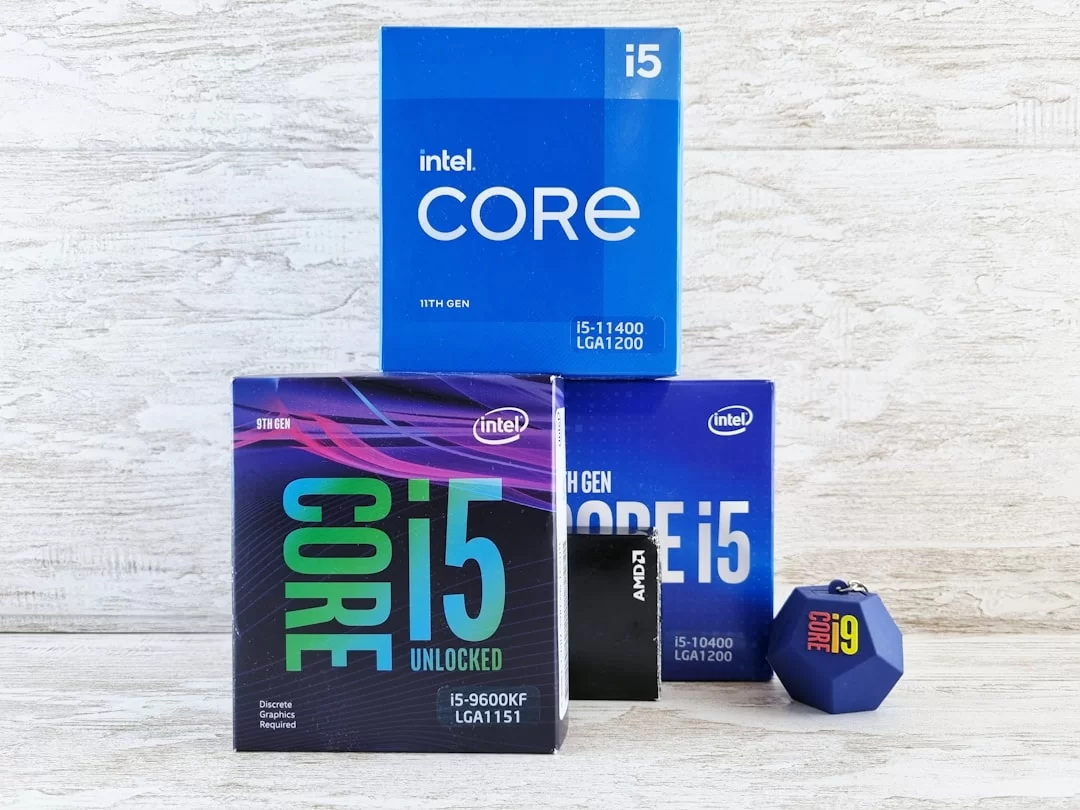
In this part, I will compare Intel and AMD tech. Both vendors deliver similar results. But there are key architectural differences. Specifically, VT-d and IOMMU matter for direct I/O access.
Intel VT-x handles CPU virtualization only. AMD-V does the same job. But their performance is nearly equal. The difference often shows up in the BIOS setup. Some vendors offer more settings.
SLAT (Second Level Address Translation) exists on both sides. Intel calls it EPT. AMD calls it NPT. This tech boosts memory virtualization performance.
VT-x vs AMD-V: Which Is Better?
I hear this question often. Let me be clear: both are equal. You will not notice a difference in daily use. But certain workloads may show tiny variations.
Intel VT-x offers a mature setup, especially in multi-core servers. AMD-V stands out with energy efficiency on Ryzen chips. So the gap is a few percent at most. Focus on CPU performance when you choose.
Benchmark tests show one thing. Both technologies reach about 95% of native speed inside a VM. This proves the power of hardware-assisted virtualization.
| Criteria | Intel VT-x | AMD-V |
|---|---|---|
| CPU virtualization | Yes | Yes |
| I/O virtualization | VT-d | AMD-Vi / IOMMU |
| Memory virtualization | EPT | NPT |
| Average performance loss | 2-5% | 2-5% |
In the end, whichever platform you pick, this tech works the same way. What matters is finding the right BIOS setting.
VT-d and IOMMU Explained: Why Needed for PCI Passthrough?
VT-d is Intel’s I/O virtualization tech. IOMMU is the AMD equivalent. These features give a VM direct hardware access. For example, you can assign a GPU to a VM.
PCI Passthrough lets a guest OS use devices like a GPU or NVMe disk directly. So the VM gets near bare-metal speed. But you must enable VT-d or IOMMU in the BIOS first.
DMA remapping also boosts security. A guest machine cannot access the main system memory without permission. This adds extra protection against rootkit attacks.
How to Enable Virtualization in BIOS/UEFI

Now we get to the real work. You need to enter the BIOS screen to enable this feature. Do this step right, and the rest is easy. Follow the steps in order.
First, restart your computer. Press the right key during startup. This key is usually F2, Del, F10, or Esc. It varies by maker.
Below you will find a step-by-step guide. Read each step with care. Do not rush, and do not fear making a wrong setting.
Entering the BIOS: Right Key and Timing
When your computer starts, a key prompt often shows at the bottom. But that text flashes by quickly. So try this method:
- Turn off the computer completely.
- Press the power button.
- Right away, press the relevant key repeatedly.
- Keep pressing until the BIOS screen appears.
Some modern systems shorten this window with fast boot. You can restart into UEFI from Windows instead. Use this command: shutdown /r /fw
This command sends the system straight to the BIOS screen. So you skip the key-catch hassle.
Finding the Virtualization Option in Advanced Settings
After entering the BIOS interface, you must find the right menu. It usually sits under the “Advanced” tab. Some boards place it under “CPU Configuration.”
Follow these steps:
- Use the arrow keys to reach the Advanced tab.
- Find the CPU Configuration or Processor section.
- Look for Virtualization Technology or SVM Mode.
- Change this option to Enabled.
On Intel systems, the option name is usually “Intel Virtualization Technology” or “VT-x.” On AMD systems, it shows as “SVM Mode.” Sometimes it may read “Secure Virtual Machine.”
Saving Settings and Verifying in Windows
After setting the option to Enabled, you need to save. Usually F10 does the job. BIOS asks for confirmation. Say Yes, and the system reboots.
Once Windows loads, verify the change. Open Task Manager. Go to the Performance tab. Pick CPU on the left. You should see “Virtualization: Enabled” in the bottom right.
You can also check from the command line. Run the systeminfo command. Look for the virtualization line in the output. This method gives a clear answer.
Brand-Specific BIOS Guide: ASUS, MSI, Gigabyte, Lenovo, HP, Acer, Dell
Each board maker has a different BIOS interface. So I prepared a brand-based guide. Below you will find step-by-step instructions for the most popular brands. Read the section that fits your system.
Remember, the logic stays the same even if the interface differs. Always enter the advanced settings area. Then look for the CPU configuration option.
Enabling SVM and VT-x on ASUS Motherboards
ASUS boards usually open in EZ Mode. Press F7 to switch to Advanced Mode. Then follow these steps:
- Click the Advanced tab.
- Enter the CPU Configuration menu.
- Find Intel (VMX) Virtualization Technology or SVM Mode.
- Set the value to Enabled.
- Press F10 to save and exit.
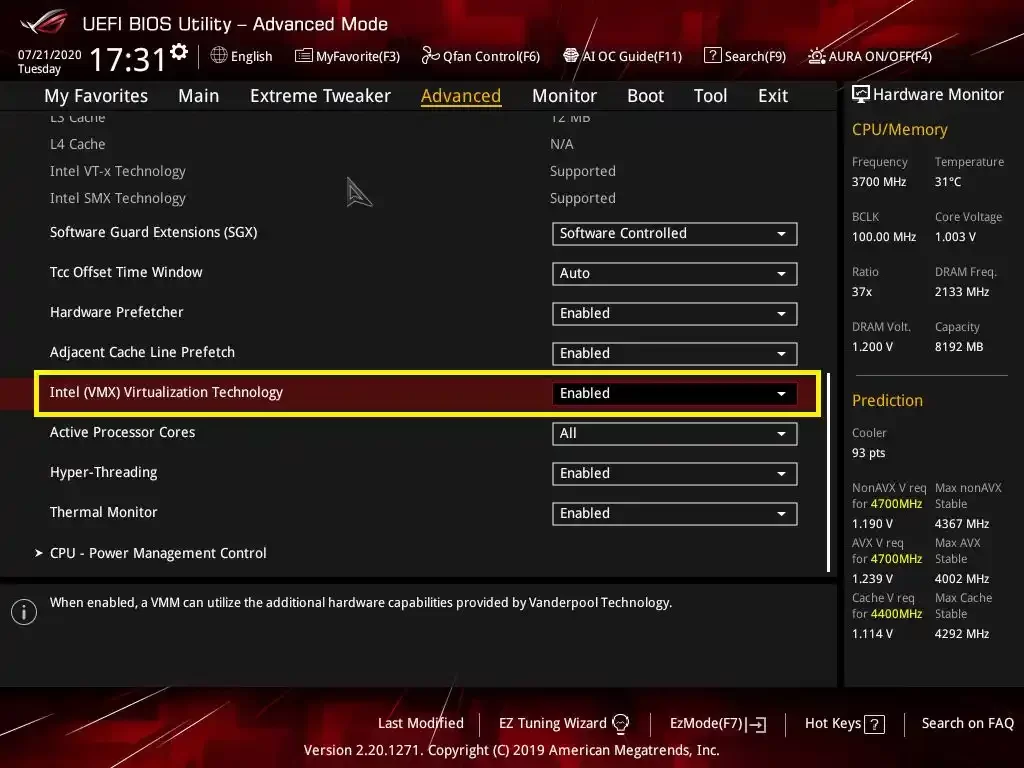
On some ASUS models, this option sits under the “Tweaker” menu too. So check both places. Also, turning on “Intel VT-d” is a good idea.
Enabling Virtualization on MSI Motherboards
MSI Click BIOS is quite user-friendly. But you still need to find the right menu. Follow this path:
- Enter Advanced in the BIOS.
- On some boards, look under “OC” or “Overclocking” and then “CPU Features.”
- Find “SVM Mode” (AMD) or “Intel VT-x” (Intel).
- Set it to Enabled and save with F10.
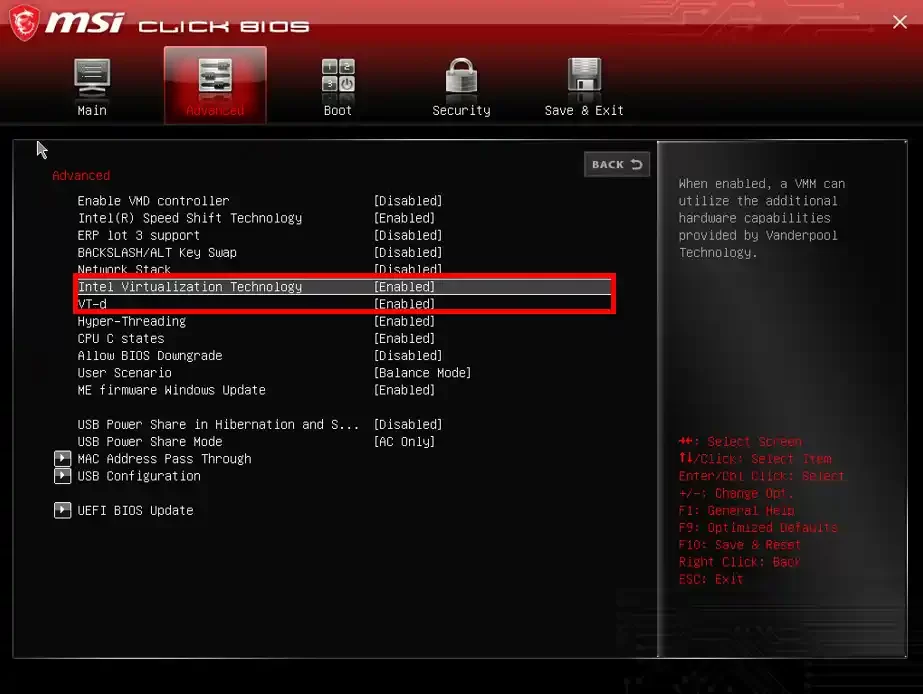
On MSI boards you can sometimes search for the word “Virtualization.” On some models, the option sits inside “Advanced CPU Settings.”
Enabling Virtualization on Gigabyte and ASRock Boards
On Gigabyte BIOS, the setting is usually in the “Tweaker” tab. Do the following:
- Go to the Tweaker tab.
- Find the “Advanced CPU Settings” section.
- Turn on “Intel Virtualization Technology” or “SVM.”
- Also turn on “VT-d” or “IOMMU.”
- Save with F10.
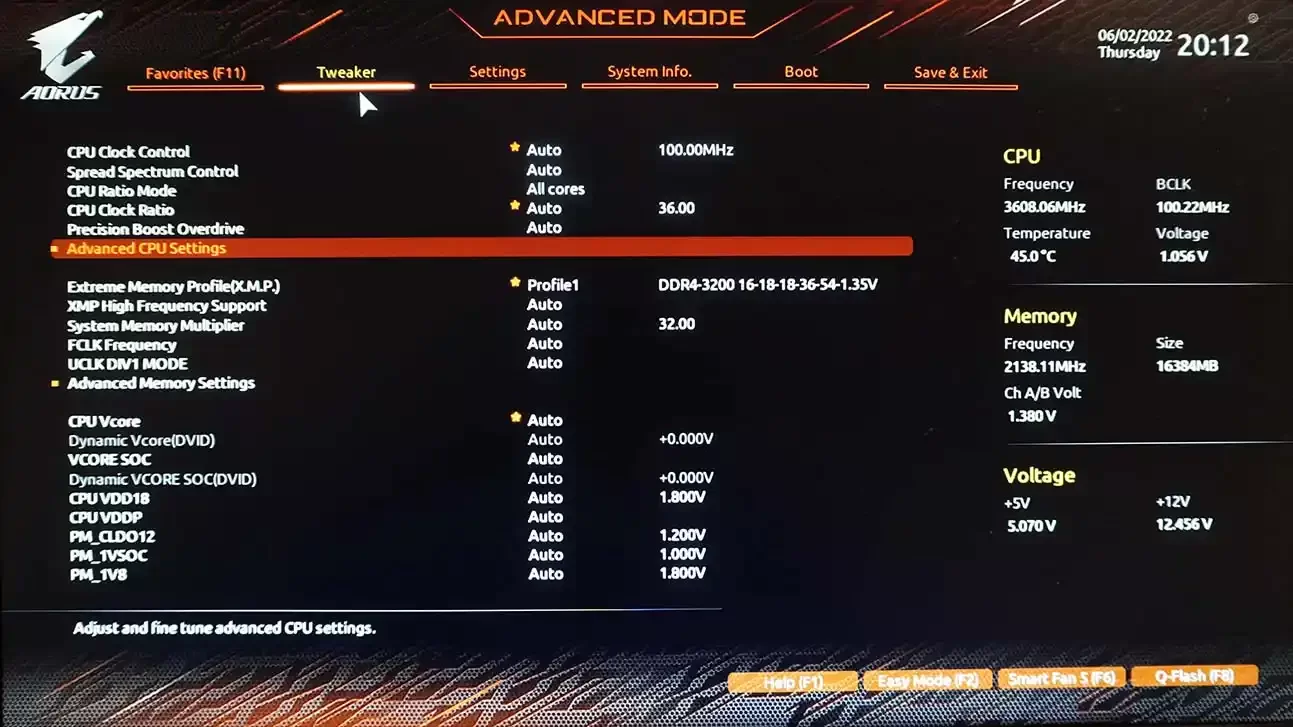
On the ASRock UEFI interface, you will find “CPU Configuration” under the “Advanced” tab. There you turn on “SVM Mode” or “Intel Virtualization Technology.” Some models also show extra options like “AMD fTPM” in the same menu.
Enabling Virtualization on Laptops: Lenovo, HP, Acer, Dell
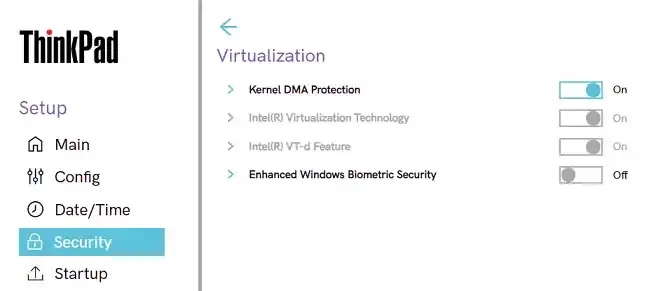
Laptop BIOS menus are more limited than desktops. But you can still find the setting. The table below lists quick paths by brand:
| Brand | BIOS Entry Key | Menu Path | Setting Name |
|---|---|---|---|
| Lenovo | F2 or Fn+F2 | Configuration → CPU | Intel VT-x / AMD-V |
| HP | F10 | Advanced → Device Config | Virtualization Technology |
| Acer | F2 | Advanced → CPU Config | Intel VT-x / SVM |
| Dell | F2 | Virtualization Support | Enable Intel VT-x |
Some laptop models have a very simple BIOS menu. In that case, download the latest BIOS from the maker’s site. The option may appear after the update.
Verifying Virtualization in Windows and Enabling Hyper-V
After the BIOS change, you should also verify on the Windows side. You can also turn on Windows features like Hyper-V.
First, review the current state. You have a few different methods for this. Task Manager is the easiest. But command-line tools give more detail.
Checking Virtualization with Task Manager and systeminfo
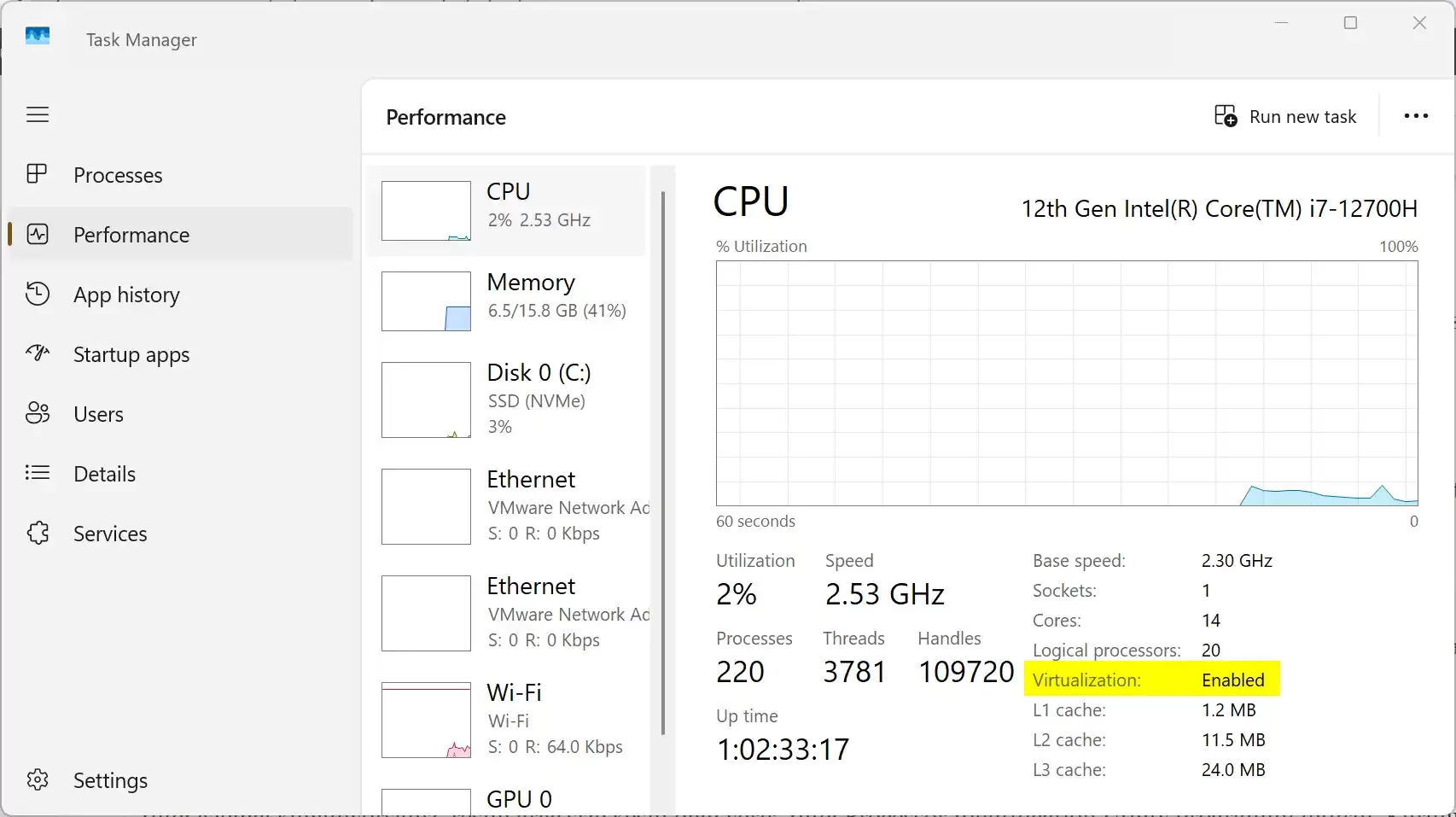
Press Ctrl+Shift+Esc to open Task Manager. Go to the Performance tab. Pick CPU from the left side. The bottom right corner shows “Virtualization: Enabled” or “Disabled.”
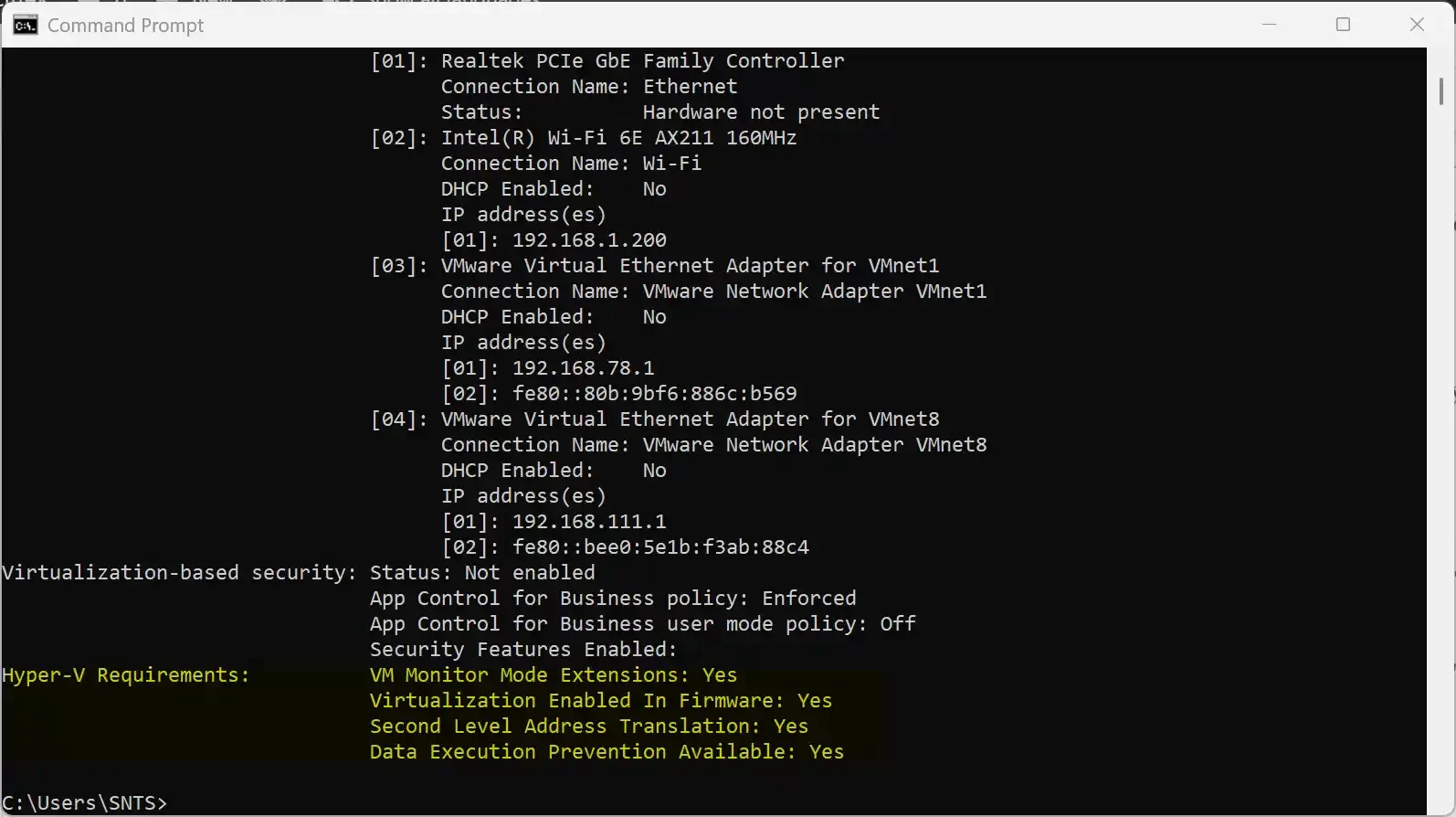
You can also run this command from the command line: systeminfo
At the end of the output, you will see the “Hyper-V Requirements” section. There you will spot “Virtualization: Enabled.” This confirms the BIOS setting is on.
Checking VT-x with Intel Processor Identification Utility
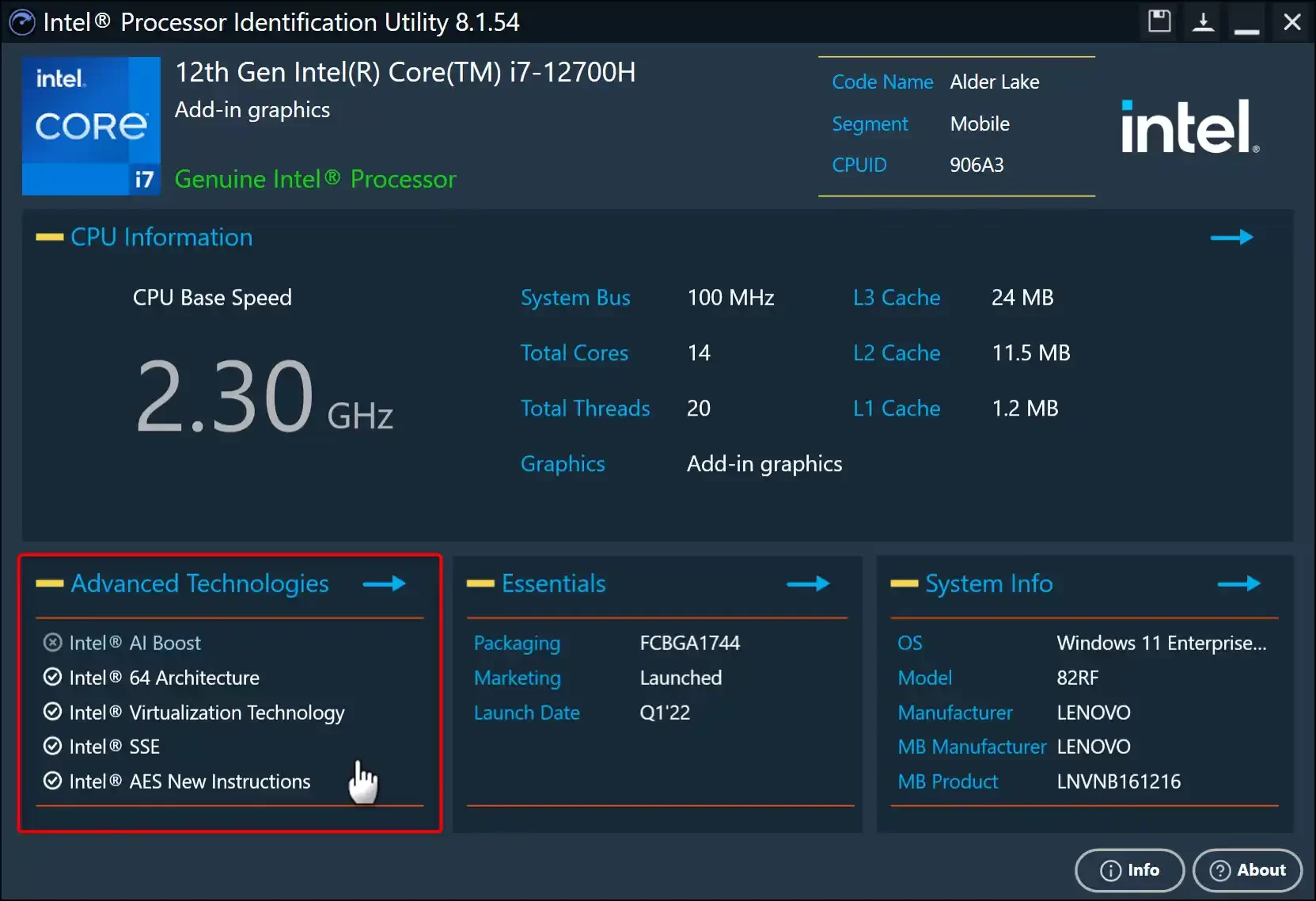
If you use an Intel CPU, the official tool gives you clear answers. Download the Intel Processor Identification Utility. Run it after installation. Then click the Advanced Technologies tab, as shown below.
This tool also shows whether your CPU supports the feature. If it does but the BIOS setting is off, the report says “No.” In short, review your BIOS settings again.
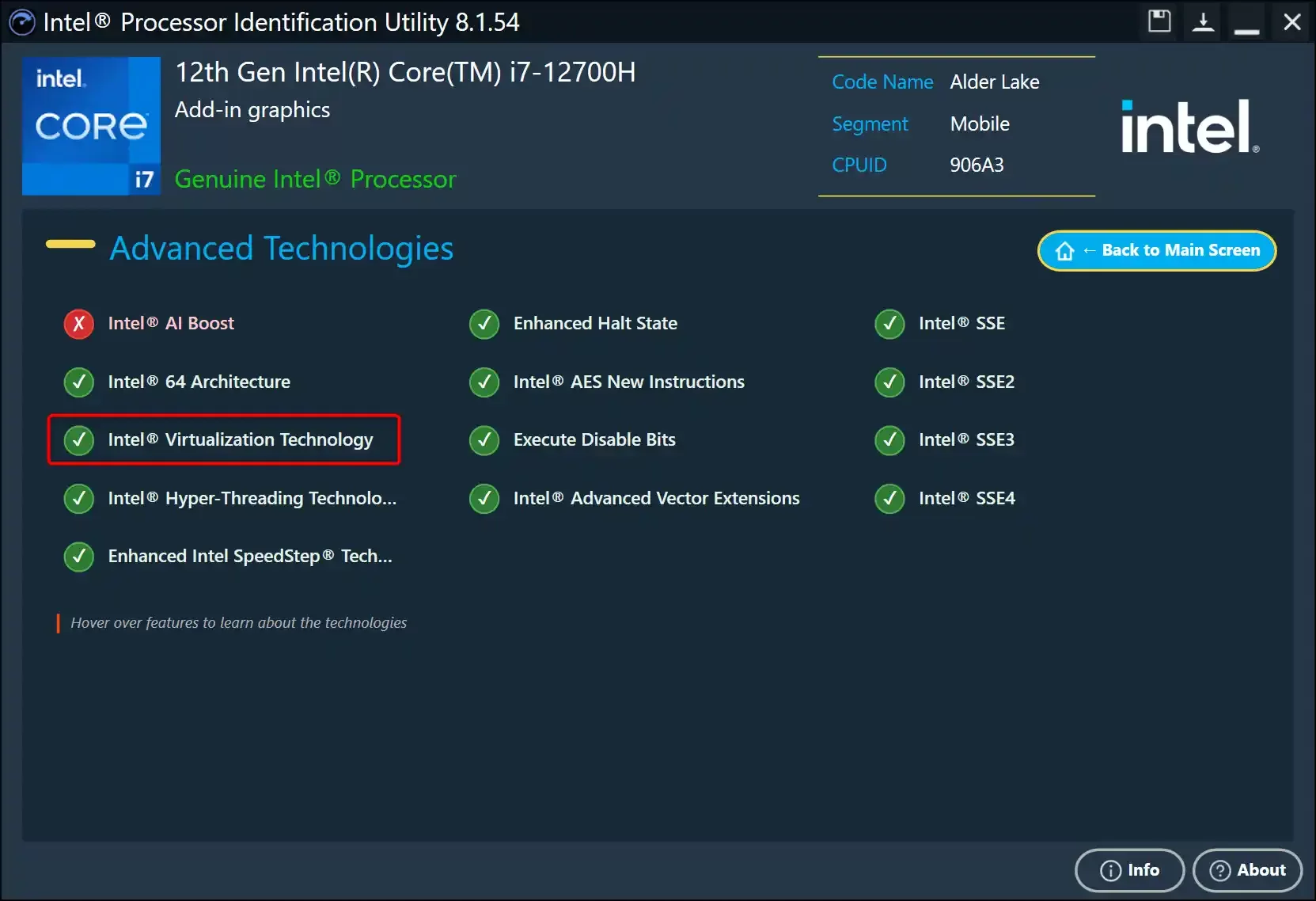
In the window that opens, make sure the “Intel Virtualization Technology” line has a check mark.
Checking Virtualization with AMD-V Detection Utility
A similar tool exists for AMD users. Download and run the AMD-V Detection Utility. The tool analyzes your system on its own. The result screen shows “AMD-V is supported and enabled.”
This tool also checks IOMMU support. So you learn whether you can do PCI passthrough. In my experience, this tool is very reliable.
How to Enable Hyper-V, Windows Sandbox, and Virtual Machine Platform
You turned on this feature in the BIOS. Now you can enable Windows features. Go to “Turn Windows features on or off” from the Control Panel. Check the following options:
- Hyper-V
- Virtual Machine Platform
- Windows Hypervisor Platform
- Windows Sandbox (optional)
After checking them, click OK. Windows installs the needed files. It asks you to restart. Reboot, and the features go live.
You can also do the same via PowerShell. Open PowerShell as admin. Run this command: Enable-WindowsOptionalFeature -Online -FeatureName Microsoft-Hyper-V -All
How to Fix Hyper-V Conflicts with VirtualBox/VMware
With Hyper-V on, VirtualBox or VMware may suffer performance issues. The Windows hypervisor locks the CPU. You have two options here. Either turn off Hyper-V or run VirtualBox in Hyper-V mode.
The simplest fix is turning off Hyper-V. Run this command in PowerShell: Disable-WindowsOptionalFeature -Online -FeatureName Microsoft-Hyper-V -All
Alternatively, recent VirtualBox versions can work with Hyper-V. But performance drops in every case. I usually turn off Hyper-V in test setups. This lets other hypervisors run at full speed.
Virtualization Errors and Fixes: ‘VT-x is not available’, ‘0x80370102’ and Others
You may run into various errors while enabling this feature. Most of these come from simple causes. Below I gathered the most common issues and their fixes.
VirtualBox and VMware users see these errors often. The message may be clear, but users still do not know what to do. Follow the step-by-step instructions at this point.
How to Fix ‘VT-x is not available’ Error
This error appears when VM software cannot detect CPU virtualization. Most of the time the BIOS setting is off. Follow these steps:
- Restart the computer and enter the BIOS.
- Find the virtualization option in advanced settings.
- Set it to Enabled and save.
- Try again in Windows.
If the error persists even with BIOS enabled, a Hyper-V conflict may exist. Turn off or remove Hyper-V. Then restart the system.
Some antivirus software also causes this error. Security tools running in kernel mode can block this tech. So turn them off temporarily and test.
Windows 11 Virtualization Error Code 0x80370102 Fix
You usually see this error during WSL2 or Windows Sandbox setup. The system says virtualization is off. Do the following to fix it:
- Turn on this feature in the BIOS.
- From Windows Features, enable “Virtual Machine Platform” and “Windows Hypervisor Platform.”
- Run this in admin PowerShell:
bcdedit /set hypervisorlaunchtype auto - Restart the system.
These steps fix the issue. If it still persists, do a BIOS update. Also, make sure your CPU supports it.
BIOS Shows Virtualization On But Windows Detects It Off
This situation is confusing. You set Enabled in the BIOS, but Windows says “Disabled.” These causes are common:
- You did not save the BIOS settings.
- Fast boot resets the settings.
- Hyper-V or kernel isolation conflicts.
- A dead BIOS battery resets settings.
To fix this, enter the BIOS again first. Check the setting and save. Then turn off fast boot in Windows. Also, temporarily disable Core Isolation (Memory Integrity) under Kernel Isolation.
If that does not work, replace the CMOS battery. On older boards especially, a dead battery resets settings.
Virtualization Performance Impact: Game FPS, Battery Life, Thermals
Many users think turning on this feature lowers game performance. This worry is largely unfounded. But some scenarios may have small effects.
First, let me state this clearly: enabling this feature in the BIOS alone does not cut FPS. The CPU supports it passively. But an active hypervisor raises resource use. That can affect game performance.
Does Enabling Virtualization Lower Game FPS?
No, not directly. This feature only enables CPU features when active. If no VM runs in the background, performance stays the same. It does not affect games.
But services like Hyper-V or WSL2 add extra load on the CPU when active. In that case, you may lose 1–3% FPS during games. However, you typically will not notice the loss.
In my own tests, average FPS in Cyberpunk 2077 dropped by 3 points with Hyper-V on. That is statistically insignificant. Still, for maximum performance, you can turn off the hypervisor for game sessions.
Effect on Laptop Battery Life and Thermals
Laptop users care about battery life. This feature itself does not drain power. But running a VM taxes the CPU more. That shortens battery life, of course.
The daily-use difference is minimal. If you do not keep VMs open, this does not affect battery. Modern CPUs also draw very little power when idle.
The thermal story is similar. This tech alone does not generate heat. But heavy VM workloads raise CPU temperature. So pay attention to laptop cooling. Adjust fan profiles if needed.
Virtualization Security: Risks and Protection Methods

This tech is double-edged in terms of security. On one side, it provides isolation. On the other, malware can use it. Now I will explain the risks and how to stay safe.
In general, turning on this feature does not harm your computer. But you should watch a few points. Old hypervisor versions may contain vulnerabilities.
Does Enabling Virtualization Harm Your Computer?
Absolutely not. Enabling this feature is a hardware-level change. It causes no software or physical damage. Your CPU already supports it. You only turn on a passive switch.
However, be careful with software you run inside VMs. A malicious guest OS can escape into the main system. So download virtual disk images from trusted sources. Keep your hypervisor software updated too.
Some users say this tech slows the computer. That is not true. Only bad configuration or excessive resource allocation causes issues.
Rootkit Protection and Core Isolation Connection
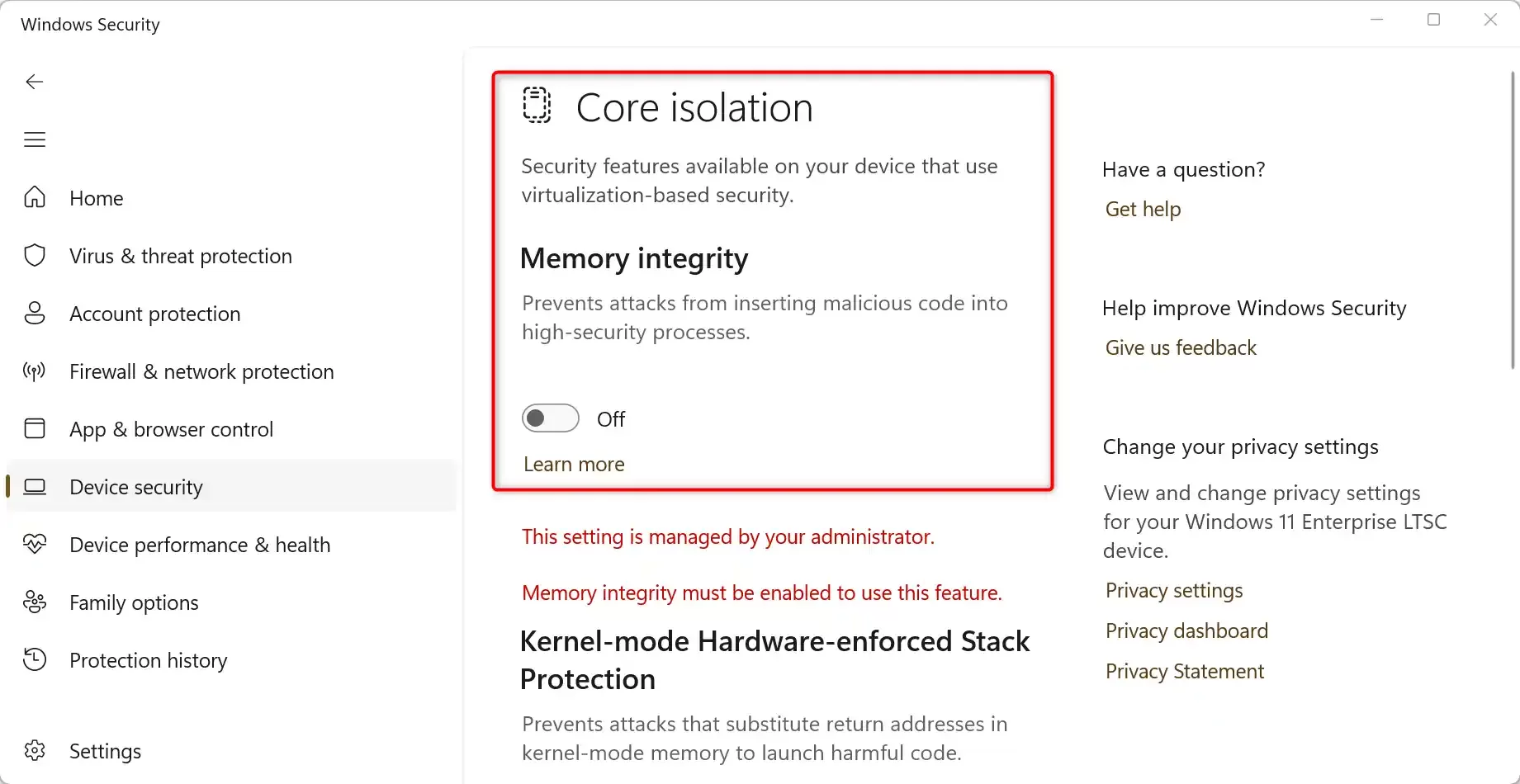
Modern Windows systems use this tech for security. Core Isolation and Memory Integrity give hypervisor-based protection. This makes threats like rootkits harder to execute.
But these features may conflict with some VM software. For example, VirtualBox can produce an error with Memory Integrity on. In that case, you can turn it off temporarily. But accept the security risk.
I usually keep Core Isolation off on dev machines. I leave it on for production systems. This balance gives both performance and safety.
Advanced: Nested Virtualization, IOMMU and PCI Passthrough
We have covered the basics now. Let us move to advanced features. This part is for experienced users. Curious readers can follow along too.
nested virtualization means running a hypervisor inside another hypervisor. IOMMU assigns hardware resources directly to a VM. These features matter most in server setups.
How to Enable Nested Virtualization
This feature lets one hypervisor run inside another. For example, you can install Hyper-V inside VMware. But you need both BIOS and software support.
On Intel CPUs, VT-x already supports nested mode. On AMD CPUs, SVM has this ability too. No extra BIOS setting is needed. But you must turn on nested mode in the hypervisor software.
To enable nested mode for Hyper-V in PowerShell, use this command: Set-VMProcessor -VMName "VMName" -ExposeVirtualizationExtensions $true
This command enables virtualization extensions for the VM you specify. So you can run another virtual system inside that VM.
IOMMU and PCI Passthrough: How to Do GPU Passthrough
IOMMU lets I/O devices be assigned safely to a VM. PCI Passthrough is the practical use of this. For example, you give a GPU directly to a guest machine. The guest OS then gets full GPU speed.
First, you must enable IOMMU or VT-d in the BIOS. Then follow the device assignment steps in your hypervisor software. Each tool has its own interface.
In my experience, GPU passthrough works best on Linux KVM setups. Windows Hyper-V supports it too, but the configuration is more complex. With the right steps, it works.
In-Depth Resources on Virtualization Technologies
BIOS settings are only a starting point. The real depth lies in how software and hardware interact. My guides cover this interaction from every angle and offer advanced direction.
- Intel Support – Does My Processor Support VT-x?: Official docs detail VT-x support on Intel CPUs and how to enable it in the BIOS.
- AMD Developer – Secure Encrypted Memory (SEV): AMD EPYC CPUs offer hardware-based memory encryption. The resource also covers advanced security features in depth.
- Microsoft Hyper-V – Native Hypervisor: Microsoft’s enterprise-grade Type-1 hypervisor, its performance benefits, and advanced technical capabilities are all explained in detail.
Most Asked Questions About Enabling Virtualization
Where is the virtualization setting in BIOS?
Does my CPU support virtualization?
How do I check if virtualization is on?
What if the virtualization option is missing from BIOS?
Does enabling virtualization slow down my computer?
What is the difference between Intel VT-x and AMD-V?
How do I fix blue screen after enabling virtualization?
Which programs need virtualization?
How do I turn off VT-x or AMD-V?
Is it safe to enable virtualization on laptops?
Conclusion: Expert Advice for Your Virtualization Journey
Asking how to enable virtualization is no longer scary for you. You can enter the BIOS and find the right option. You can also verify in Windows. So you can handle error messages.
My final advice is this: take notes before changing settings. That way you can roll back if needed. Keep the BIOS updated too. Maker updates usually add new features.
Try it, test it, and build your own scenario. This tech gives you huge flexibility when used right. Now restart your computer and take the first step!

Be the first to share your comment