

In this article, I’ll explain what the PAL format is and its main parts. I will also highlight its good points and demonstrate how people use it in different areas. I’ll also give a simple check comparing it with other systems. Finally, we’ll take a clear look at why it matters in TV tech.
Knowing TV code systems is very important. It matters for both workers and regular viewers. Because this knowledge changes how good the picture is, it also helps to see and fix problems.
The PAL (Phase Alternating Line) system is a well-known way. We use it mainly to send old-style color TV signals. The system is popular because it gives significant benefits compared to other ways.
They first developed PAL in the early 1960s. It gives better picture quality than the older NTSC system. They also designed it to reduce color changes. Therefore, we know it has found widespread use.
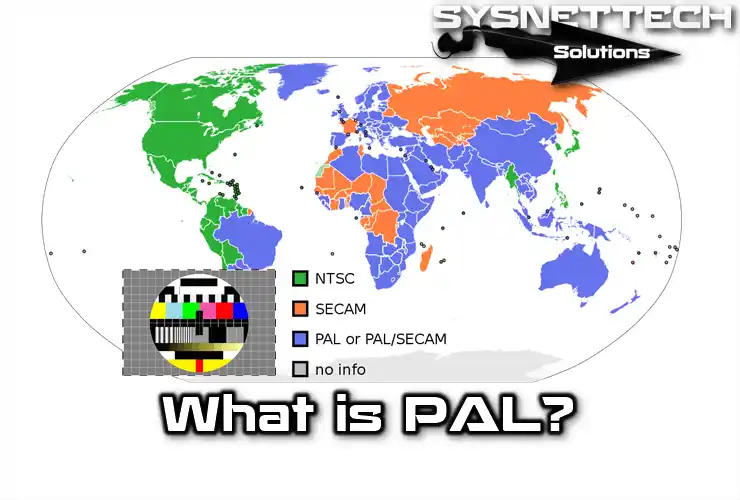
What is PAL Video Format?
The PAL format stands for Phase Alternating Line. We use this system for old-style color TV signals. It’s mainly a coding way used in sending signals.
Many countries use the PAL system. It is very common in Australia and some countries in America.
Many countries in Africa, Asia, and Europe also prefer it. Dr. Walter Bruch developed the PAL format in 1963.
He made changes at Telefunken Labs to make NTSC colors better. It also tried to lower the color mistakes. However, the main ideas of sending signals come from NTSC.
What are the Features of PAL Format?
The PAL format sends color data by changing the line phase. It corrects phase errors by itself when they take place.
Phase errors often happen in radio from signal delays. In a video, these errors can change colors and make the picture look bad.
But the receiver fixes color errors by using nearby lines. This cuts down on color flaws that are less clear than color shifts.
Therefore, PAL is better than NTSC because PAL lines shift phase, making PAL more complex. Initially, humans relied on our eyes to correct phase errors. You could easily see errors greater than 5° if you didn’t fix them.
PAL’s brightness signal keeps the color data with a delay of about 64 microseconds. This means the screen shows the average color of two lines.
The first devices that added delays were costly, but later they became cheaper. This method gave PAL less color detail up and down than NTSC. But our eyes see less color detail anyway.
NTSC TVs need manual color control. Technically, NTSC works better than PAL. But it requires a perfect signal to work right, as phase shifts break it.
PAL excels at signal jumping, which is why many countries in Europe widely use it. Europe has a more complex landscape than North America. Furthermore, while local TV channels are common in the US, they’re not as common in Europe.
The only thing NTSC has better than PAL is its refresh rate. So it prevents flickering on large screens.
NTSC & PAL Format Comparison: Let’s Learn the Differences!
1. Basic Technical Ideas
The United States created NTSC in the 1950s. People used it a lot, mainly in North America. People also liked it in some parts of South America.
Its key features include a frame rate of 29.97 fps. It also gives 480i split-frame resolution. That is, it translates to a total horizontal resolution of 525 lines.
The PAL format started in Western Europe. So, they used more in Europe. People also use it in Australia and some parts of Asia. The format works at 25 frames per second. On the other hand, it gives 576i resolution, giving 625 horizontal lines.
The better resolution makes PAL a lot better. It is a clear win, mostly on bigger screens. People like it more as it looks sharper than NTSC.
2. Color Coding
The most significant change from NTSC to PAL is the color. NTSC uses its own way to make colors.
This way can cause issues with weak signals. It also makes colors change in unset content.
So, color ghosting or bleeding can happen. This also hurts the watching experience.
PAL’s color system has fewer possible issues. It changes the phase of the color data. So, it removes the mistakes that make the color look wrong.
This means a weak signal hurts it less. It also gives a much clearer, steadier picture.
3. Effects of Location
The places that use NTSC and PAL matter a lot. It changes how the world watches media. For instance, NTSC stuff can have issues on PAL sets. This can cause problems when the two try to work together.
This mismatch can upset people who watch. It is a big problem with region-locked DVD and Blu-ray players. People who want to watch movies or shows from other countries may have trouble. But videos of different types may not work either.
Many new devices have started to push beyond the limits. For example, smart TVs and DVD players support dual standards. They can generally play both NTSC and PAL without any issues.
This makes watching shows from other countries easier. However, not every device can do this. In short, buyers should check the technical details before they buy.
| Feature | NTSC | PAL | Comments / Practical Results |
|---|---|---|---|
| Origin / Use | North and South America, Japan | Western Europe, Australia, Turkey, and most of Asia | Geographic distribution based on power grid frequency (60Hz/50Hz). |
| Frame Rate (fps) | 29.97 | 25 | Movies are played back at a 4% speedup in PAL (PAL Speed-Up). |
| Resolution | 525i (480i) | 625i (576i) | PAL provides higher resolution (576 > 480). |
| Color Encoding | Color tone adjustment is left to the viewer | Color phase is automatically corrected | PAL provides more stable and accurate colors. NTSC is often called “Never the Same Color.” |
| The Modern Situation | Universal standards like HD (720p/1080p), 4K UHD, and digital broadcasting (YouTube, Netflix) have replaced these older formats. Multiregion devices solve the compatibility problem. | ||
What are PAL Formats?
The color system commonly uses 625 lines per frame. It also has a refresh rate of 25 frames per second. So, I’d say the format is relatively standard.
Some Eastern European countries have left the SECAM system. Instead, they chose PAL-D or PAL-K. These systems keep some technical parts of SECAM. They also changed them to work with the PAL format.
In Brazil, they use the PAL-M system. The system has a 525-line version and operates at 29.97 frames per second. In fact, its color signal is almost like NTSC.
Anatel is Brazil’s phone and TV regulator. It started using its own standard in the early 1970s. It mainly wanted to stop importing color TVs. In addition, it also wanted to work with black-and-white TVs.
NTCS System in the 60s
In the 1960s, the country conducted NTSC tests. However, they had problems sending the signal far away. This caused the color quality to drop. As a result, the system did not work as planned.
All other countries use the M standard for black and white. They also prefer NTSC as their color system.
You can find the system in Argentina, Paraguay, and Uruguay. It uses a standard 625-line system. However, it is like the NTSC system with a color signal near NTSC’s frequency. Systems like this are also called PAL-N and PAL-CN.
In some South American lands, video equipment makers give three types of sets. These are NTSC-M, PAL-M, and PAL-N.
New TV receivers in Europe can do many things. They can seamlessly display signals from all these systems. In this respect, they provide great convenience for TV viewers.
Most TV sets use French-made parts. But, they can usually get SECAM signals from outside France. In fact, they can read signals from East Europe and the Middle East.
Many can even show video player and game console signals. They mainly handle baseband NTSC-M signals through their video ports. That’s why they offer such versatile use.
Pros and Cons of PAL Format Compared to SECAM Format
The PAL (Phase Alternating Line) format is standard worldwide. However, if we compare it to the SECAM format, we can see differences.
For example, France and Eastern Europe mostly use SECAM. Both formats have strong points. They also have weak points.
1. Advantages of PAL over SECAM:
- Color Staying the Same
The PAL format has a main strength: it gives steady colors by fixing phase mistakes. As a result, you see colors that stay the same. Also, it cuts down on signal errors. This benefit is possible because of the phase-shifting system.
- Higher Resolution
The PAL format typically has a resolution of 720×576 pixels. So, it is better than SECAM for picture detail. It also gives more pixels, making for better image quality on big screens. This difference is easy for viewers to see.
- Works with Many Devices
It works with more types of equipment. So, users will have less trouble getting to media.
This also cuts down on fit problems. That is, devices made for PAL often can also handle SECAM signals.
2. Disadvantages of PAL over SECAM:
- Hard to Use
PAL’s color fix gives better color. But using it adds some difficulty.
But this is a problem, mainly in places with basic systems. So, it means sending costs can go up, and home gear costs more.
- Not Many Color Shades
PAL gives steady colors. If we compare it to SECAM, we can see that it has limitations.
Also, it has some limits in color depth. SECAM, though, shows more color facts as it uses a special code method. More often, it is helpful for art shows and movies.
- Easily Hurt by Bad Signals
Signal loss over long distances easily hurts it. As a result, it can break the watching experience.
SECAM stays the same in places where signals change. This is why it takes a different approach to color signal transmission.
What are the Main Benefits of Digital TV Compared to Old Systems Like PAL & NTSC?
Digital TV is much better than the old ways. In particular, it is better than analog systems like PAL and NTSC.
1. Enhanced Image & Sound Quality
Video and sound are changing how we watch TV. Its best part is a better picture. It also makes the sound quality much better.
Digital signals send high-grade video. They are sharper than old-style ways. They also give more quality pictures. And they also offer better sound. With this, watching is much better.
2. Efficient Bandwidth Usage & More Channels
Digital TV uses bandwidth well. Thanks to digital compression, it can show more channels.
Many channels can fit in the same frequency range. This is a big win over analog systems. This way, it gives viewers more choices of content.
3. Enriched Viewer Experience
Using bandwidth better helps viewers. First, it gives access to more channels. It also lets us watch on-demand content. We can also use interactive features. In short, watching TV becomes much better.
Digital TV works better. It also makes getting a signal much nicer. Old signals get worse with space. So, it causes ghosts and noise issues.
Digital signals stay good until a set point. When the signal fades, we see a sharp stop, not a slow fall. This gives watchers a more even time.
4. Advanced Features & User Control
On the other hand, digital TV gives advanced features. For example, it shows electronic program guides (EPGs). It also works with subtitles and more than one audio track.
These features make the user experience much better. As a result, we have more control over watching content.
5. Multi-Device Integration & Accessibility
Last, digital TV works with new devices. For one, it pairs well with phones and tablets. It also runs great on smart TVs.
It lets you watch from anywhere. On the one hand, it fits well with online trends. In short, we can watch content from many devices.
All in all, the move to digital made watching better. It also opened the door for new TV tech. It is good to see this change keep going. So both the picture and our access got even better.
How PAL & NTSC Work with Modern Devices
In TV and video, two formats were most common: PAL and NTSC. Their beginnings, of course, go back to the mid-1900s. I would also say that the technology limits of that time strongly shaped them.
But tech gains have changed all things. Also, how old types work with the new device is a key point.
1. Old Differences
First of all, they use the NTSC format in North & South America. The format is 29.97 frames per second. It is also 480i resolution.
On the other hand, the PAL format is standard in Europe and Australia. PAL runs at 25 frames per second. Finally, its resolution makes 576i different.
Fundamental changes have always made fit issues. Most of all, with new digital media, the tests are bigger. This is because digital media uses new signal tech.
2. New Devices & Fit Problems
Today’s digital world has made many new devices. For one, smart TVs and streaming sticks are some. Game consoles are part of this, too.
They also design most of them to work with many video types. However, working with all types can still be hard.
Almost all new TVs have these formats. For example, they include HD and 4K. But the older PAL & NTSC formats are not the same. The way they play them changes with each device. It all depends on how the makers build them.
For instance, many new TVs have parts inside. These parts change the video right away. People can watch older movies. This is especially true for DVDs with PAL or NTSC.
They can also play VHS tapes. But smooth playback is not sure. Because people may see delays and moving pictures, they might even find that it does not work at all.
3. Publishing Services and Types of Files
The growth of online movies changes the talk. For example, sites like Netflix and Amazon Prime Video use regular digital files.
In fact, they have converted them from PAL and NTSC. They use international formats like 1080p and 4K. So, as long as we connect to the Internet with our modern device, we should have no problem.

From the other side, the original format does not matter. Because of that, it can show the content with no playback problems.
However, you should be careful if you have old content in physical formats. For example, there are DVDs or videotapes. If you have these, you will need external devices.
Multi-region DVD players are helpful. You will also need video changers. In short, it will be easier for you to play old videos on new screens.
4. Impact of HDMI & Other Connections
We all know that HDMI connections are now universal. We have less and less need for PAL and NTSC distinctions.
Because HDMI can send digital signals easily, also, the type of the source does not matter. But our old devices can still work with the new system.
But we may have trouble linking our old devices. Picture size and shape can be hard. Because changing the signal is not enough, the changes in picture quality will stay.

Looking at the Digital System
The PAL video format is entirely analog. In the 1980s, they tried to make the signal digital. But the devices did not sell well. So, the project did not reach the expected results.
We use digital TVs in new devices. For example, I can say that game consoles and computers now use the system.
They usually send the color parts with three wires. We call the signals R, G, B, or Y, RY, BY. In short, we see that picture quality has gotten much better.
What Causes Flicker in PAL Systems and How Can We Reduce It?
Flickering is a typical problem in TV systems. Primarily, we sadly see this technical issue with PAL formats.
Flickering can really hurt our watching experience. But it is vital to know the cause of the problem. If we can lower the flicker, we can make the picture quality better.
1. Find the Sources of Tremor
1. 1. Signal Interference
Flicker is often from problems in the TV signal. Outside electrical noise is a usual reason.
For example, computers and microwave ovens cause this. Wi-Fi routers also add to it.
Machines can mess up the TV signal. You will see this problem as flickering on the screen. It is very clear whether the TV reacts to frequency changes.
1. 2. Bad Connections
Loose or broken cables are another cause of signal issues. It happens often in PAL systems because these systems use coax cables.
We also use SCART plugs. Really, broken parts or bad links also cause noise. So, they can make the screen flicker.

In fact, you should check the connections regularly. Plus, changing old cables can help keep the signal steady.
1. 4. Power Supply Issues
Power changes can also affect how it works. Basically, this involves the TV and its parts.
PAL systems need a steady beat. Because of this, power changes cause issues. For instance, untimely refreshes can cause a flicker.
Moreover, you can also see frame drops. This is common with older TVs. Because they cannot handle power changes, they do not work as well as new ones.
1. 5. Insufficient Renewal Rate
A PAL system usually has a refresh rate of 50 Hz. The speed is necessary for a stable image. In particular, the lines change every 20 milliseconds.
But problems can happen if the refresh rate is set wrong. For example, conflicts appear at different frame speeds, like 24 fps.
In fact, the refresh rate can lead to noticeable flickering. You may also need to adjust the TV settings because the settings change depending on the content.
1. 6. Screen Settings
Settings like brightness and contrast can make flicker worse. Very bright screens are especially a problem.
This is more pronounced in dark scenes. Because of this, the perception of flicker may occur. It is critical to set these settings correctly.
2. Use Ways to Reduce Vibration
2. 1. Check and Secure Connections
Look at all the TV cables often. Make sure they are tightly connected.
Replace damaged or old cables as an extra. Keep the wires far from things that cause interference. This way, you can make the signal much better.
2. 2. Optimize the Power Supply
Surge protectors help keep the voltage steady. UPSs also work well for this. So, the chance of power-made vibration is lower because these devices keep the TV safe.
If you see vibration, act right away. First, switch off other high-power devices.
2. 3. Match Refresh Rates
Check your settings when watching from various sources. For instance, DVD players and online boxes matter.

The devices must be compatible with the PAL screen speed. That is, they must match the refresh rates. Some new TVs do this by themselves. However, older models may not have this feature. In that case, you may need to make manual adjustments.
2. 4. Calibrate Display Settings
Built-in calibration tools can help you. Especially, you can adjust brightness and contrast. What’s more, you can also optimize color settings.
Many TVs have ready-made modes. These settings change by themselves to fit the show. As a result, they lower the chance of flicker a lot.
2. 5. Use Quality Equipment
Buy good-quality TVs. Also, use good cables and parts. This way, you can lower the vibration a lot.
OLED screens, for example, are perfect for this. High refresh rate LCDs are also good. Because of this, these techs use new picture handling, which cuts breaks even more.

Frequently Asked Questions About PAL Format (FAQ)
- What does PAL format mean?
- Which is better, PAL or NTSC?
- How do I know if my TV is PAL or not?
- Is PAL still in use?
My Final Thoughts on PAL
All in all, the PAL video format is a necessary standard. In particular, it has proven itself in the broadcasting world. Europe uses this kind the most. It is also valid in Africa and Asia. In fact, they continue to use it in parts of South America.
PAL uses a special way to send color information. This phase-change system solves old problems. That is, it makes watching much better. But it also has some bad points. For example, it can make our eyes tired. On the other hand, it can also make flicker appear.
NTSC gives benefits in moving picture processing. Also, refresh rates are fast. But PAL has a stronger signal quality. So, it is safer in many conditions. Also, it can fit regional needs. In this way, it remains vital in TV technology.
When moving to digital formats, it is crucial to know old systems. This is not only about liking the technology. In other words, you need it to work with modern devices.
Digital systems keep changing. So, analog formats may become less used. But PAL’s impact will still stay. Also, its use will continue. In short, its role in TV history is permanent.

Be the first to share your comment