

In this article, I will teach you how to make a Host-Only network for virtual machines in VMware Workstation Pro. Specifically, this setup lets your virtual PCs talk to each other and to your main computer. But they cannot connect to any outside networks.
We will also check that the VMs are connected by doing a few tests. So, you will make sure everything is set up and working right.
Now you will learn how to change your LAN settings to fit what you need for your virtual computers!
Why Do We Configure Host-Only Networking in VMware?
In our past articles, we looked at other network types for VMware. We talked about the Bridged and NAT settings. Now, we will talk about the Host-Only network. In fact, it is actually very different from the other two.
The main reason to set up this isolated LAN is simple. First, it makes sure virtual machines can only talk to each other. This way, it means they are totally separate from any outside LANs.
For example, suppose you have two machines named Client1 & Client2 on VMware. Let’s say you configured the network settings of these machines as Host-Only. As a result, you will see that your devices can only communicate with each other.
As a result, your VMs on the Host-Only network are alone. Because of this, they cannot reach your physical area. Also, they cannot get to the Internet.
How to Use Host Only on Virtual Network Editor Software
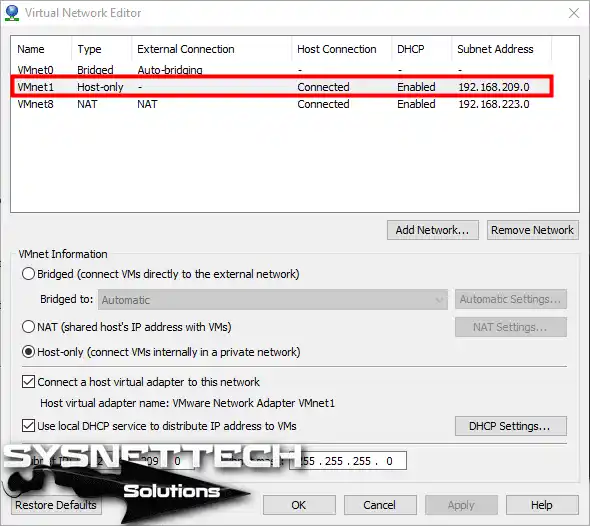
When you first install VMware, the Virtual Network Editor shows up. You will see that the settings here are usually in their default state.
Look at the settings in the Network Editor. Here you will see that VMnet1 is set to Host-Only by default. Now you should open the two machines you created earlier.
How to Configure a Host-Only on VMware Workstation
Now, you will create a custom LAN in VMware Workstation. Therefore, you must follow the advanced steps below in order.
1. Configure Host-Only on Your VMs
Step 1
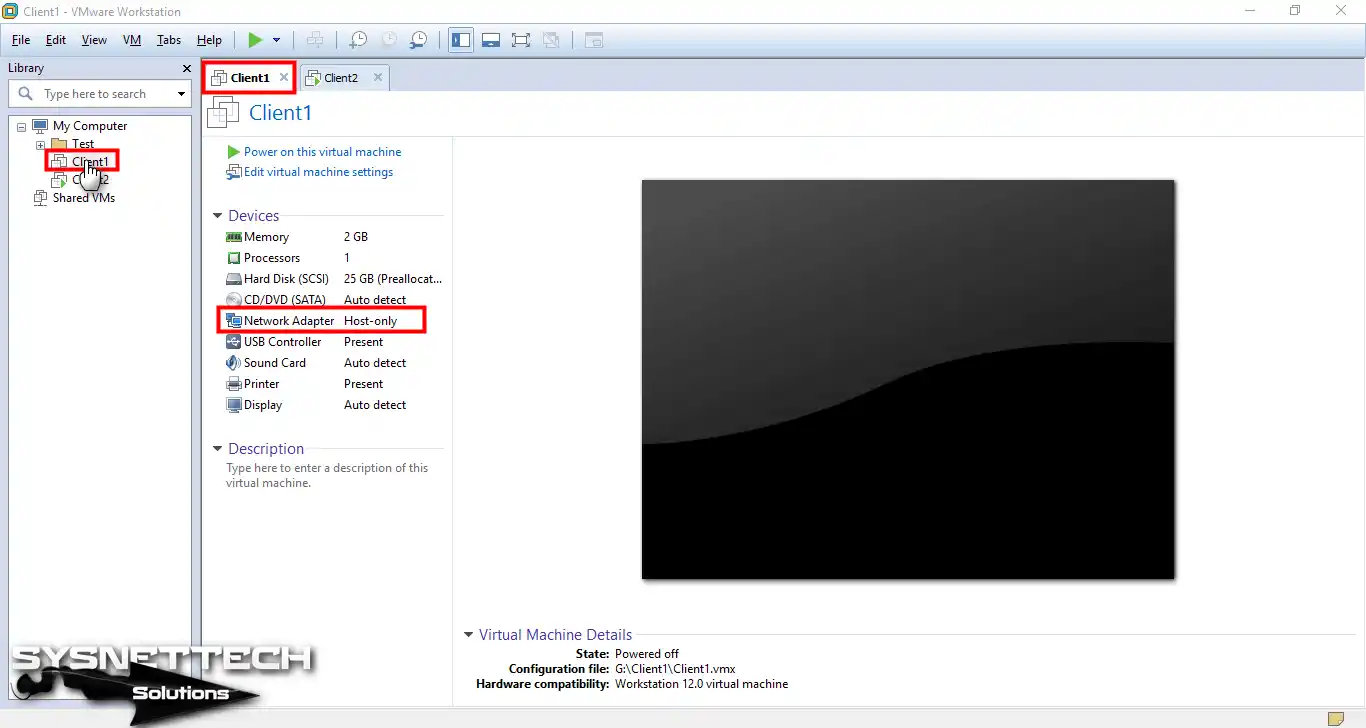
Click the Adapter to configure the Client1 machine.
Step 2
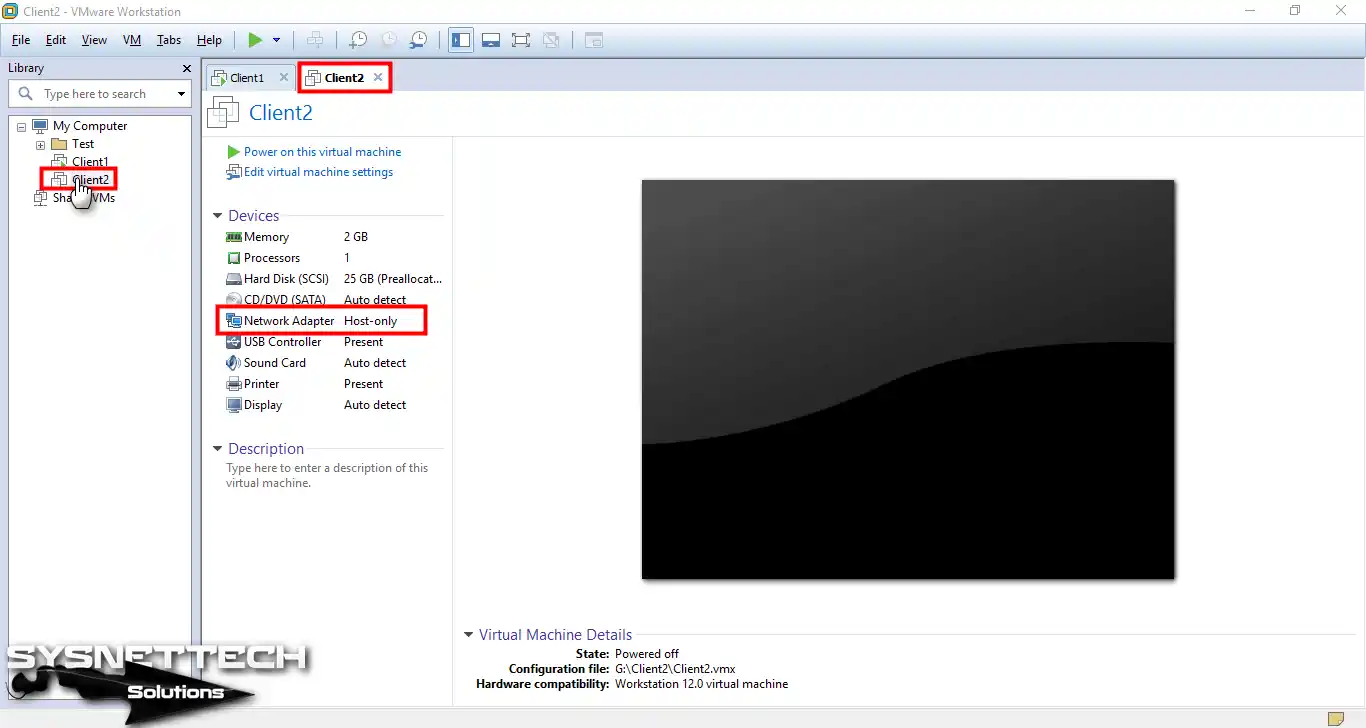
Also, set up the other machine named Client2. After that, start the machines after you set the adapters for both of them.
Step 3
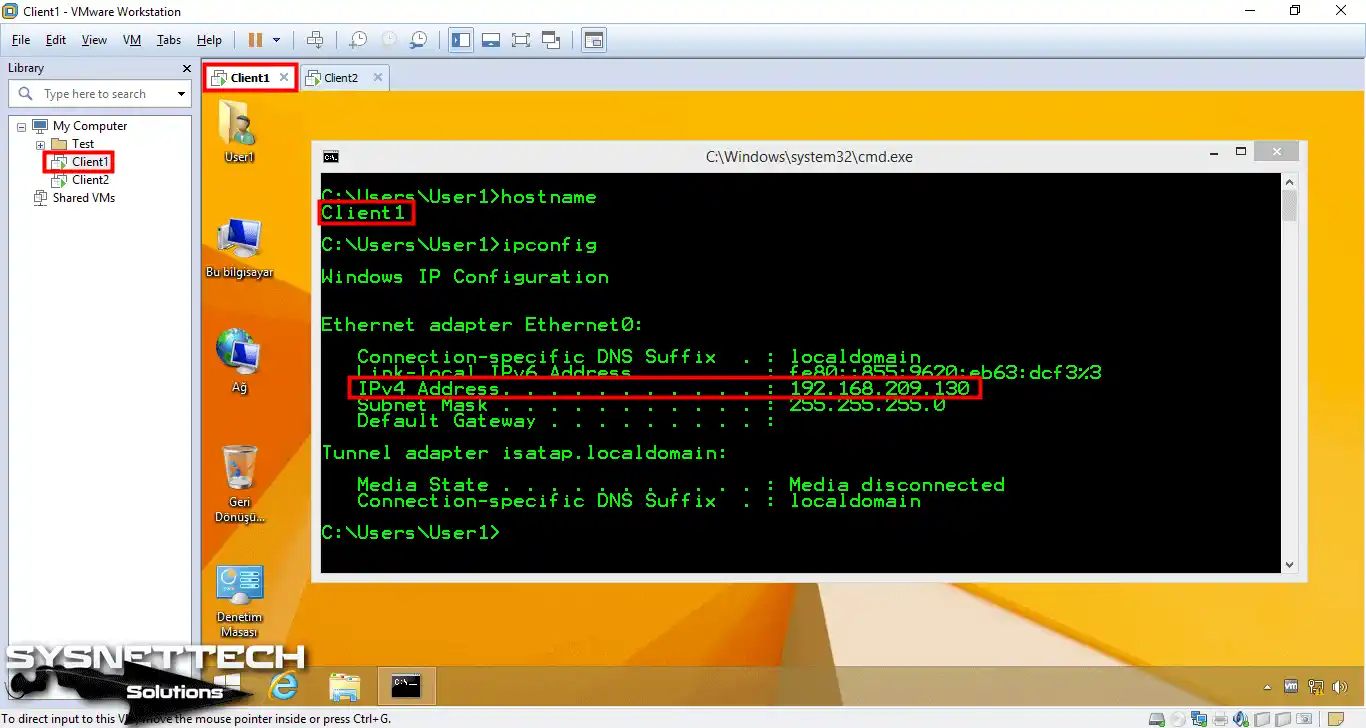
Open CMD to check the IP address of Client1. Then, type ipconfig into the command prompt. When you examine the image, you will see that the system assigned the IP number 192.168.209.130 to the machine.
Step 4
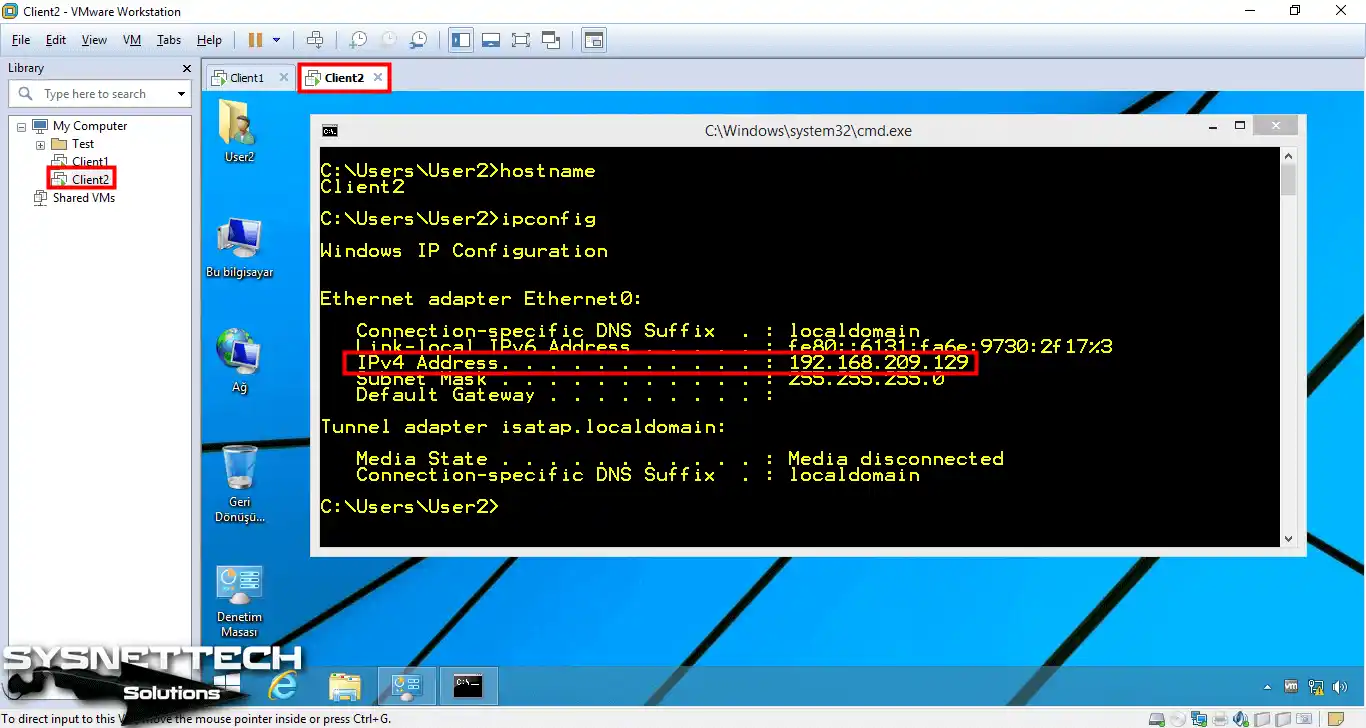
Similarly, the IP assigned to the Client2 machine is 192.168.209.129.
Step 5
As you can see, the Client PCs have obtained IP addresses. They actually obtained these addresses from VMnet’s default block. VMware’s local DHCP service ran for this purpose.
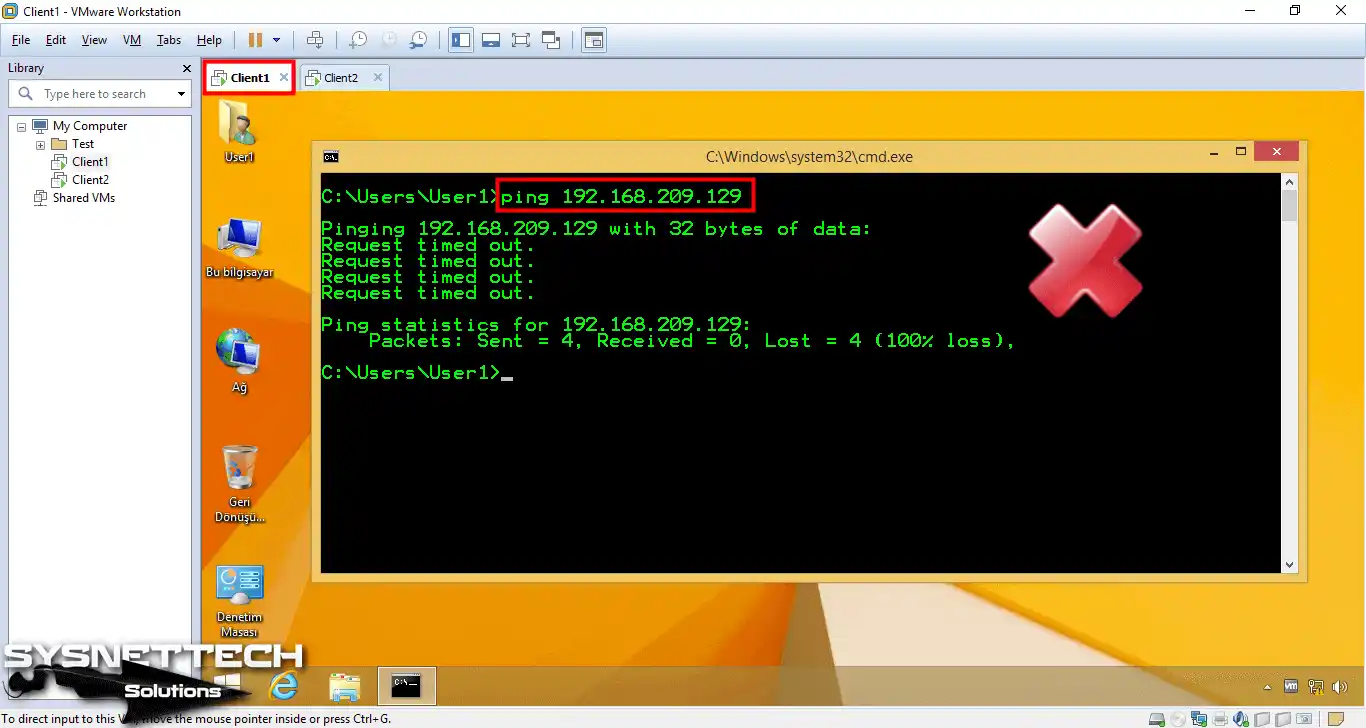
Test the LAN connection by pinging from Client1 to Client2.
Step 6
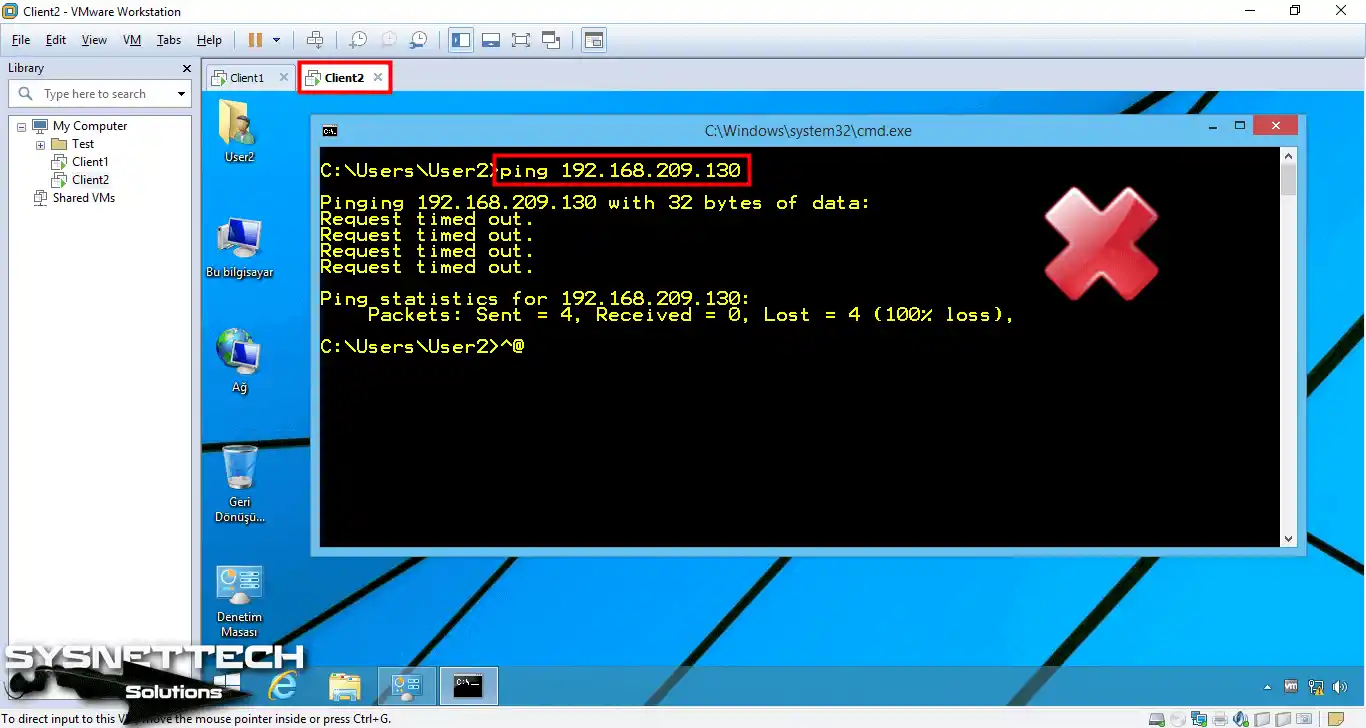
Likewise, Ping from Client2 to Client1’s machine.
Step 7
Since the ping did not work, you should look at the Windows Firewall. First, open the Control Panel, then click on the Windows Firewall area.
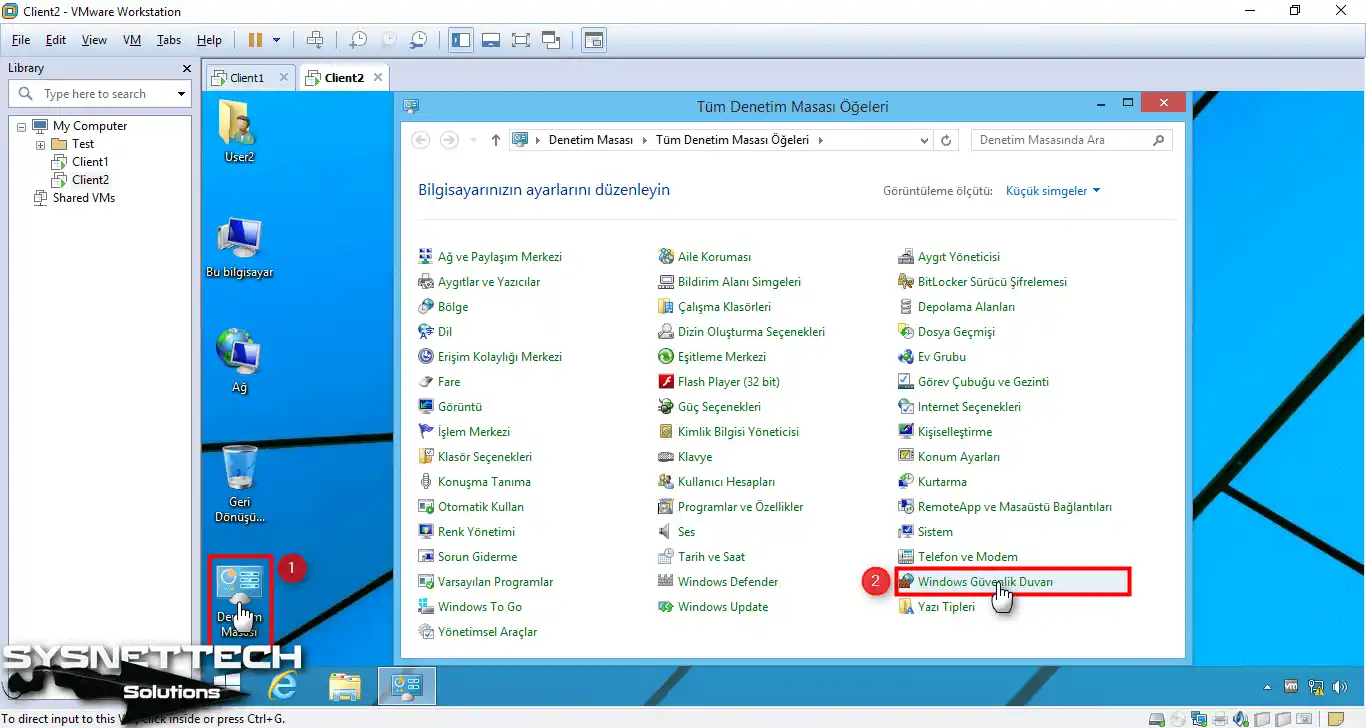
Step 8
After you open the Firewall window, you need to click on one choices. So, next, you should pick “Allow an app.”
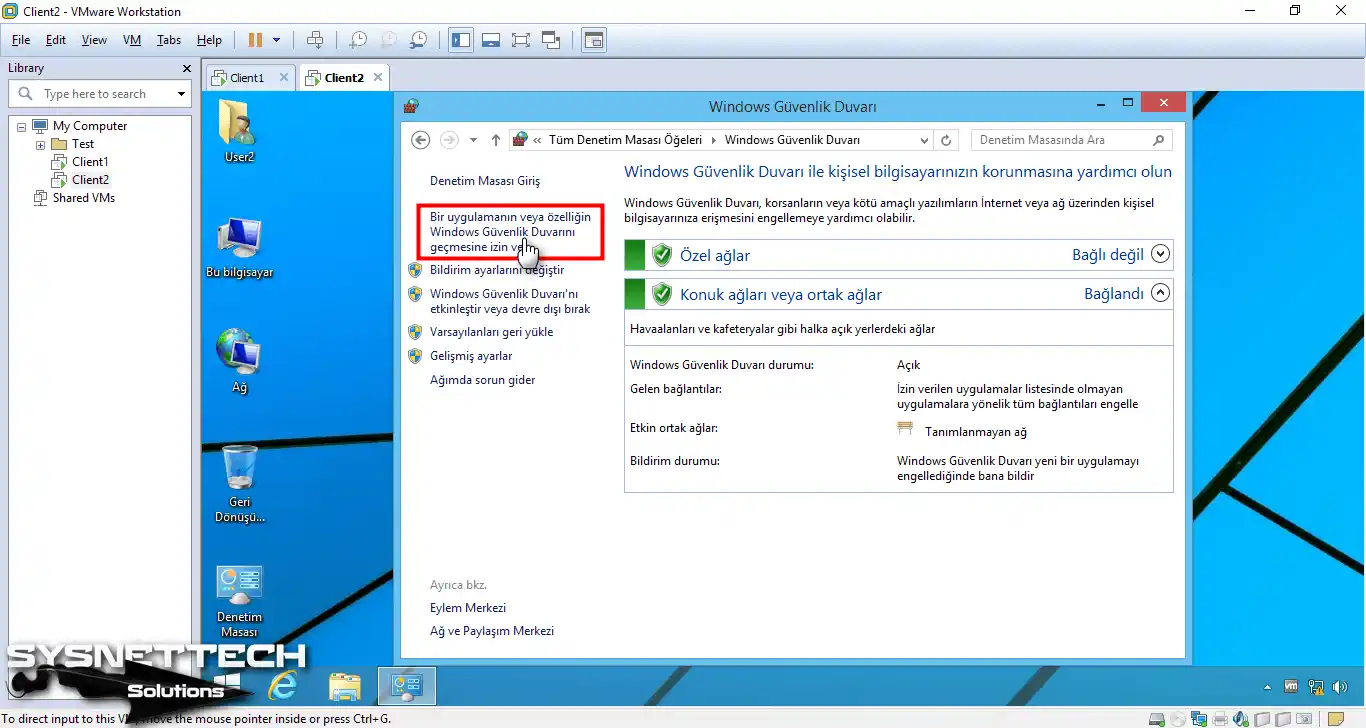
Step 9
If you do not have administrator rights in the window that opens, click Change Settings.

Step 10
Select File and Printer Sharing for both Private and Public networks.
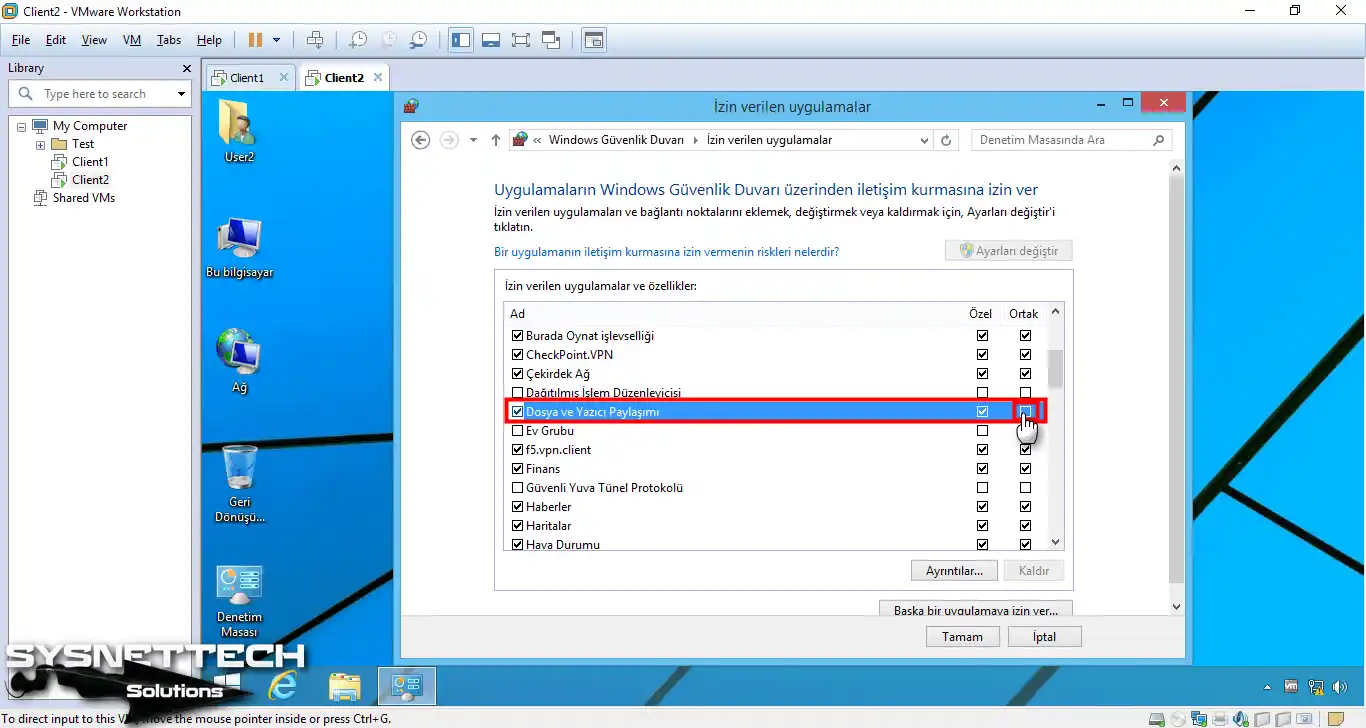
Step 11
After you fix the allowed apps, click OK to close the window.
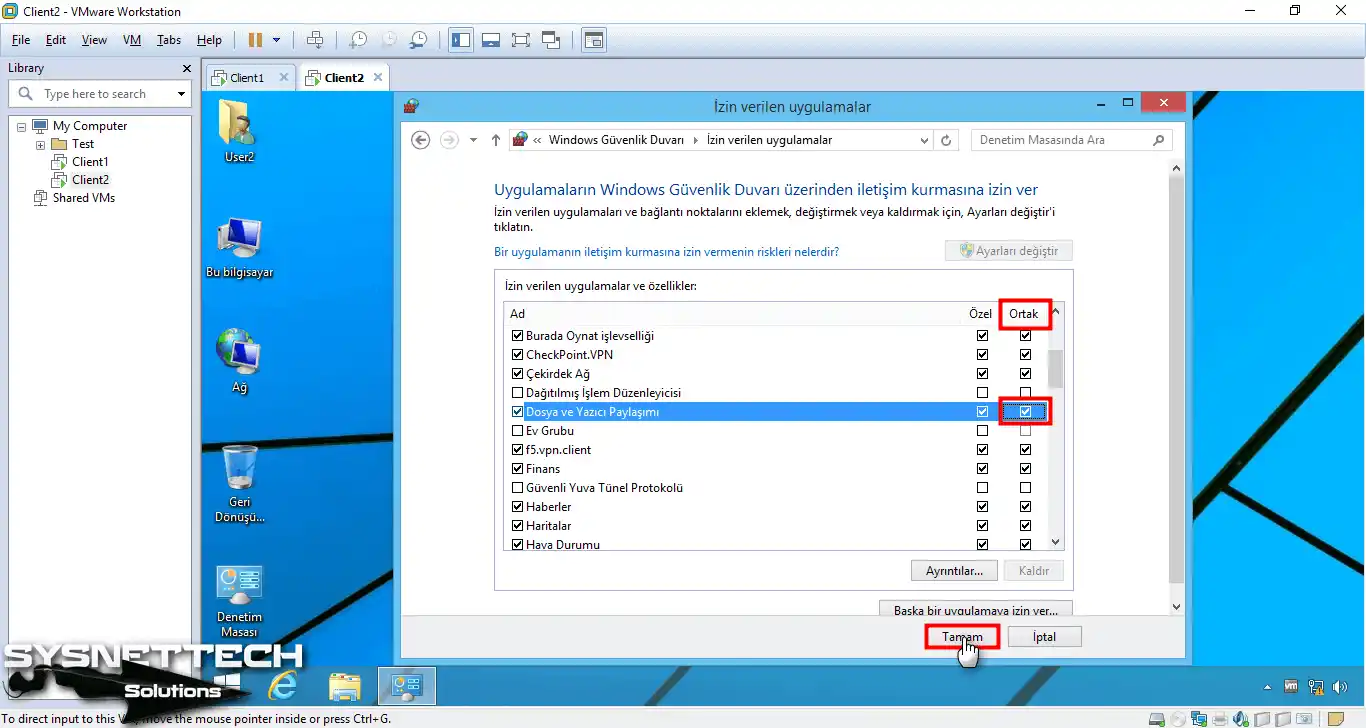
Step 12
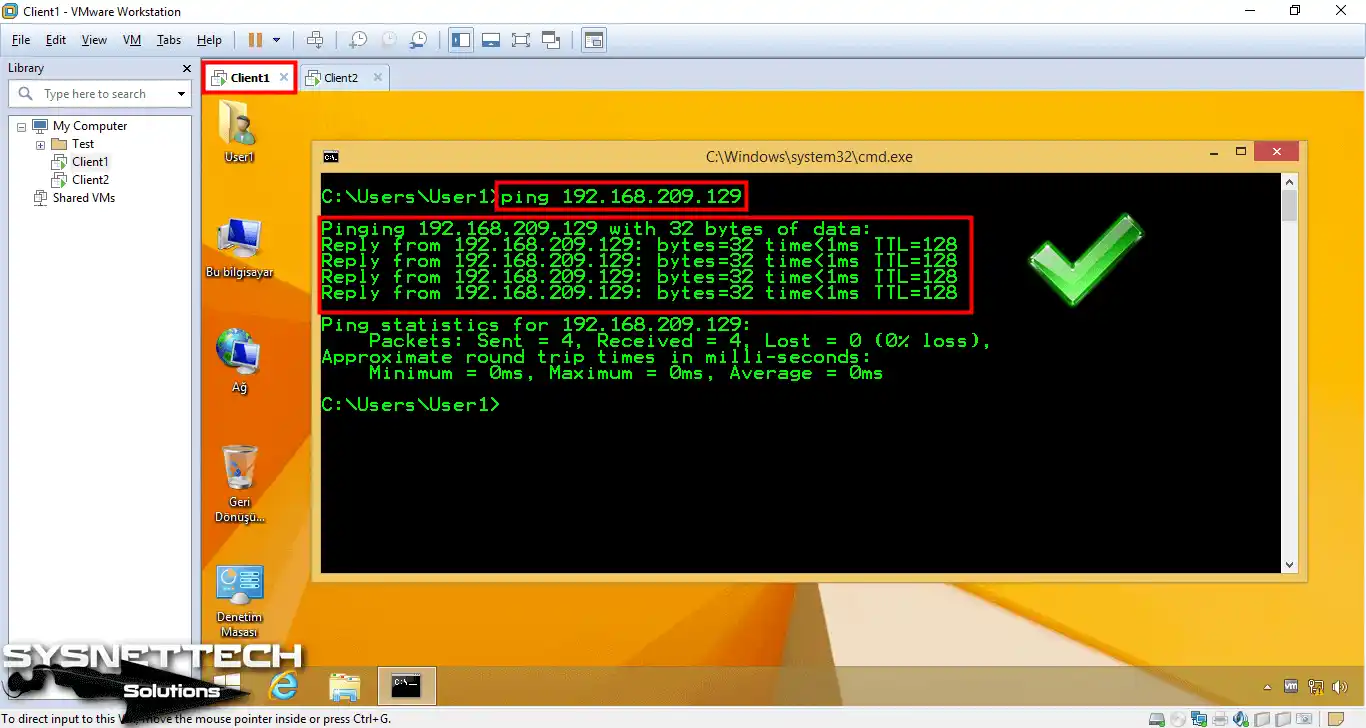
Check the link between Client1 and Client2 by pinging them again. This time, you should see that the ping operation is successful.
2. Try to Access Your Physical Adapter
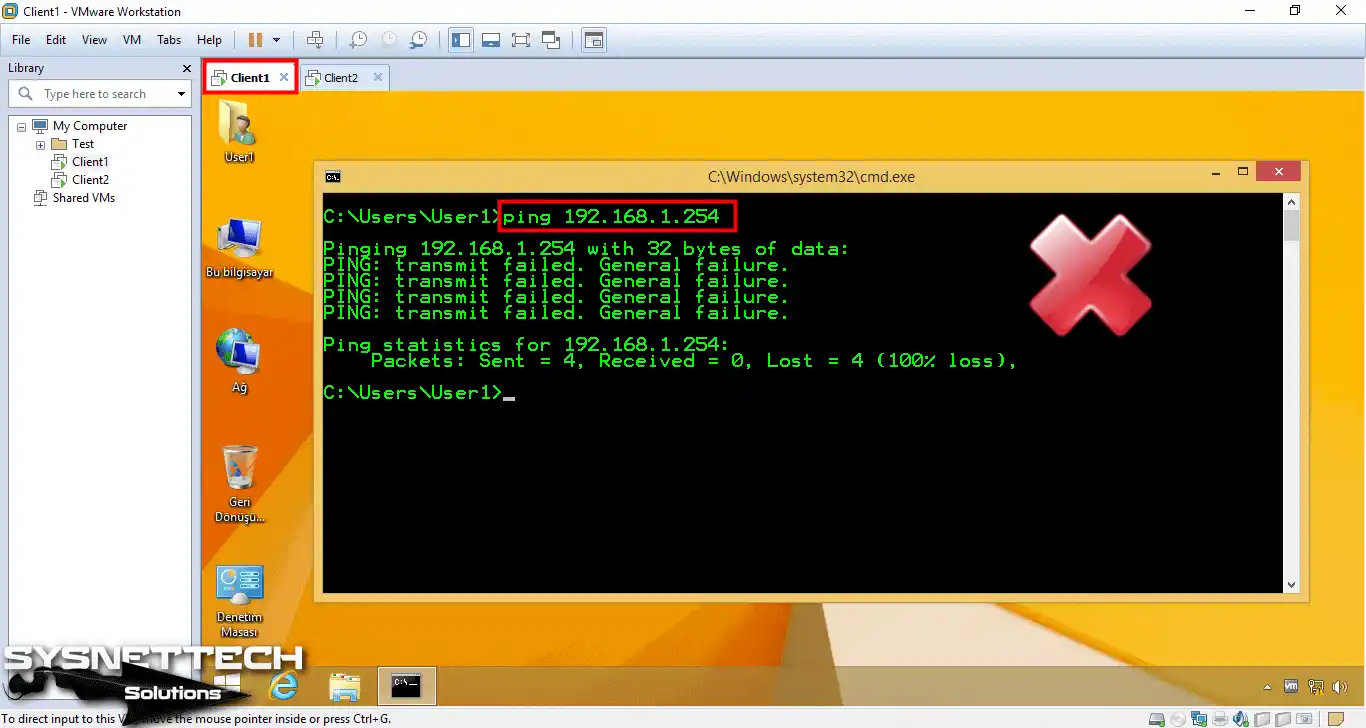
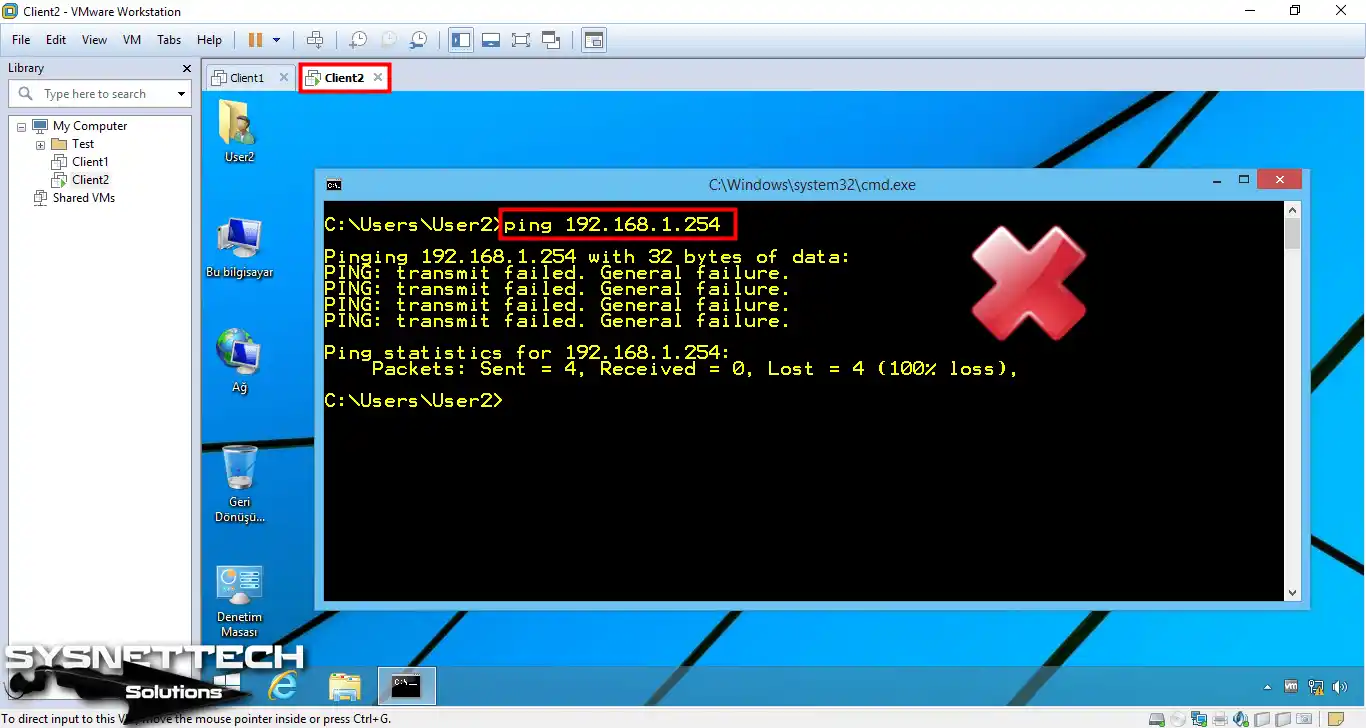
All guest machines set as Host-Only can only talk to each other. Now, test the link by pinging your real one on the Client1 and Client2 machines.
As the picture shows, the Client1 machine cannot reach the host area.
The Client2 machine also cannot get to the real connection.
3. See If You are Able to Get On the Internet
In this private setup, the guest machines cannot reach the physical or access the Internet.
Open a web browser on the Client1 VM. Then, try going to www.google.com. As a result, you will see that your VM cannot connect to the Internet.
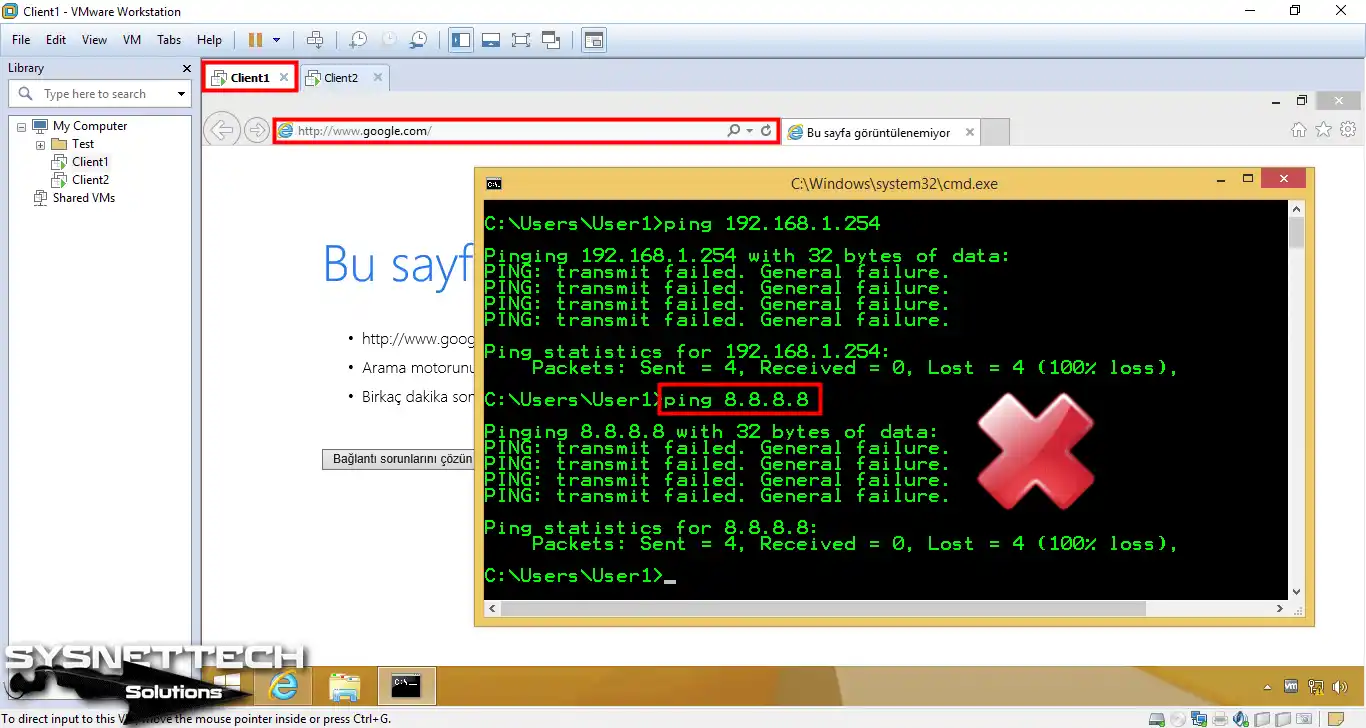
Again, the Client2 machine will also fail in this case.

Frequently Asked Questions (FAQ) About VMware Host-Only
- What is a Host-Only network?
- How do I create a Host-Only?
- How do I assign only one VM to a private LAN?
- Can multiple VMs use the same private network?
- Can I access the Internet from a VM connected to a private network?
Conclusion
Making a Host-Only network in Workstation Pro is easy but very useful. This lets you build a separate, closed virtual space.
This way, it lets your virtual machines talk to each other and your host PC. But they stay totally cut off from different areas and the Internet.
By following the steps in our guide, you can better see how an isolated network runs. As a result, you safely try out different simulations.
In short, with VMware, you will better understand VMnet settings while working on various topology projects.

Be the first to share your comment