
How to Configure NAT Network in VMware Workstation

Quick Insight

You configure a NAT network in VMware Workstation to give guests private internet access. First, open the Virtual Network Editor and confirm VMnet8 is set to NAT. Then, in the VM's settings, pick the network adapter and select the NAT option. After a quick restart, the guest pulls an IP from the virtual DHCP server. This hides the VM behind your host's own address. As a result, you browse the web or update packages without exposing the guest to the physical LAN.

In this article, we will connect a virtual machine running on VMware Workstation to the Internet using NAT configuration.

NAT Network Connection on VMware

How to Set Up NAT Network on VMware

First of all, NAT converts IP addresses on a LAN to a single public IP. This way, PCs on the network access the internet. You install VMware Workstation on Windows 10 or Linux. Then, you configure the network of a new virtual machine as LAN translation.

This protocol is the first setting the system configures on its own after VM setup. In short, this setting is applied when you create a new guest. You can see it in the editor.

Setting Up NAT Network on a Guest

In the editor, NAT network settings look like this by default. You can also check the image below to see VMnet8 set as NAT.
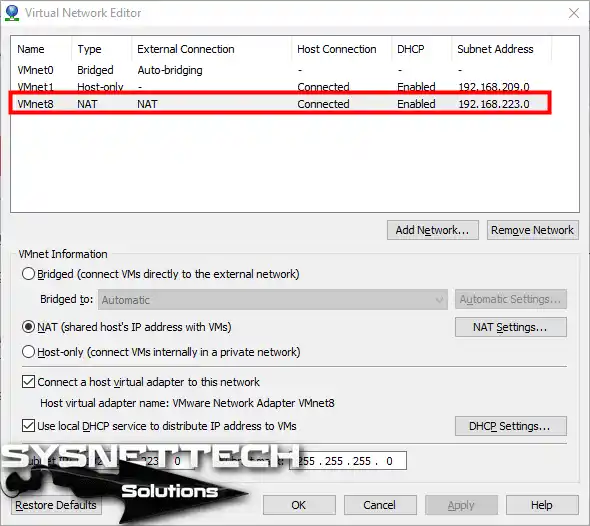
Virtual Network Editor

After you create VMnet8 with the editor, follow the steps below. Next, set up NAT on the VM.

Step 1

After you set up VMware Workstation, you will see VMnets in your network connections. The window looks like this.

You can check the virtual network adapter defined for VMnet8 in the image below.
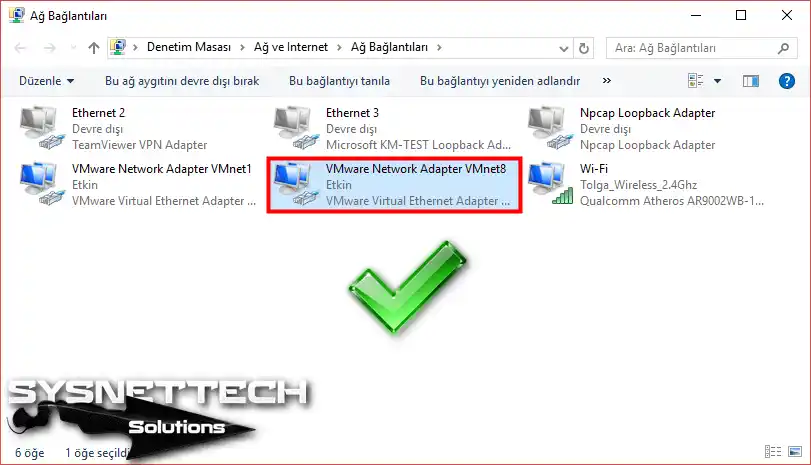
Windows Network Connections

Step 2

You must turn on the NAT connection in the editor. Also, do this on the guest. Now open the Workstation program. Then click the Network Adapter option. It lets you set up the guest’s network connection.
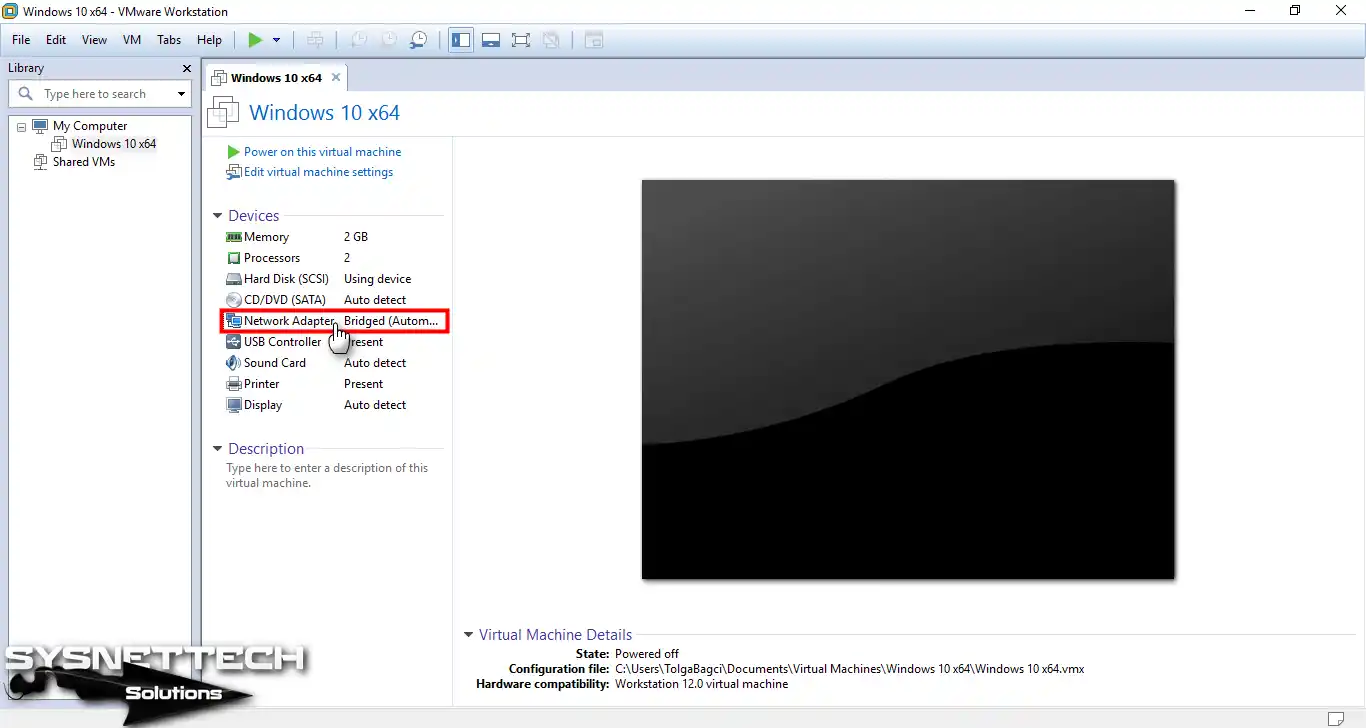
Network Adapter Configuration in VMware

Step 3

Once the VM Settings window opens, select appropriate for Windows 10. Choose: Used to share the host’s IP address.

Selecting NAT Network

Step 4

After you select the Network Address Translation option, click OK to close the window.
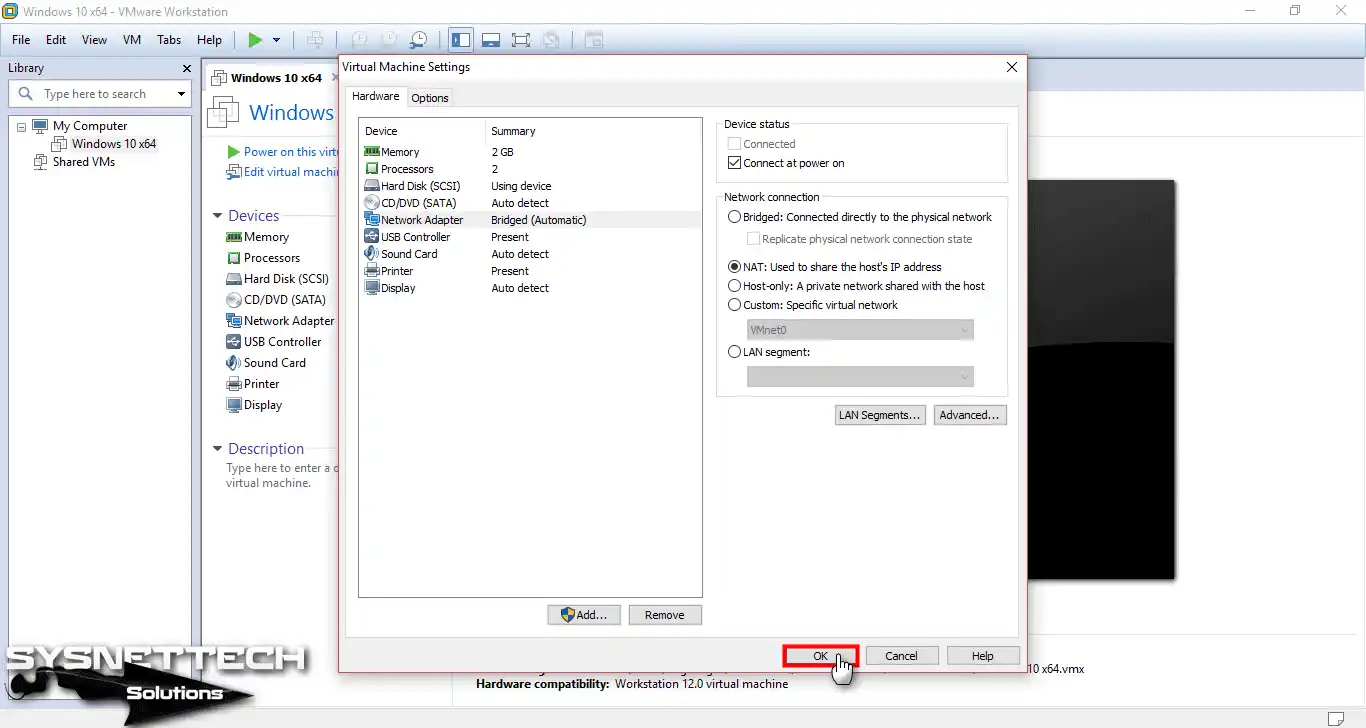
Closing Virtual Machine Settings

Step 5

Now click Power on this VM to start the guest.
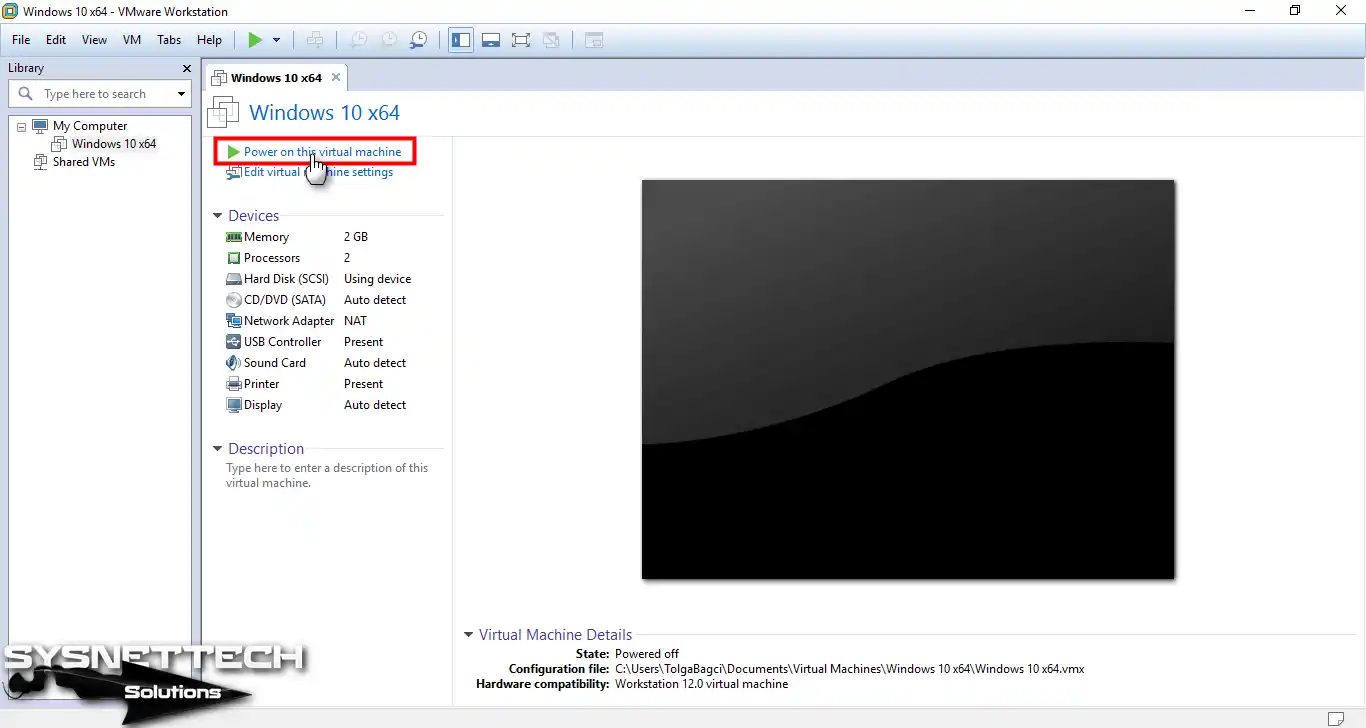
Starting the Virtual Machine

Step 6

After you start the Windows 10 VM, open CMD to check the IP address. Press the Windows Key + R to do this.

After you open CMD, run the ipconfig command. Then check the machine’s IP address. The VM’s IP block is 192.168.223.0/24. You can change this block through the editor.
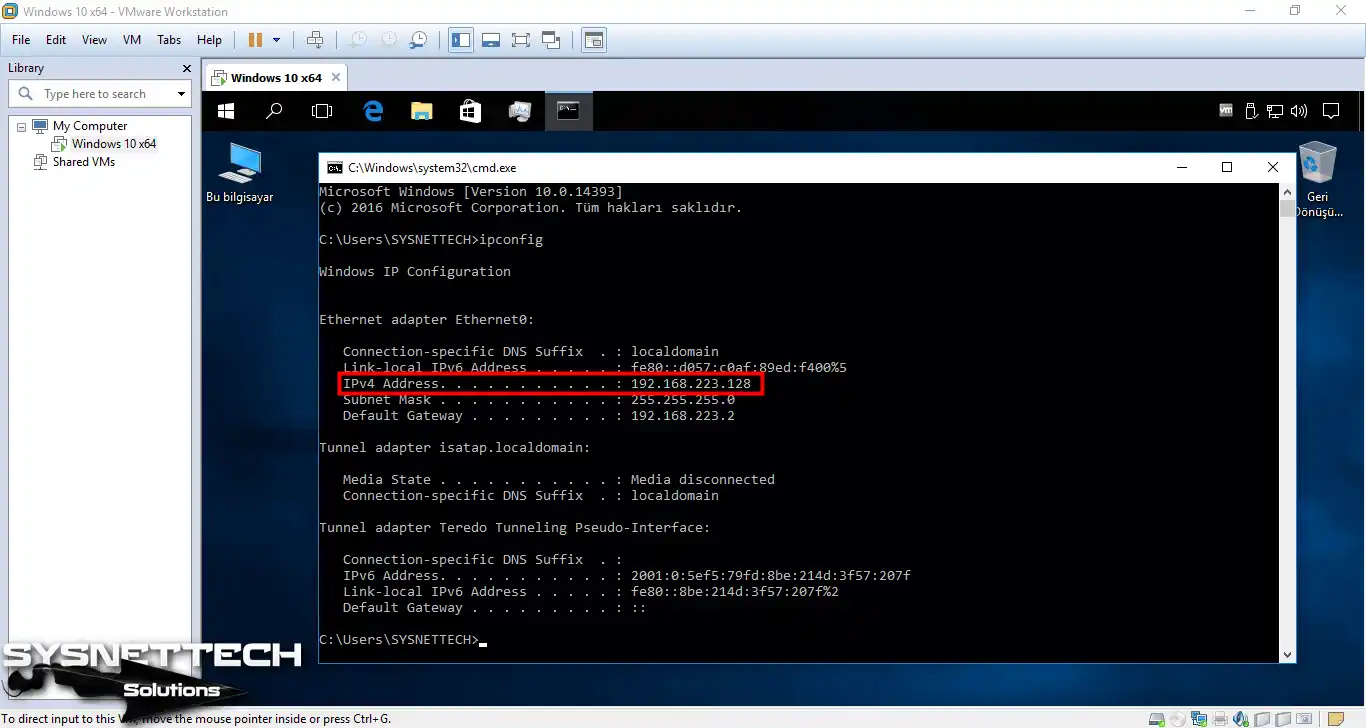
ipconfig

Step 7

After you set the machine’s network settings as NAT, check the internet connection. You can use a web browser for this. Or ping a website from CMD to test the connection.

6 NAT Secrets to Get Your VMs Online

Why does VMware choose NAT as the default network mode for new VMs?

Here is the secret: NAT is the smoothest and fastest working mode. You don’t need extra IP addresses from your network admin.
Your VM reaches the internet easily. It won’t clash with physical network IPs. This gives you a fully secure setup.
So VMware prefers this mode. It’s also the easiest option for beginners. You get online without dealing with complex settings.

What is the difference between NAT and Bridged? Which one is better?

Think of it like being at a party. Bridged mode is like stepping directly onto the dance floor. Everyone sees you, and you see everyone.
NAT is like using a translator. You talk to the translator, who tells everyone else. The outside world doesn’t see you, but you see out.
Which is better? It fully depends on your needs. Use Bridged for file sharing. It works fine if you just want internet access.

What IP range does my VM get? Can I change it?

It uses the 192.168.223.0/24 range by default. But these numbers are not set in stone. You can change them easily.
Open the editor. Then select VMnet8. Finally, click the ‘DHCP Settings’ button.
In the window that opens, edit ‘Starting IP Address’ and ‘Ending IP Address.’ You can change them as you wish. For example, you can use the 10.10.10.0/24 range. It’s totally up to you.

How do I set up port forwarding? How do I connect to my VM from outside?

Ah, that’s a great question! The ‘Port Forwarding’ feature in NAT Settings exists for exactly this.
Select VMnet8 in the editor. Then find the ‘Port Forwarding’ section in the window.
Example: Send requests from the host’s port 8080 to your guest’s port 80. This way, the outside world can reach your web server.

I can’t ping, but the web browser works. Is this normal?

Yes, this is normal and expected. This protocol can sometimes block the ICMP protocol (ping).
VMware allows ICMP traffic by default. But Windows Firewall can stop these packets.
If the browser works, you have internet. Don’t worry about ping. Need to ping? Turn off the firewall on the VM briefly. Turn it back on after the test.

I broke my NAT settings. How do I restore the default settings?

Don’t panic, there’s a solution for everything. VMware makes this easy for you.
Open the editor. Then click the ‘Change Settings’ button (it will ask for admin rights).
Then click ‘Restore Defaults.’ That’s it! All VMnets return to factory settings. You can set VMnet8 back to NAT if you want. It takes five minutes.

Conclusion

In this article, we used the editor program on VMware Workstation. Then we examined the NAT network connection step by step. Don’t forget one important point. When you create it, you must also set up VMnet Bridged.

They'll Thank You for Discovering This Guide!

Ready to do your loved ones a huge favor with just one click? Knowledge grows as it is shared.

1 Reader Comment

  1. Oi. Meu notebook é Windows 7 Professional, depois de já ter sido W7 original, W10, e agora W7 novamente. E nesses dias, após iniciar, está aparecendo a mensagem: VMWare Nat Service parou de funcionar/ Fechar o programa. Porém, tudo funciona normalmente. Devo realizar algum procedimento ou deixar como está?

Share Your Opinion