

Technology is growing fast, so it’s essential to check how well your computer is working. This is easy to do, especially on popular versions like Microsoft’s Windows 10 or 11.
A valuable tool called WEI (Windows Experience Index) can help you. Microsoft introduced WEI with Vista, and it still works today.
WEI helps us find out which parts of our PC are not working well. Clearly, it’s like a scoring system that tells you how smoothly you can use Windows. This guide shows you how to test performance on Windows 10 or 8.
How to Use Experience Index (WEI) in Windows 10 & 8
Rerunning the test after adding more RAM will probably give you a higher RAM score. Therefore, this boost shows your memory is faster. In short, these tests show you hardware upgrade benefits.
You can test your computer’s performance using the CMD prompt in Windows. However, using a third-party program is quicker and easier. In short, these programs give you results faster and have more straightforward scoring tests.
The command line is great for speed tests. Moreover, it gives handy answers for daily tasks.
Let’s say you need to quickly give your guest a password. In this case, use this guide: how to view your saved WiFi password in Windows 10 and 11. Then, with a few commands, you can instantly display your network key.
First, I suggest you check if this exists on your current PC. To look at this, right-click My Computer. Then select Properties in the window that opens.
Then, if you see an option related to speed testing, OK. This means you use a system that came after Vista. So, you will see the scoring system in the computer properties you open.
However, let me note here: Microsoft removed this feature as of 8.1. Currently, 8.1 and 10 operating systems do not include a WEI Score feature.
Learning the Windows 8 Performance Score
If you use Windows 8, follow these steps. They let you test your computer’s performance.
Step 1
Right-click on My PC / Properties and then click System rating not available.

Step 2
In the Performance Information and Tools window, click Rate this computer.

Step 3
Wait while the WEI tests your computer.

Step 4
After the Windows rating completes, you see the scoring system. It shows your computer’s hardware speed.
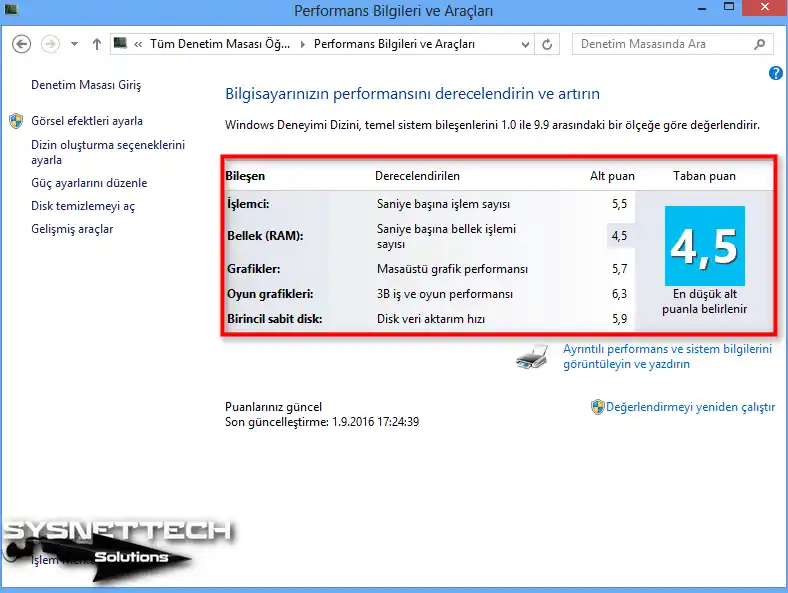
Step 5
Click My Computer / Properties again. You will see a Windows Experience Index score. It replaces the unavailable System rating.

The image below shows that Windows 8 does not include this feature.

How to Test Windows 10 Performance
You can use third-party software. This OS does not include the WEI feature. You can learn your computer’s system score using ExperienceIndexOK.
Download ExperienceIndexOK 1.17 before you start the hardware test.
Step 1
Extract the ZIP file to a folder. Then run the program as an administrator.

Step 2
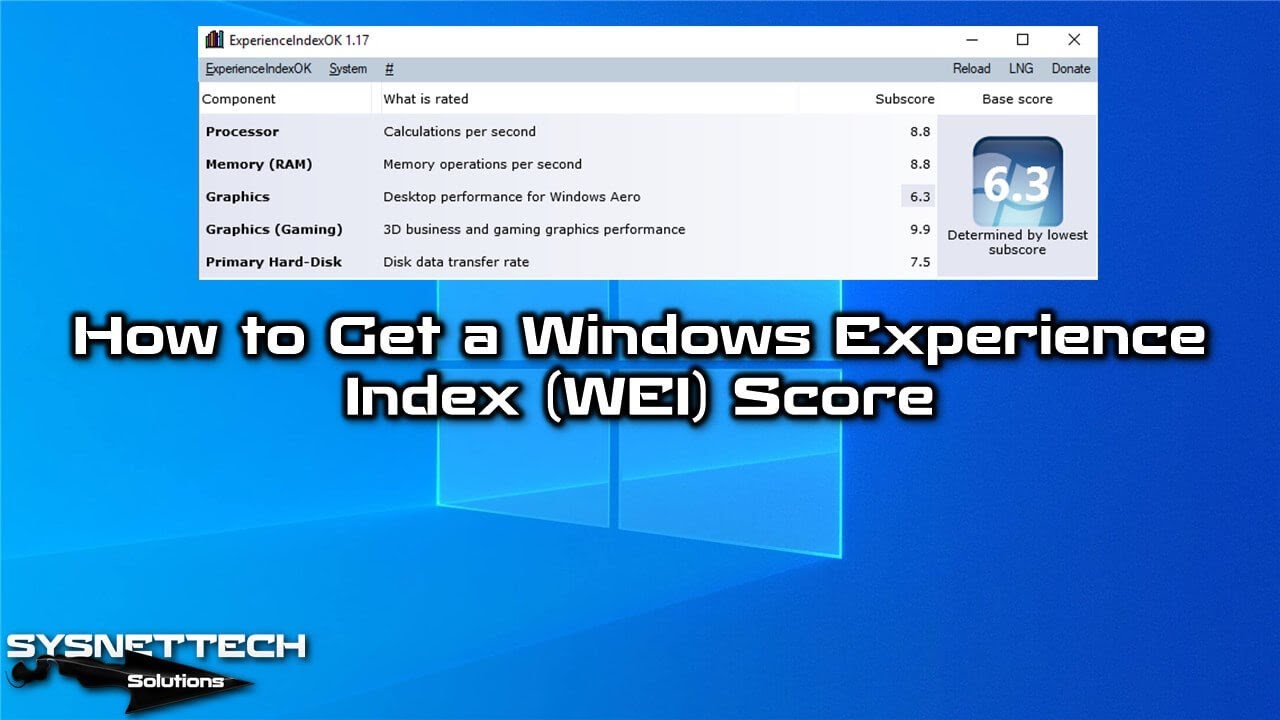
After opening ExperienceIndexOK 1.17, click the Rerun Evaluation button.

Step 3
Wait while WinSAT.exe (System Evaluation Tool) performs your computer’s performance test.

Step 4
After completing the system rating, you will see a score like below.

Tools like ExperienceIndexOK sometimes don’t offer your language support. This can be frustrating. Now, let’s take this further. You might need to change the language across the system. This goes beyond a single program.
Changing the system interface language in Windows 11 and 10 is simple. You might think it’s hard, but it’s not. Essentially, you download a language pack. With a few clicks, you can use your computer in another language.
How to Install ExperienceIndexOK ⇒ Video
Watch the video below to check your performance with ExperienceIndexOK. Don’t forget to subscribe to our YouTube channel to support us.
Frequently Asked Questions About WEI
What is WEI (Windows Experience Index) and what benefit does it give me?
Why is there no option in computer properties to see the WEI score on Windows 10?
Which program should I use for the performance test?
How can I learn the WEI score via the command line (CMD)?
My WEI score came out low. What should I do?
Can the WEI score go up to 9.9? Which hardware reaches this score?
Conclusion
In conclusion, I recommend you check your PC performance. Use WEI for new or old PCs. Microsoft constantly updates its systems and releases new ones to the market. Therefore, run a system test. You can find out which hardware is slow.
I want to add something. WEI was a valuable tool for evaluating hardware. It gave a score. However, you can use third-party software like ExperienceIndexOK. Microsoft removed WEI from Windows 8.1 and 10. You can also use terminal commands that require advanced knowledge.

Be the first to share your comment