

The mobile world rose on a quiet revolution. Code Division Multiple Access, or CDMA, sits at its core. It fathered the 4G and 5G systems we still use today. Most people don’t notice this. Yet the wireless world owes this tech a huge debt.
CDMA is no ordinary access method. Its journey from military roots to market success reads like a true engineering epic. Thanks to the stubborn work of Qualcomm engineers, this technique found its way deep inside our cell phones.
So what is CDMA? It lets many users talk at once on the same frequency. Best of all, this brilliant technique keeps things simple. It gives each user a special code. These codes stop signals from mixing. In fact, this approach changed how we use the frequency spectrum at its core.
In this article you will learn the backstory and the patent wars. You will also see how this tech rose to power in the US and why it eventually faded away. Plus, we will unpack its wireless legacy today.
Let’s begin. We will explore the telecom world’s perhaps most rebellious child in full detail and plain language.
An Intro to CDMA (Code Division Multiple Access) Tech
Before we dive into wireless details, it helps to have solid ground on phone tech basics.
That way you see more clearly what code division access transformed. From my own time in the field, I can say simple definitions make a big difference when you learn complex systems.
What is CDMA? Definition and Core Concepts
CDMA is short for Code Division Multiple Access. This spread spectrum technique opens the same frequency band to many users at once. Each user gets a unique code. The base station decodes these to separate the calls.
The basic logic is this: a narrowband data signal gets spread on purpose across a much wider bandwidth. You use pseudo-random noise codes for this spread process. The receiver gathers the signal again using the same code. So other users’ signals just stay as noise.
From what I saw in the field, this work principle makes frequency planning almost useless. In contrast, old systems forced neighbor cells to use different frequencies. It uses the same frequency in every cell. That is a truly game-changing difference.
These codes for each user are orthogonal, meaning they are perpendicular to each other. This trait lets hundreds of people talk on the same carrier frequency at once.
What’s more, you can scale the system capacity softly. As users increase, quality drops step by step. However, the system never crashes all at once.
On the other hand, CDMA marks a turning point for spectrum efficiency in wireless engineering.
It can host far more users on the same resource than old FDMA and TDMA methods. Furthermore, security is naturally high. A receiver that lacks the right code simply can’t decode the signal.
Multi-Access Methods in Wireless: TDMA, FDMA and CDMA
The mobile network world has three main multi-access rivals: FDMA, TDMA, and CDMA.
FDMA shares the frequency without dividing time among users. It gives each user a separate frequency band. Designers picked this method for first-gen analog systems.
TDMA, on the other hand, divides the same frequency into time slots. Users send and receive data in turn. So everyone uses the same channel in different time intervals. Actually, GSM tech has this TDMA method at its heart.
It offers a totally different philosophy. It divides neither frequency nor time. All users use the whole frequency band all the time. The distinguishing factor is the unique digital codes. These codes let you separate the signals.
The table below compares these three technologies clearly:
| Feature | FDMA | TDMA | CDMA |
|---|---|---|---|
| Division Method | Frequency | Time | Code |
| Bandwidth Use | Fixed and Narrow | Medium | Wide (Spread Spectrum) |
| Frequency Planning | Mandatory | Mandatory | Flexible or Unnecessary |
| Capacity Limit | Hard Limit | Hard Limit | Soft Limit |
| Security | Low | Medium | High (Natural Encryption) |
To my mind, the smartest part of CDMA is how it stops seeing interference as a problem. Plus, it turns it into a variable you can manage. The system sees other users’ signals as noise. Also, it constantly improves this noise level through power control.
When you hear about the CDMA, TDMA, and FDMA difference, this flexibility should come to mind first. Moreover, it gives you amazing freedom in using frequency bands. All base stations use the same frequency. So the headache for frequency planning engineers largely goes away.
The Role of CDMA Tech in Mobile Networks
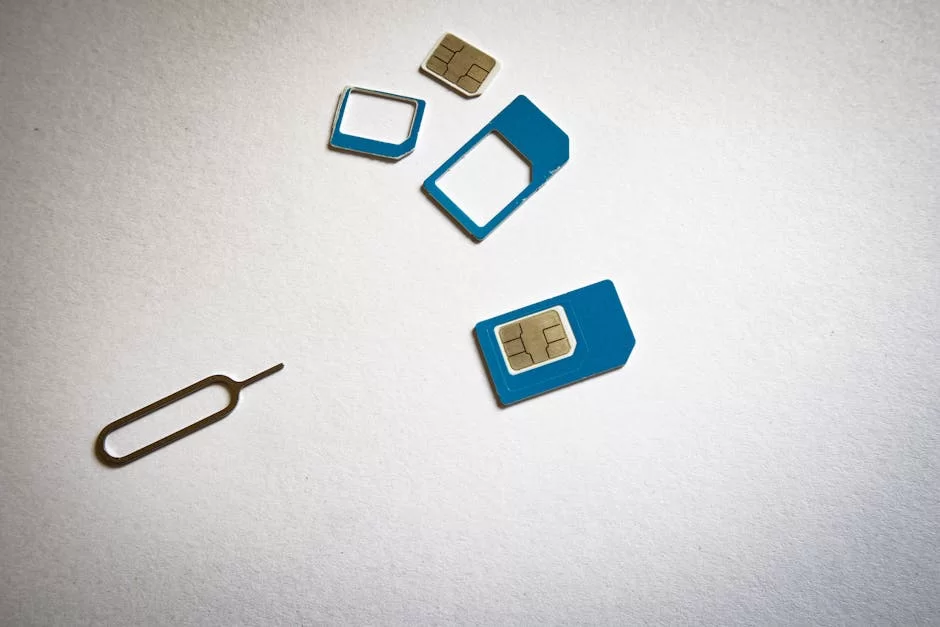
It was the star of second-gen digital communication systems. It created a big jump, mainly in North American and Asian markets.
While Europe chose GSM, US operators adopted the IS-95 standard. This tech boosted voice quality in a dramatic way compared to analog systems.
With that, CDMA’s real big gift came during the shift to 3G. The union of CDMA and 3G laid the ground for mobile internet.
Evolutionary tech offshoots like cdma2000 and WCDMA fed directly from this root. To be exact, what we call 3G is largely a wideband adaptation of these principles.
The soft handoff feature CDMA brought to cellular network design is game-changing. You switch between base stations while moving without dropping the connection. This experience is far smoother than the hard handoff you find in GSM.
Nowadays, CDMA 2G networks are almost fully shut down. In fact, the terms CDMA 4G and CDMA 5G are technically wrong.
Still, LTE and 5G NR networks use the technical legacy CDMA offers. What’s more, they weave this legacy into their own core structure. Mainly, OFDMA and SC-FDMA techniques are the modern takes on this heritage.
How Does CDMA Work? The Work Principle and Coding Mechanism
Spread Spectrum Technique and Frequency Hopping Spread Spectrum

The spread spectrum technique lies at the heart of CDMA. Put simply, we spread a data signal on purpose over a wide frequency band. This spread process scatters the signal’s energy. As a result, the signal can even fall below the noise floor.
CDMA spread spectrum technique comes in two main types: direct sequence spread spectrum and frequency hopping spread spectrum.
Commercial CDMA systems use the direct sequence method. Frequency hopping spread spectrum, meanwhile, shows up more in military systems and Bluetooth.
In the direct sequence method, the code multiplies the narrowband data signal at a much higher speed. So this process greatly increases the signal’s bandwidth. The receiver narrows the signal back down using the same code. As a result, the other signals remain as noise during this time.
CDMA provides a very key edge in frequency use. Since the signal energy spreads over a wide band, it does not interfere with other narrowband systems.
Besides, it is also extremely resistant to narrowband interference itself. This trait is a perfect fit for military communication.
A concept we call processing gain comes into play here. The higher the spreading ratio, the more resistant the system is to interference. Mainly, with high processing gain, the signal can even work well below the noise floor.
CDMA Coding, User Codes, and Signal Processing
The coding mechanism runs on Walsh codes and PN sequences. Walsh codes are special digital sequences that are orthogonal, meaning they are perpendicular to each other.
Thanks to this orthogonal trait, different users’ signals separate in a perfect way. The receiver only needs to know the code assigned to it.
The signal processing flow is a two-stage affair on the forward link. In here, the system first digitizes the voice or data signal. Then it quickly compresses this data.
After that, it scrambles it with a Walsh code and a long PN code. This scrambling process turns the signal into a piece of a puzzle.
On the reverse link, the base station runs a correlation process on the incoming signal. A receiver that knows its own code pulls that coded signal out of the noise. Other users’ signals remain as multiple access interference. Luckily, power control keeps this interference to a bare minimum.
The system uses user codes to separate channels on the forward link. It gives a different Walsh code to each user. On the reverse link, PN codes tell users apart. The base station manages hundreds of users at once thanks to these codes.
Modern error correction techniques like turbo codes and LDPC codes exist in CDMA systems. So these techniques play a vital role. These codes guarantee data integrity.
That way, you pull the bit error rate down to acceptable levels. Moreover, you optimize the frame error rate in the same way.
Power Control, Soft Handoff, and Hard Handoff Mechanisms
CDMA power control is the lifeblood of the system. Engineers adjust the power 800 times per second to solve the near-far effect problem.
A cell phone signal near the base station can overwhelm a weak signal from far away. For this reason, the system balances the power of all terminals within milliseconds.
The list below sums up the key power control steps:
- The base station measures the received signal strength nonstop.
- It compares the measured value against the target signal-to-noise ratio.
- It sends the power control bit back to the mobile device at once.
- The device updates its transmit power now in ±1 dB steps.
- It then repeats this loop 800 times per second.
CDMA soft handoff is the most elegant answer for managing mobility. The device connects to two or three base stations at the same time. The device combines the signals using maximum ratio combining. As a result, the user never feels this switch.
Systems use hard handoff when switching between different frequency bands. You also pick this method for switches between different systems.
Unlike soft handoff, you break the link for a moment and then reconnect. Plus, this method mirrors the handoff in GSM systems. As a result, this feature usually comes into play in inter-system roaming scenarios.
In short, these three mechanisms together provide a flawless network experience. Network capacity depends directly on how well the power control works. Besides, the better you manage the signal-to-noise ratio. So the more users you can serve at the same time.
The History of CDMA: A Journey from Hedy Lamarr to Qualcomm
CDMA’s Military Roots in WWII and Hedy Lamarr
When people talk about the military roots of CDMA, the first name that comes up is a very surprising one. Hollywood star Hedy Lamarr got a patent in 1942 with composer George Antheil.
So Hedy Lamarr secured the patent for frequency hopping spread spectrum. They designed this system to stop enemies from jamming torpedo radio signals.
Actually, it’s an idea born during the World War II era. The Lamarr and Antheil patent used frequency hopping spread spectrum with a piano roll mechanism.
The US Navy only brought this patent to life in the 1960s, during the Cuban blockade. In those days, no one guessed this idea would change the whole world.
Researchers ignored the CDMA and Hedy Lamarr link for years. Lamarr got her Pioneer Award from the Electronic Frontier Foundation in 1997.
She passed away in 2000. Then in 2014 she entered the National Inventors Hall of Fame. Everyone now remembers her as the one who laid a cornerstone of wireless communication.
After all, no one had a concept called CDMA back then. But frequency hopping spread spectrum formed the very spirit of modern CDMA.
Military communication systems kept this technique a secret for years. Throughout the Cold War, this tech stayed under the monopoly of the armed forces alone.
IS-95, Qualcomm, and the Patent Wars
The Qualcomm equation began with a small company founded in 1985. Geniuses like Irwin Jacobs and Andrew Viterbi were the first to see CDMA’s market potential.
While the rest of the sector focused on TDMA, they worked on CDMA. This bold bet would change telecom history.
The year 1995 is a critical turning point. Qualcomm finished the CDMA IS-95 standard and opened the first commercial network in Hong Kong. Everyone also knows IS-95 as cdmaOne.
Also, this tech offers a data speed of 14.4 kbps. So, while that sounds funny today, it was a game-changer for its time.
The CDMA patent wars are one of the sector’s most turbulent periods. Qualcomm held nearly all the key patents linked to CDMA.
During the period when the patent wars heated up, Nokia’s time in the CDMA market is interesting. The firm faced license fights while also hunting for rival solutions to Qualcomm. There is a different angle to the story: this struggle actually sped up innovation. In the end, the consumer got better devices.
Giants like Nokia, Ericsson, and Motorola pushed back hard against this. The big firms waged huge battles in courtrooms for years.
The Qualcomm licensing model was extremely aggressive and hotly debated. That’s why, the company sold chips while also charging a license fee for its IP rights.
This double-dip revenue model drove rivals crazy. But in the end, Qualcomm built the CDMA ecosystem all on its own.
The Evolutionary Tech from CDMA to 3G, 4G, and 5G
We can sum up CDMA’s evolutionary journey in order of time like this:
- 1993: Industry reps approved the IS-95 (cdmaOne) standard in 1993.
- 2000: cdma2000 1xRTT started in the market.
- 2002: Firms launched 1xEV-DO tech in 2002. So the real mobile broadband era began.
- 2006: Rev A boosted uplink speeds.
- 2010: LTE went live in the market, with OFDMA at its base.
- 2020: Developers finished the 5G NR standards in 2020.
You can clearly see the legacy CDMA tech left in this list. cdmaOne and cdma2000 are direct members of the CDMA family. 1xEV-DO is an offshoot optimized for high-speed data. All these technologies blazed a trail in the digital communication space.
When you ask about the CDMA and LTE difference, the main split is the modulation technique. LTE no longer uses spread spectrum. It switches to OFDMA and SC-FDMA techniques instead.
But engineers carried over principles like power control and soft handoff exactly as they were. What’s more, they also moved core methods like code multiplexing into the new system.
In short, CDMA did not die. It just changed form. Even the core network design of 5G took shape from the lessons learned back then. The smartphones we use today are the grandkids of those old CDMA cell phones.
CDMA vs. GSM: A Comparison Analysis
Tech Infrastructure and Work Principles
The topic of the CDMA and GSM difference sparked heated debates in the sector for years. The most basic split between the two technologies is the multi-access method.
GSM uses TDMA and FDMA together. In contrast, CDMA adopts a fully code-based approach.
The comparison table below clears up the technical differences:
| Feature | CDMA | GSM |
|---|---|---|
| Multi-Access | Code Division (CDMA) | Time + Frequency (TDMA/FDMA) |
| Frequency Reuse | 1 (Universal Reuse) | 4/12 or 7/21 |
| Handoff | Soft Handoff | Hard Handoff |
| Power Control | 800 Hz (Critical) | 2 Hz (Less Critical) |
| Voice Codec | EVRC, QCELP | EFR, AMR |
When you compare them, CDMA usually leads in terms of capacity. It can host more users in the same frequency band. Yet the biggest edge for GSM is being the global standard. You find a GSM signal almost anywhere in the world.
Even so, CDMA proves more efficient in processing radio signals. It naturally gains frequency diversity. Thanks to this, it copes better with issues like multi-path propagation. For GSM, this case can cause a serious drop in performance.
SIM Card, Roaming, and Device Dependency Differences
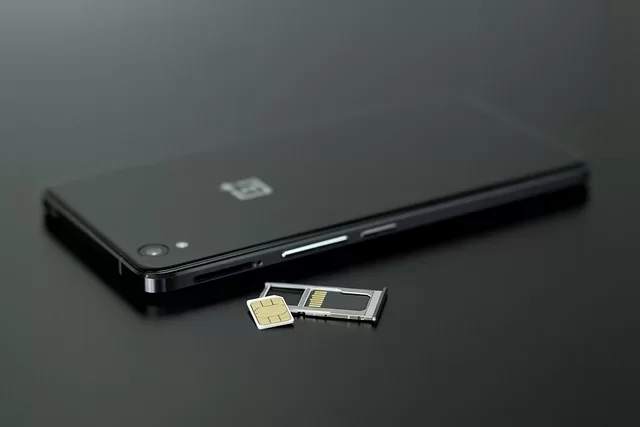
The SIM card topic is one of the biggest myths. Many people think CDMA phones had no SIM card. Actually, early devices truly had no SIM card. But developers wrote the number straight into the device’s memory.
Now, this case created a huge loss of flexibility for its users. You could not pull the card out and put it in another phone as with GSM. If you wanted to switch carriers, you had to buy a new phone. Slipping free of this shackle was truly hard.
The SIM-free period partly ended with the arrival of R-UIM cards. R-UIM became common, mainly in the Asian market. But carriers in North America held out against this card for a long time. Luckily, with the LTE shift, USIM cards became the standard everywhere.
Roaming was a serious limit. GSM’s global roaming deals were far more widespread. Roaming among CDMA carriers was possible in a limited set of countries. This case was a big drawback for those who traveled abroad.
CDMA coverage area generally had a different structure from GSM. The coverage area per base station was wider. Yet it sometimes struggled with in-building penetration. This also made the coverage comparison topic a complex one.
Battery Life, Power Use, and Security Features
The matter of CDMA battery life hits the user experience directly. Thanks to the nonstop, aggressive power control, these phones’ power use was generally higher. Adjusting the power level 800 times per second kept the processor busy nonstop.
Power use was a drawback mainly in standby mode when matched against GSM. GSM devices listen to the base station at sparse intervals and then switch to sleep mode. CDMA, however, had to stay always active. That’s why, with the same battery, GSM phones lasted longer.
With that, the case changed during a call. Thanks to efficient power control, the system keeps the transmit power at the lowest level. Plus, GSM devices transmit at full power for their time slot. So, there is no big gap in talk time.
Security features offer a natural edge. Eavesdropping on the signal is extremely hard due to the very nature of the spread spectrum structure. The CDMA encryption method provides an extra security layer on top of that. The long PN code and auth protocols make listening in nearly impossible.
On this point, GSM networks were weaker at the start. The A5 encryption algorithm got cracked over time. CDMA, in contrast, had a far more secure radio signal structure by its very nature. The military roots show themselves clearly here.
CDMA Advantages and Disadvantages
Standout Advantages
High network capacity sits at the top of the advantages list. You can serve 4 to 5 times more users in the same frequency band compared to GSM.
This trait makes a big difference in dense city centers. Carriers reach more subscribers with fewer base stations.
The second big advantage is voice quality. CDMA voice quality is close to landline quality thanks to the EVRC codec. The background noise suppression algorithms are extremely successful. Also, thanks to the soft handoff feature, you hear no cuts or crackles during a call.
Third, CDMA security features stand out. The spread spectrum signal naturally has a low chance of being picked up. The encryption key and auth protocols add extra protection. That’s why tapping CDMA networks is far harder than GSM.
The list below stacks up other key pluses:
- Easy frequency planning: All cells use the same frequency.
- Soft capacity: Quality drops step by step as users grow, the system won’t crash.
- Multi-path resistance: Signal bounces turn into an edge with the RAKE receiver.
- Low transmit power: The average output power sits lower than GSM’s.
- Flexible bandwidth: You can easily combine 1.25 MHz carriers.
CDMA packet-switched data support offered quite efficient performance. Moreover, with 1xEV-DO tech, they moved to a pure packet-switched structure.
This structure pioneered LTE and the all-IP logic that followed. Yet the team still carried circuit-switched voice on a separate channel.
Disadvantages and Limits
Among CDMA disadvantages, the most annoying one is device dependence. Mainly in the SIM-free era, changing phones was a total nightmare. To switch carriers, you had to buy a new device. This case seriously curtailed user freedom.
The second key downside is about battery life. Aggressive power control cuts the standby time short. A GPS receiver is a must for network sync. These parts mean extra power draw. From another view, GSM phones had an edge on this point.
Third, roaming limits posed a big problem. On trips abroad, GSM users could roam with ease. CDMA users, in contrast, got no service in most countries. This was a serious handicap in a globalizing world.
CDMA network planning also held unique headaches of its own. Power control and capacity management needed careful tuning. The near-far effect needed nonstop watching. Base station density needed precise calculation.
Also, patent costs were a huge burden for carriers. Qualcomm licensing fees ran higher than GSM setup costs.
This cost also passed on to the end user. In the end, CDMA phones were generally pricier than their GSM peers.
CDMA Use Cases and Its Place Today
Carriers and Countries That Used It
CDMA carriers mainly ran their business in North America and Asia. In the US, Verizon, Sprint, and US Cellular were the biggest carriers.
Sprint turned off its CDMA networks in 2022, and Verizon did the same at the end of 2022. Today, no commercial service remains in the US.
The list of countries that used CDMA was quite broad. South Korea, Japan, China, India, Canada, and Brazil were key markets. Mainly in South Korea, SK Telecom and LG Uplus started with CDMA2000. In Japan, KDDI au was the big carrier.
China Telecom offered CDMA service for many years in China. Reliance Communications and Tata Indicom used this tech in India.
But by the start of the 2020s, nearly all carriers moved to LTE. Now, CDMA has practically ended in the market.
Despite this, some niche use cases for CDMA still live on. This tech still lives in satellite comms, military systems, and private wireless networks. Firms also often pick CDMA-based answers for IoT and M2M comms.
On top of that, the US case on this topic is interesting. Carriers never set up a commercial CDMA network in the United States. We’ll dig into the reasons for this in detail soon.
CDMA Phones, Device Compatibility, and Internet Connection
CDMA cell phones always held a special spot in the market. These devices did not work on GSM networks. In the same way, GSM phones could not connect to CDMA networks. Building a bridge between these two separate worlds was impossible.
Some users went for business-focused devices like BlackBerry on CDMA networks. Mainly the need for corporate email and secure messaging fed this pick.
Among handset makers, Motorola, LG, Samsung, and Kyocera stood out. Apple offered only GSM support on the first iPhone models. They added support with the iPhone 4. Yet this move sent big ripples through the sector.
The internet connection with 1xEV-DO offered a true mobile broadband experience. Download speeds up to 2.4 Mbps were impressive for the era.
With the Rev B version, this speed hit 4.9 Mbps in theory. But with the arrival of LTE, these speeds quickly became old news.
For high-speed data, 1xEV-DO Rev A was the most common version. This tech was optimized for pure packet-switched data. The system carried voice and data at the same time on different channels. That’s why the user experience was quite smooth.
Engineers broke a theoretical record in the lab. They mainly hit a speed of 167 Gbit/second with CDMA. Of course, this value had no link to commercial systems. Yet it showed just how vast the theoretical limits were.
CDMA, WCDMA, and LTE: The Evolutionary Process and Differences
The Wideband Difference
The CDMA and WCDMA difference often causes confusion. Both use code division multiple access. But WCDMA has a much wider carrier bandwidth. Standard CDMA uses a 1.25 MHz carrier, while WCDMA uses 5 MHz.
WCDMA, meaning Wideband CDMA, is the radio access network tech for the 3G UMTS standard. Designers built this as Europe’s path to jump from GSM to 3G. The CDMA 3G standard, cdma2000, was Qualcomm’s own evolutionary path from IS-95.
In technical terms, WCDMA bases itself on CDMA principles yet uses a different coding and modulation setup. For one, asynchronous transmission is possible in WCDMA. In contrast, cdma2000 base stations need tight sync via GPS.
The table below compares the two technologies clearly:
| Feature | CDMA (cdma2000) | WCDMA (UMTS) |
|---|---|---|
| Carrier Bandwidth | 1.25 MHz | 5 MHz |
| Chip Rate | 1.2288 Mcps | 3.84 Mcps |
| Base Station Sync | GPS Mandatory | Optional |
| Power Control Frequency | 800 Hz | 1500 Hz |
| Evolution Path | IS-95 → cdma2000 → EV-DO | GSM → GPRS → UMTS → HSPA |
In short, WCDMA re-interpreted the CDMA idea on a wider band. Both come from the same family but split in how they apply the details. Today, both technologies have morphed into LTE and 5G. So these systems have now bowed off the stage of history.
The Shift from CDMA to LTE and the CDMA Legacy in 5G
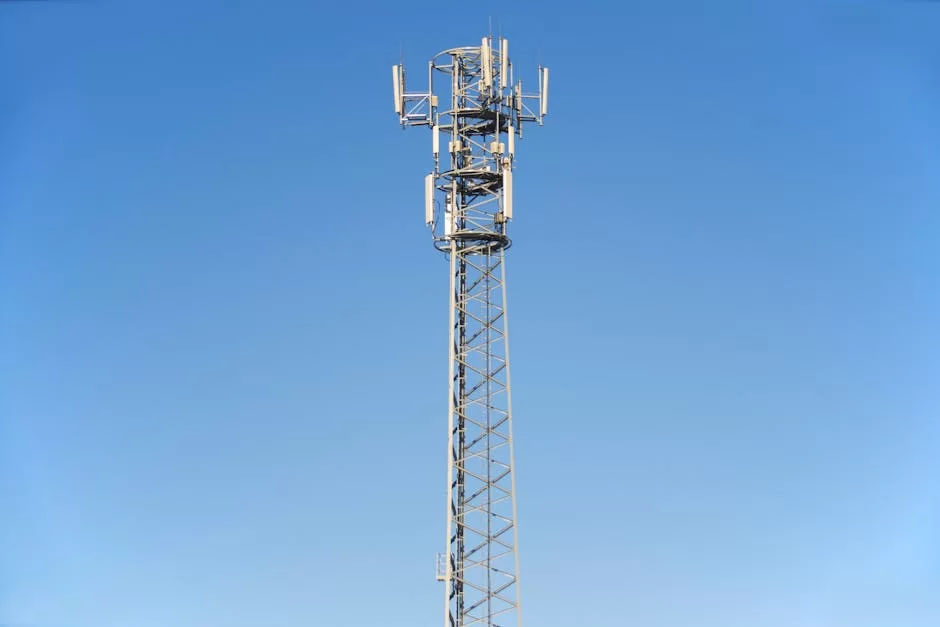
The CDMA and LTE difference is not a break, but a change story. Now, the LTE radio access network uses a fully new modulation technique: OFDM and OFDMA.
At this point, developers no longer use CDMA’s spread spectrum approach. Yet the network design and protocol design carry deep marks from this tech.
With the shift to LTE, CDMA’s biggest legacy was the full move to a packet-switched structure. The sector now fully left circuit-switched voice tech behind.
Voice service started being carried as VoIP inside data packets. This idea shift actually began with 1xEV-DO.
In 5G, the CDMA legacy becomes even more interesting. The 5G NR standard is OFDM-based. Yet principles like code multiplexing, power control, and interference management live on just the same.
In fact, new multi-access techniques like NOMA revive the spirit of CDMA.
The CDMA and 5G link is an indirect one. Yet you cannot ignore this bond. Qualcomm’s patent lead actually rests on the know-how it built up during the CDMA era. Plus, 5G features evolved from CDMA techniques to reach their current form.
In a word, even though CDMA no longer lives as a standard, its ideas pop up everywhere. Next-gen wireless tech work will also carry on this legacy.
Spread spectrum principles still inspire fields like terahertz and quantum comms.
The Rise and Fall of CDMA in the United States
Did the US Use CDMA? Why Did It Eventually Shut Down?
The answer is clear: Yes, the US was the global stronghold of CDMA. Giants like Verizon and Sprint built their early empires on this very tech. While Europe went all-in on GSM, the US bet big on Qualcomm’s invention.
First, CDMA offered a clear edge in capacity. It packed far more calls into the same spectrum. This was a huge deal in dense cities like New York and Los Angeles. Second, the voice quality was superb. It sounded nearly as clear as a landline.
Third, the security was rock-solid. The military-grade spread spectrum made eavesdropping extremely tough. For a long time, carrying a Verizon phone meant you were on a CDMA network. For Sprint users, the same was true. This was the American way of wireless for nearly two decades.
But the tech world never stands still. The arrival of 4G LTE marked the beginning of the end. LTE offered a single global path forward. Carriers faced a choice. They could keep pouring money into the old CDMA networks. Or they could refarm that valuable spectrum for the faster, more efficient LTE. The answer became obvious.
Sprint pulled the plug on its CDMA network first, on March 31, 2022. Verizon, the last major holdout, followed suit on December 31, 2022. Today, those once-mighty CDMA signals have fallen silent across the country. Their work is done. Their legacy, however, is forever baked into the 4G and 5G networks we use every single day.
CDMA Health Effects, Base Station Health, and Green Approaches
The health effects topic has been a research subject for years. At their core, CDMA base stations run at a lower peak power than GSM ones. The average transmit power also stays at a bare minimum nonstop. This case is a plus for electromagnetic exposure.
Base station density is generally less than GSM’s. Thanks to the wider coverage area, fewer base stations cover the same space. This also brings the total electromagnetic radiation level down. Yet, for firm judgments on this topic, we need more research.
In terms of Specific Absorption Rate, or SAR value, CDMA phones are generally lower. The lower average output power plays a role in this. Still, each device’s SAR value is different, and usage habits matter more.
CDMA green approaches start with energy efficiency. Fewer base stations mean less energy use. Plus, thanks to efficient power control, mobile devices burn less energy. This also cuts down on electronic waste by reducing how often you swap batteries.
Energy efficiency also lines up with the green comms concept. Green base station designs draw inspiration from this principle. Power-saving comms algorithms are also a priority in today’s 5G networks. This legacy forms the base of green mobile networks.
On the topic of electromagnetic sensitivity, there is no full scientific agreement. The CDMA signal is nonstop and wideband, so it differs from GSM’s pulsed signal.
Some researchers suggest the nonstop signal has a smaller biological effect. Still, we need more work in this field.
Advanced Resources for CDMA
In this detailed guide, we covered the technical foundations, history, and legacy of CDMA in modern networks.
For readers who want to grasp the topic more deeply, I list four solid online resources below.
First, I suggest you glance at Irwin M. Jacobs’s page at the National Inventors Hall of Fame. The Irwin Mark Jacobs – NIHF Inductee link gives the official record of this visionary’s story. He was Qualcomm’s founder and the architect of it’s market success. It’s a unique starting point to grasp how it turned from a research project into a global standard.
Second, if you’re hunting for a step-by-step training aimed at beginners, TutorialsPoint Tutorial is just right for you. This page explains concepts like Walsh codes, PN sequences, and power control in plain terms. Also, this page walks through core concepts like network design using examples.
The third resource is for those who want to dig a bit deeper into the physical layer details. The article titled Electronics Notes: What is Code Division Multiple Access? explains the math logic of direct sequence spread spectrum (DSSS). What’s more, this article lays out the processing gain math and code types.
Finally, for solid engineering data and comparison analysis, you can check RF Wireless World: Tutorial – Walsh, PN Sequence & Phy Layer. You can find the frequency bands and modulation setups for the IS-95 and cdma2000 standards here. Plus, you can also find practical info like base station specs here.
FAQs on Code Division Multiple Access (CDMA) Tech
What is the link between Hedy Lamarr and this tech?
Why did CDMA shut down in the US?
How do SIM-free phones work?
Do Code Division systems still get used today?
Which is more secure? CDMA or GSM?
What is the link to GPS and gpsOne?
Was the voice quality of Code Division systems better?
What is the SAR value and health effect of CDMA tech?
How can I tell if a phone is compatible?
What are the differences with WCDMA and LTE?
Conclusion: The Legacy and Future of CDMA in Mobile Communication
It taught us a very key engineering lesson. The best tech does not always win. Global standards, the ecosystem, and timing matter just as much as the tech itself. GSM won thanks to its global compatibility, even though it was technically weaker.
But the idea legacy of this technology never died. Nearly every new thing we see in the wireless space today rose on those foundations. Principles like spread spectrum, code multiplexing, and power control got etched into the DNA of modern systems.
In the future, we’ll get a taste of its spirit with new techniques like NOMA. Code-based multi-access will win back its importance for 6G and beyond. Developers will craft CDMA-like answers for machine-type comms and IoT devices.
My own view is that grasping CDMA is the key to grasping modern telecom. The time you spend learning this tech is the best investment you can make for the wireless world of the future. I hope this guide has opened that door for you.

Be the first to share your comment