You can update software on Ubuntu without typing a single command. First, click the launcher and search for the Software Updater tool. Next, open it and let the system check for new packages. Then, click Install Now and type your root password when asked. This method keeps your apps and system safe with the latest fixes. In the end, you get a stable desktop that runs fresh and stays secure.
Users of the new Linux-based Ubuntu operating system can easily update the software and packages on their computers without writing any code on the system.
How to Update Packages in Linux / Ubuntu
People using Ubuntu can easily update programs and packages installed on their computers. In order to update the programs installed on Ubuntu, they can update the applications such as Chrome and Wine installed on the system.
To update the software in Ubuntu, please see the steps below.
Step 1
After installing Ubuntu with VMware Workstation, power on / run the virtual machine.
Step 2
Click on the Launcher and type updater in the search field. Once you find Software Updater, run the program.
Step 3
After the Ubuntu updater opens, it checks for updates.
Step 4
The Ubuntu Updater is ready to download updates for programs on the system. Click the Install Now button to start the update process.
Step 5
You must type your root password before downloading updates. You will see the authentication window in the image below.
Step 6
Type your root password in this window and click the Authenticate button to continue.
Step 7
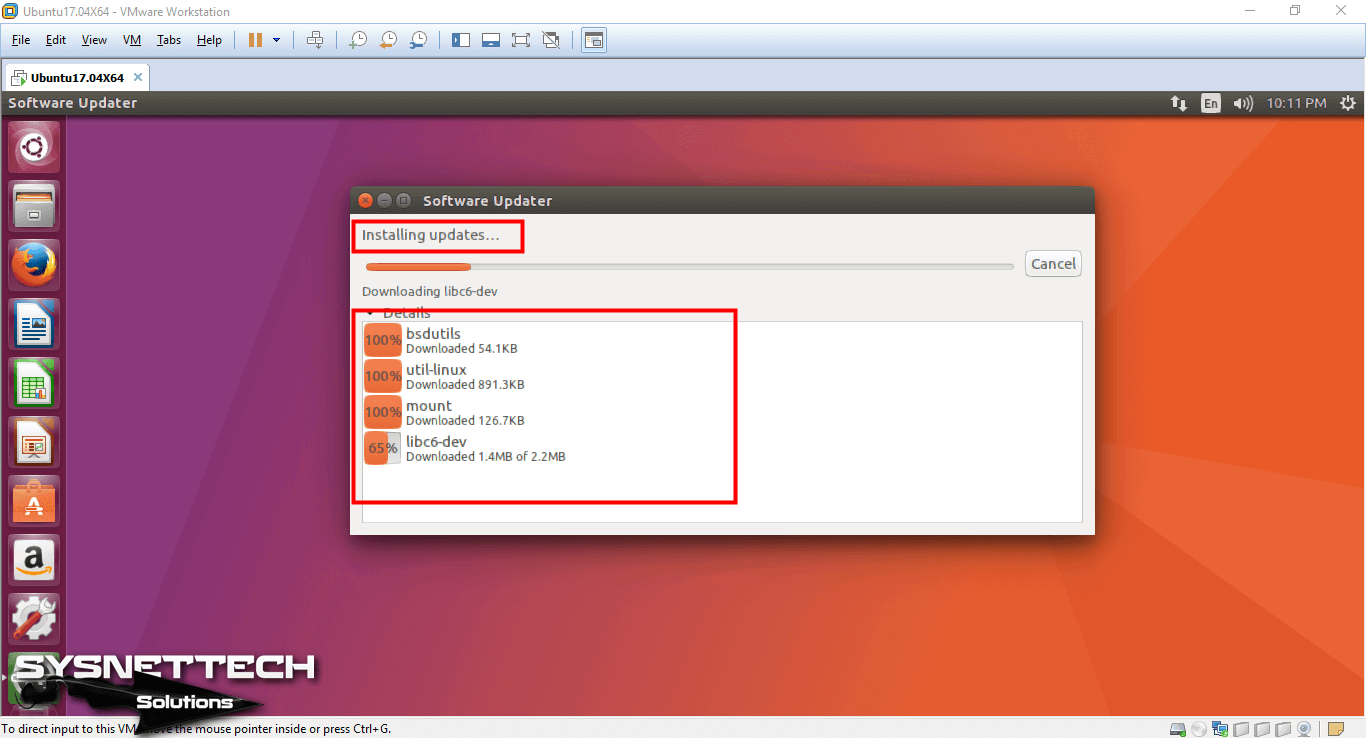
Installing the system package updates.
Step 8
Extracting packages.
Step 9
Installing Linux firmware package.
Step 10
After the updates have been completed, restart the virtual machine.
Updating through the terminal is just as safe as using the screen. In fact, it gives you a greater feel of control. If you are curious about this way, we have made a step-by-step guide on how to handle Ubuntu system updates from the command line.
Things That Stick in Your Mind About the Software Refresh Guide on Ubuntu
Is updating Ubuntu from the graphical interface as safe as the command line?
Definitely yes and you have no reason to be afraid, my friend. That tool you call Software Updater actually uses the same APT mechanism in the background. So the ‘Install Now’ button you click with your mouse actually politely whispers the `sudo apt upgrade` command to the system.
The only small difference here lies in the Root password window. You cannot ignore that screen and skip it. The system asks you for authentication because the changes can touch the kernel level.
Besides, without entering that password, no package sneaks onto your computer. Using the graphical interface is not a rookie thing at all. On the contrary, it lets you see what will be updated in a clear table together with their sizes. The process flowing in front of your eyes has always seemed more transparent to me.
I run Ubuntu on a virtual machine. What should I watch out for when updating inside VMware?
Right here is a critical point. The virtual machine emulates the hardware of the host computer. VMware Tools or Open VM Tools packages manage this emulation.
During the update, do not be surprised if you especially see Linux firmware packages. These are for the drivers of the virtual setup and are critical. You should definitely not skip them.
But this part is important: restart the virtual machine when the update is done. Yes, Ubuntu does not always ask for a restart, but in VMware, when the kernel is updated, the screen resolution can get weird.
Even shared folders drop for a moment. A restart saves that moment. If you ask me, doing a clean shutdown and startup after a system refresh brings peace of mind.
The Software Updater gets stuck on ‘Checking for updates’ as soon as it opens. What could be the reason?
I know there is nothing as frustrating as waiting on that screen. Usually the culprit is either the internet mirror list or a locked APT job in the background. Do not panic, the solution is simple.
If the mirror server is geographically far from you, the response time gets long. Wait a minute. If it takes too long, close the updater. Open a terminal and try typing ‘sudo apt update’. The terminal tells you exactly where the error is.
There is a second possibility. A half-finished installation from the past blocks this process. The system does not release the dpkg lock in the background. Restarting is the cleanest cure. When the machine comes to its senses, everything will flow like oil.
I only want to update a certain program, like Firefox. Can I do this without refreshing the whole system?
The Ubuntu Software Updater has a bit of an all-or-nothing mindset. When you open that tool, it pushes a list of all waiting packages on you. But do not get upset because there are alternative ways.
Go directly into the Ubuntu Software Center. Click the installed apps tab. An update button will appear next to Firefox. This way you can only refresh the browser and leave the rest for later.
So is this method safe? Of course. The system is smart enough to manage dependencies. If Firefox wants a new library, it silently pulls that too. All that is left for you is to browse happily.
Is it normal for it to ask for the Root password during an update?
Please take a deep breath. This is not only normal but also the cornerstone of security. Ubuntu keeps the Root account locked by default. The password you type is actually your own user password that has ‘sudo’ permission.
That authentication window is there so nothing secretly happens in the background. A package manager gets your approval before changing system files. The password you type while giving approval is kept in memory for about fifteen minutes.
So when you see that window, it means you are on the right path. You have no chance of making a mistake here other than typing the password wrong. The system almost begs to protect you.
Is it a must to restart the computer after package updates are complete?
I hear this question from my clients at least ten times a week. My answer is clear. Yes, especially if the Linux kernel or security patches came down, it is a must. Even if the system does not force you, force yourself.
You cannot change a running kernel while the plane is in the air. The update is written to the disk, but the memory keeps running with the old version. This situation does not close the security hole. A restart lets you jump to the new and secure kernel at that moment.
Even for a tiny browser add-on, I restart out of habit. The memory is cleaned and background services stand up in the right order. System performance visibly increases. Take ten minutes, do your machine a favor.
Conclusion
Although Ubuntu is a secure operating system, it may be helpful to update your programs and system updates frequently. In this article, we have upgraded programs and packages on the Linux / Ubuntu operating system.
They'll Thank You for Discovering This Guide!
Ready to do your loved ones a huge favor with just one click? Knowledge grows as it is shared.
Hi, I'm Tolga, a computer expert with 20 years of experience. I help fix computer issues with things like hardware, systems, networks, virtualization, servers, and operating systems. Check out my website for helpful info, and feel free to ask me anything. Keep yourself in the loop about the newest technologies!






Be the first to share your comment