

If you work with network devices, at some point you need TFTP. This protocol saves the day when you set up routers or switches. So, how do you install a file transfer server on Windows 10? This guide shows you exactly that. Additionally, you need no tech background at all.
First, let us clarify what this tool is. TFTP, or Trivial File Transfer Protocol, is a very simple file transfer tool. It uses UDP port 69. It is fast and light. Yet it lacks security. It offers no encryption or password protection. So use it only on local networks. In live setups, always choose SSH or SFTP. Still, it is perfect for test scenarios.
SolarWinds TFTP Server is one of the most practical tools for this job. It is free. Setup is easy. The interface is plain and clear. Additionally, it works fully with Windows 10. Even better, a virtual machine keeps you isolated from errors. On top of that, you can view log records.
If you are ready, let us start with Step 1. That way, you run your own server in no time. Also, following the steps in order cuts your error rate. As a result, network management becomes much more practical.
TFTP Server Installation and Use on Windows 10
TFTP, or Trivial File Transfer Protocol, moves data in a very simple way. However, it is not a secure protocol compared with FTP. Even so, it offers a fast and practical fix on local networks.
Now we will use the SolarWinds program on Windows 11 and 10. That way, we set up our own server step by step.
First, our setup has two parts:
- TFTP Server: Provides the file transfer service.
- TFTP Client: Handles file upload and download tasks.
You can use a PC, laptop, or server to set up the file transfer service. Best of all, you do not need a real server. Simply install SolarWinds on a Windows system and run this tool.
What Is a TFTP Server?
This protocol uses UDP port 69. Also, it serves files to clients. Typically, you use it to load software onto Cisco or other brand routers. Do not use this method where security matters most.
Instead of this protocol, you can use FTP or another option. That way, you can test by setting up a temporary file transfer server on your local network.
SolarWinds TFTP Server Configuration
First, click the button below to download the SolarWinds program. Next, create a new virtual machine in VMware or VirtualBox. Then, install a clean copy of Windows 10 on it.
After you download the software, follow the steps below in order.
VMware Virtual Machine Preparation
Step 1
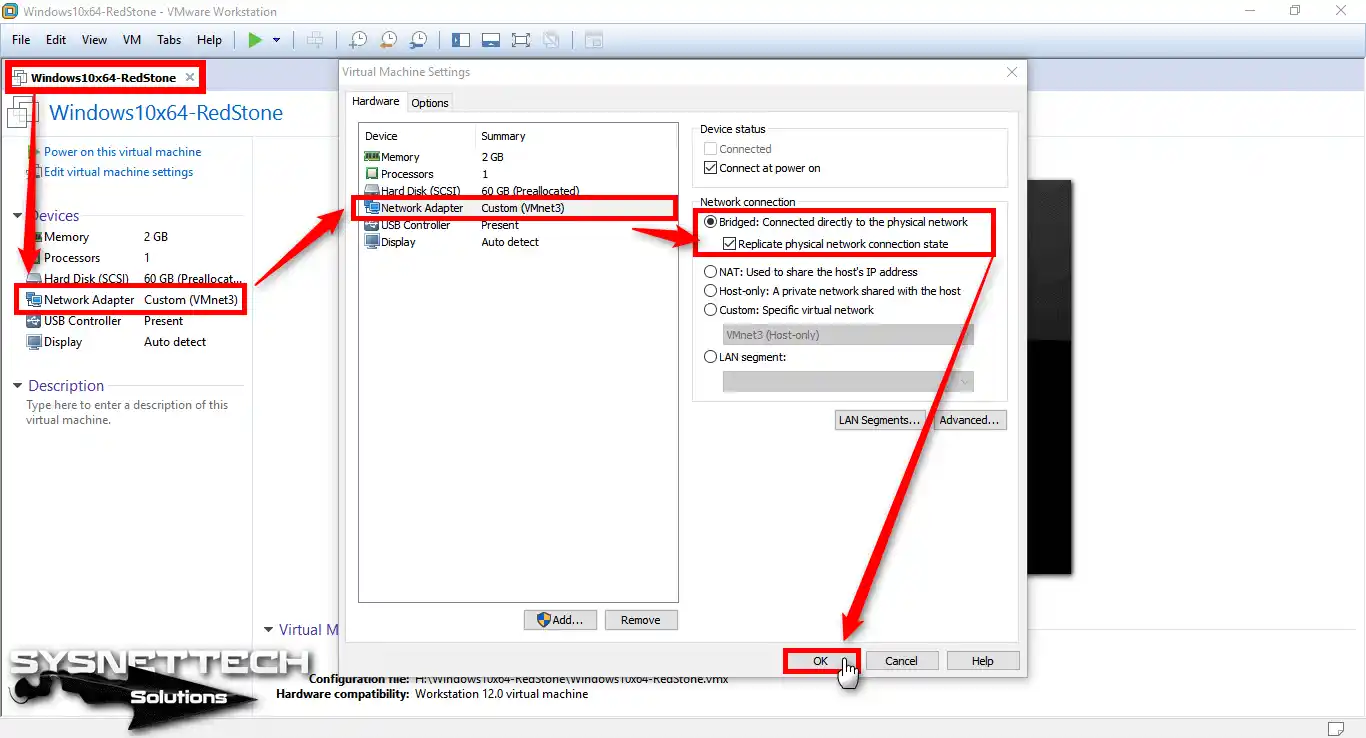
To set up a server on a Windows 10 virtual machine, first set VMware network settings to Bridged.
Step 2
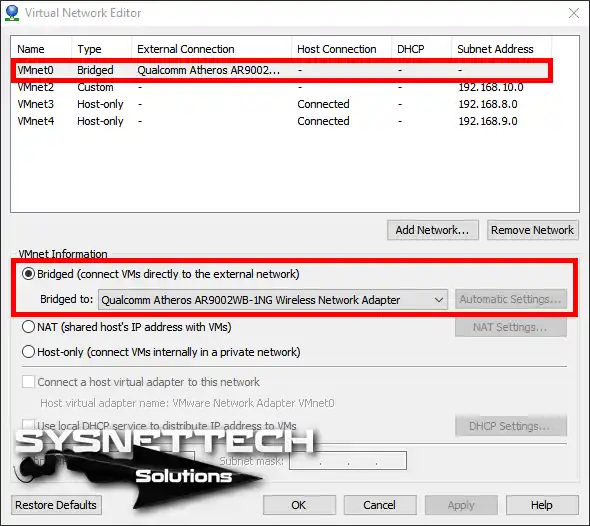
Also, you can set VMnet0 to Bridged in the VMware Virtual Network Editor.
Step 3
Start the Microsoft Windows 10 virtual machine.

Step 4
Copy the SolarWinds program you downloaded to the Windows 10 virtual machine. Then run the setup file as an administrator.

SolarWinds TFTP Server Setup
Step 1
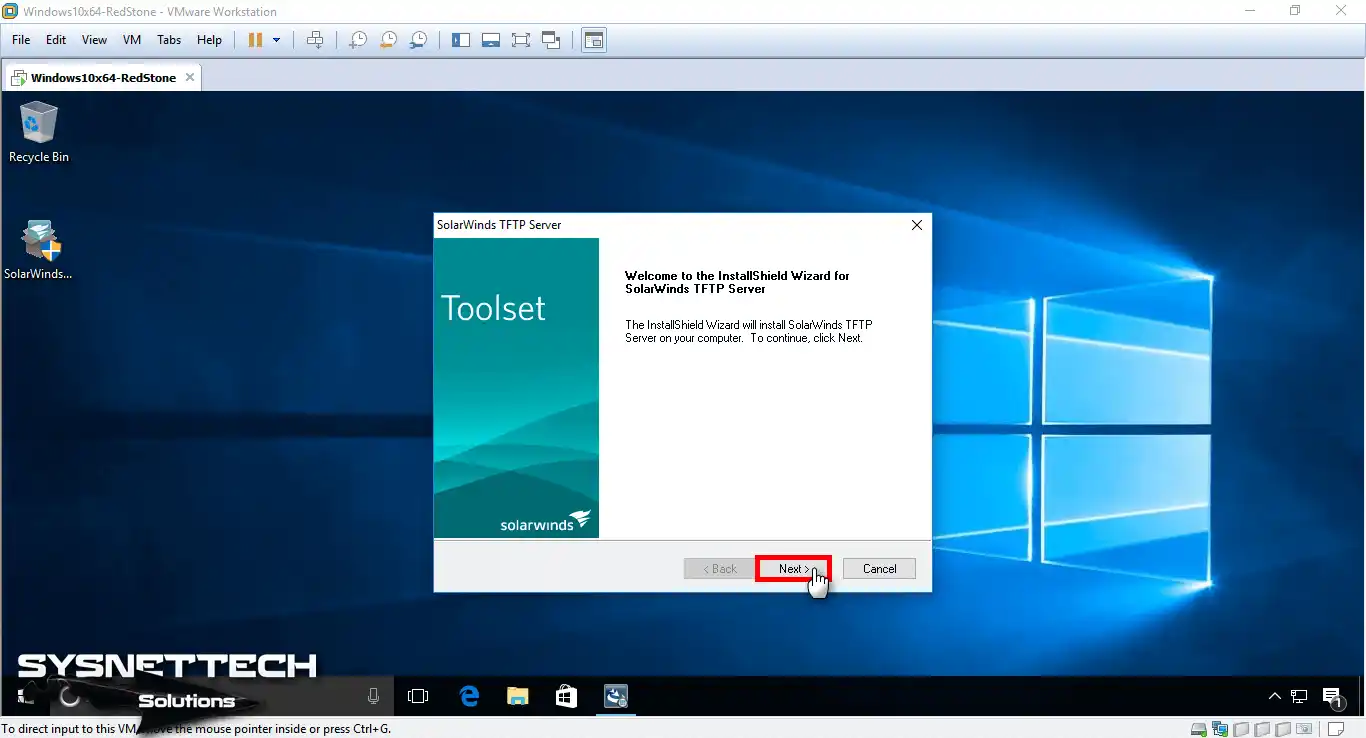
Click Next in the SolarWinds setup window.
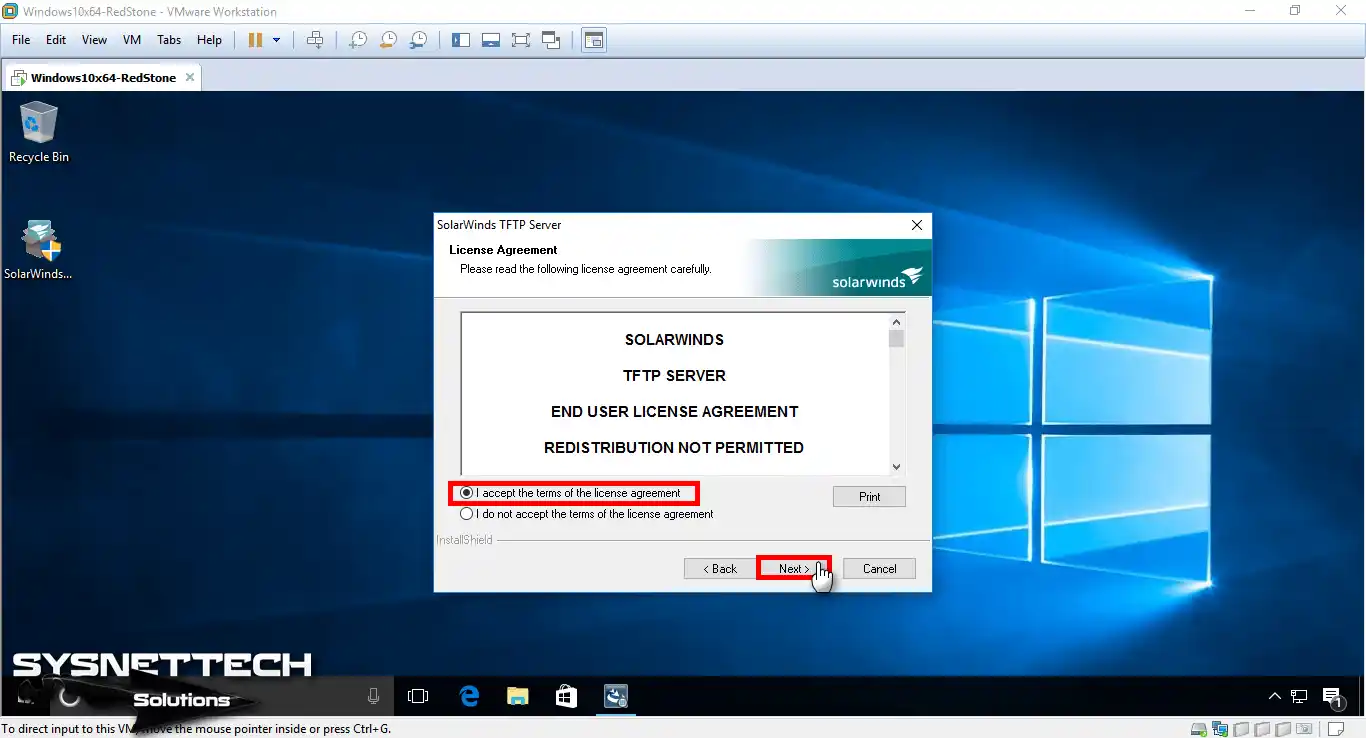
Step 2
Accept the SolarWinds license agreement. Then click Next.
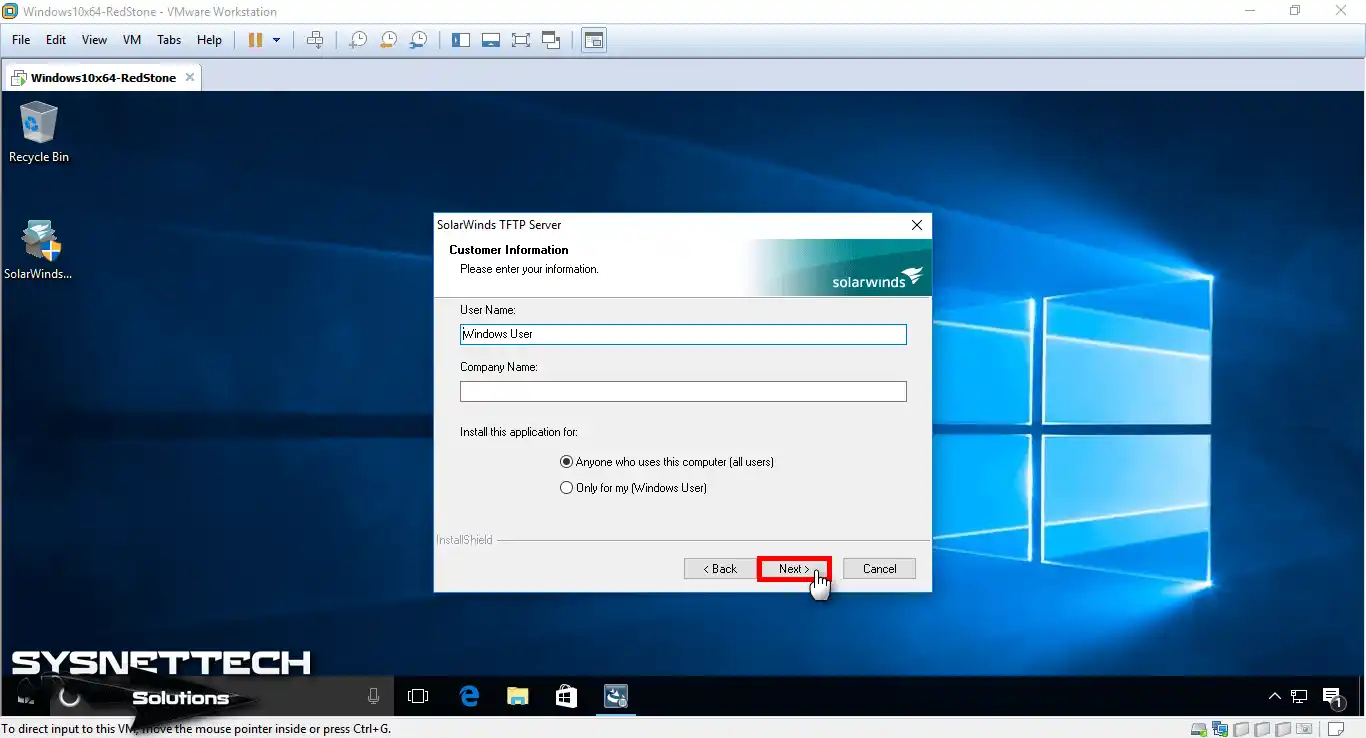
Step 3
Type a username and company name in the contact window. Then click Next.
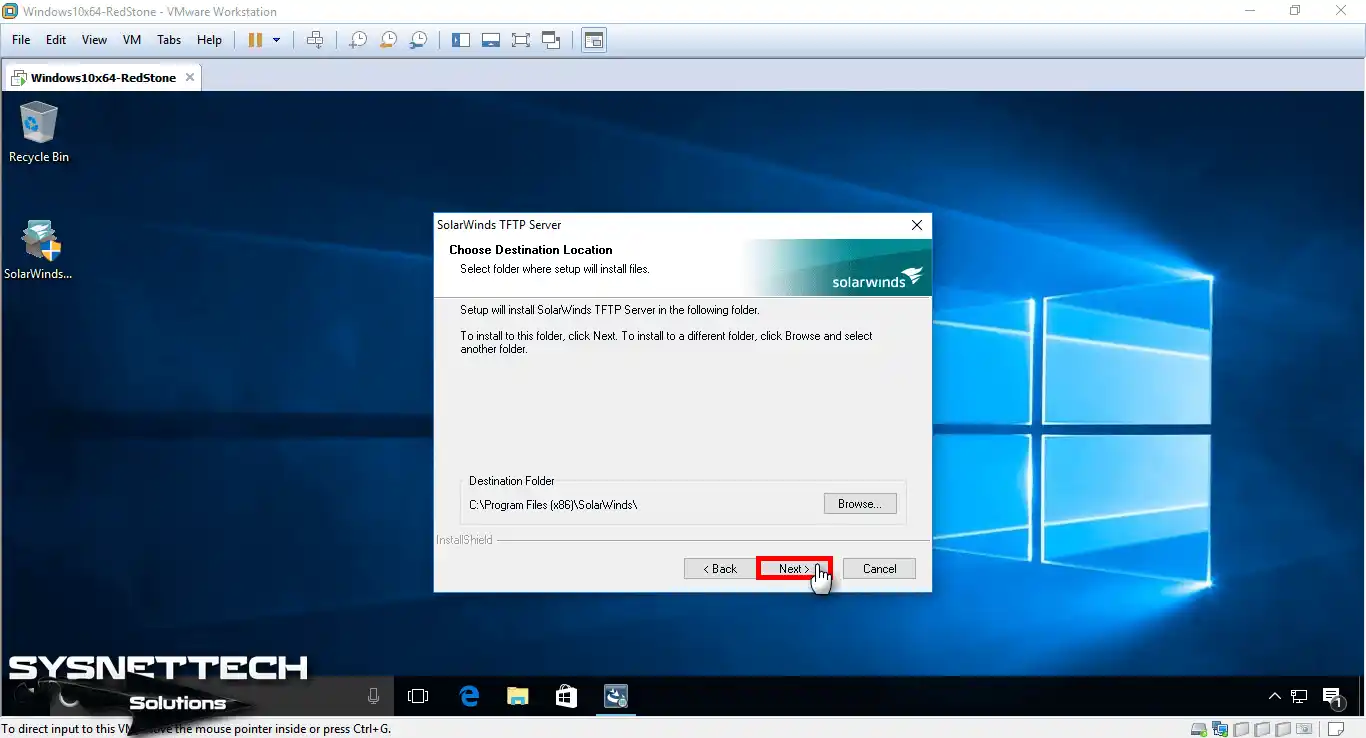
Step 4
Leave the install location at its default value. Then click Next.
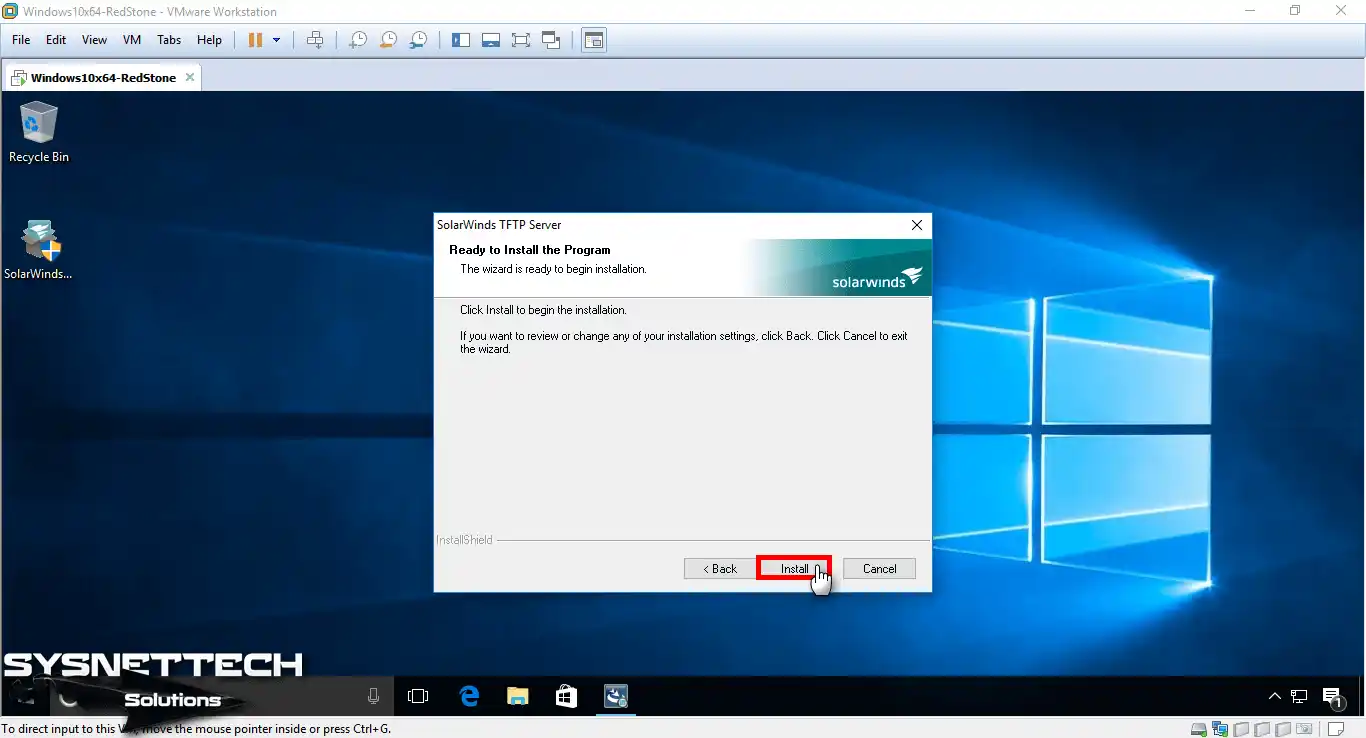
Step 5
Click Install to start the setup.
Step 6
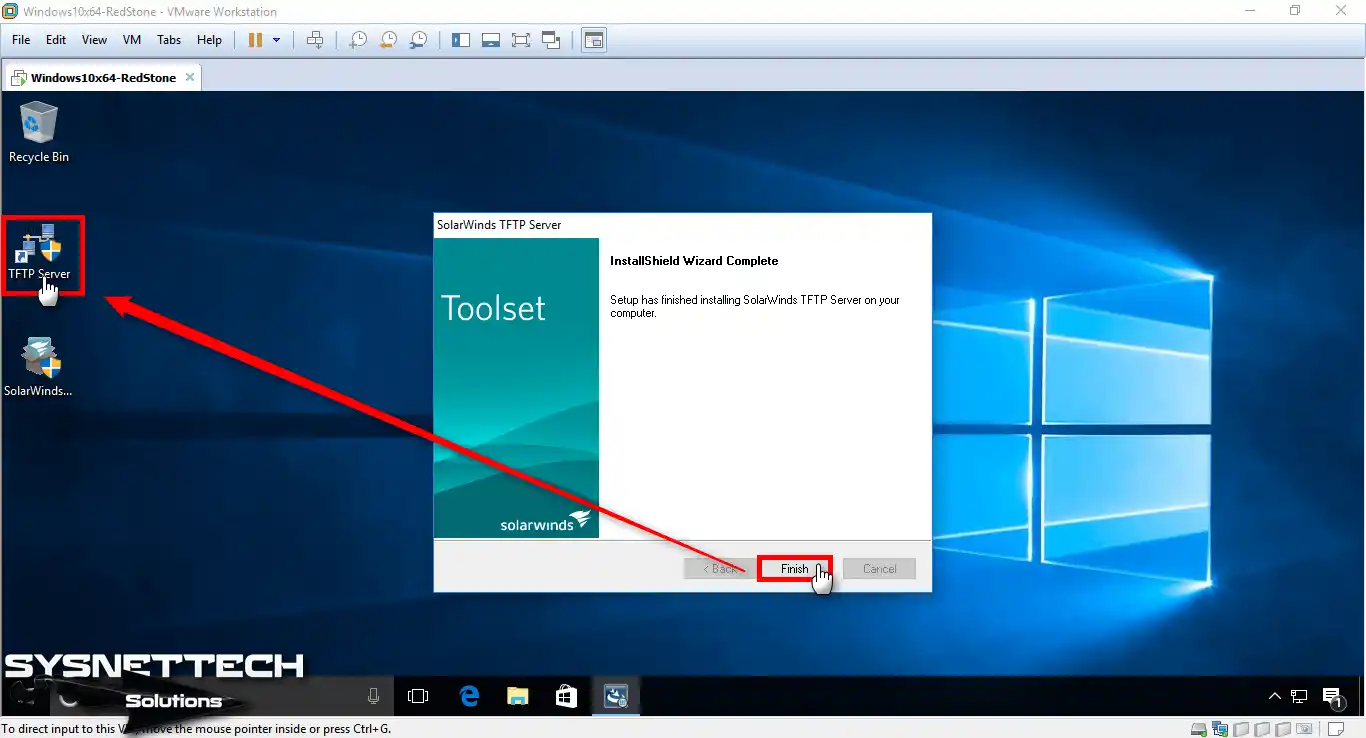
Click Finish in the wizard window.
Starting and Configuring SolarWinds
Step 1
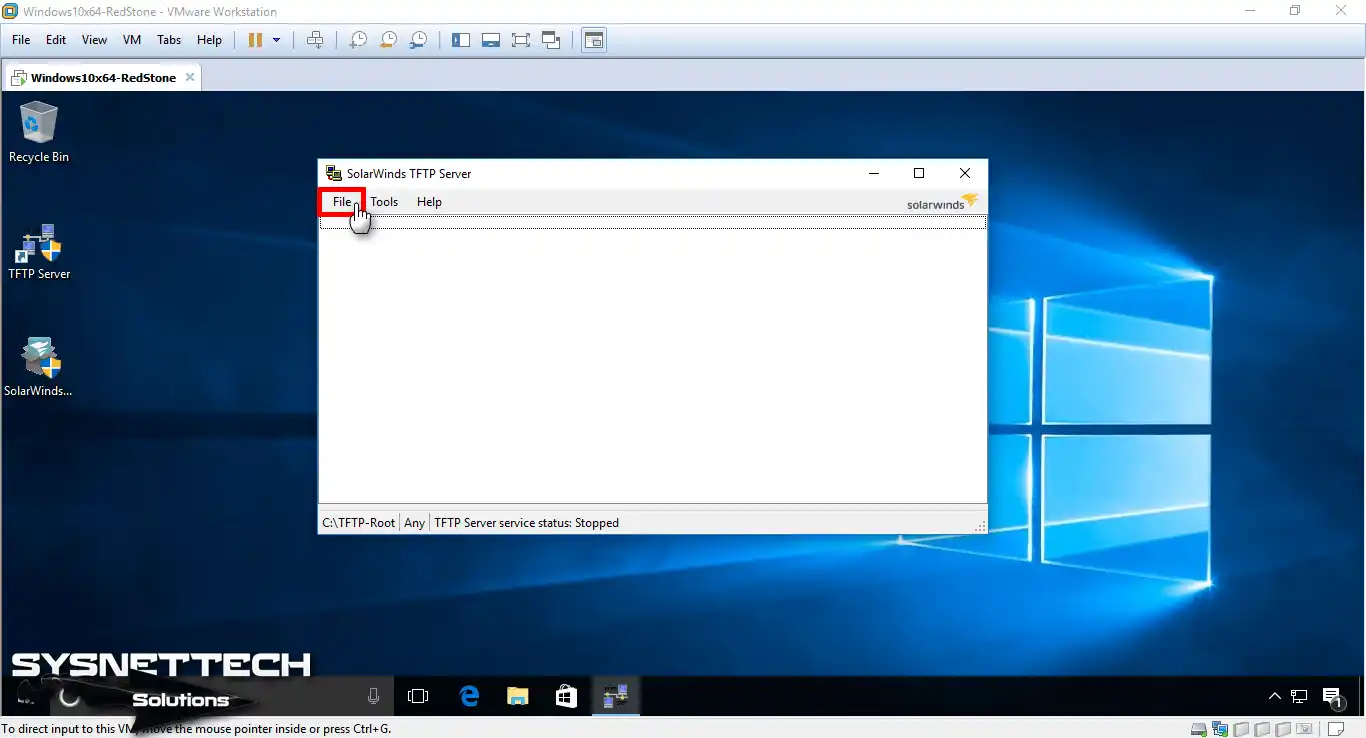
Open the SolarWinds program. Then click File.
Step 2
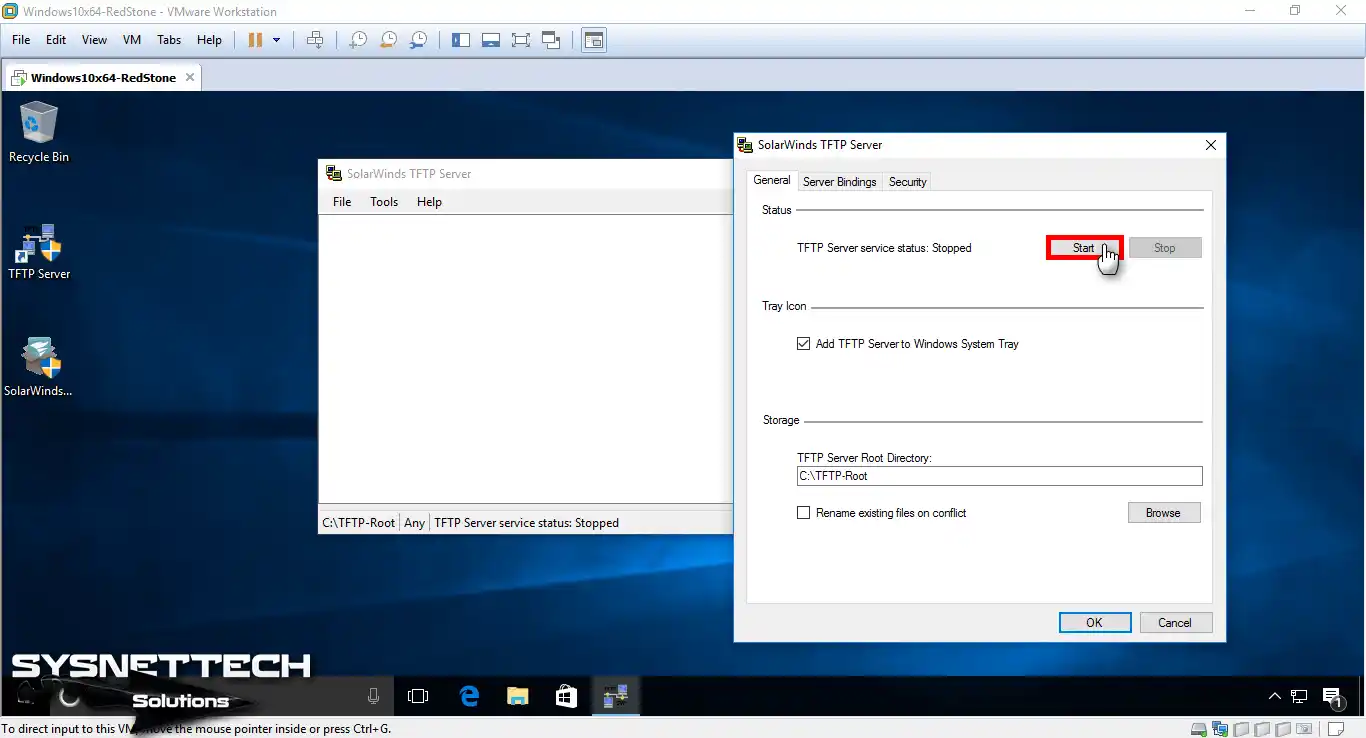
As you can see, the service is not running yet. Click Start to launch it.
Step 3
You can change the storage location for this service.
Step 4
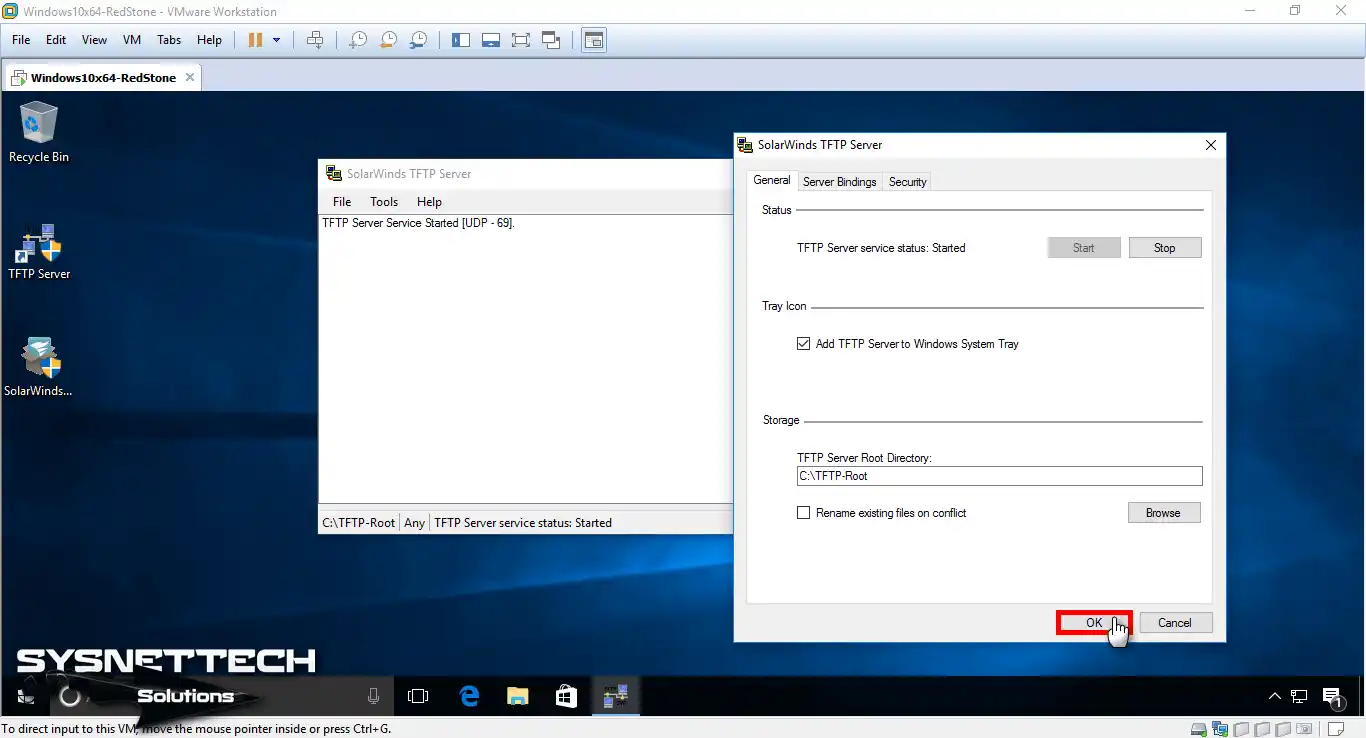
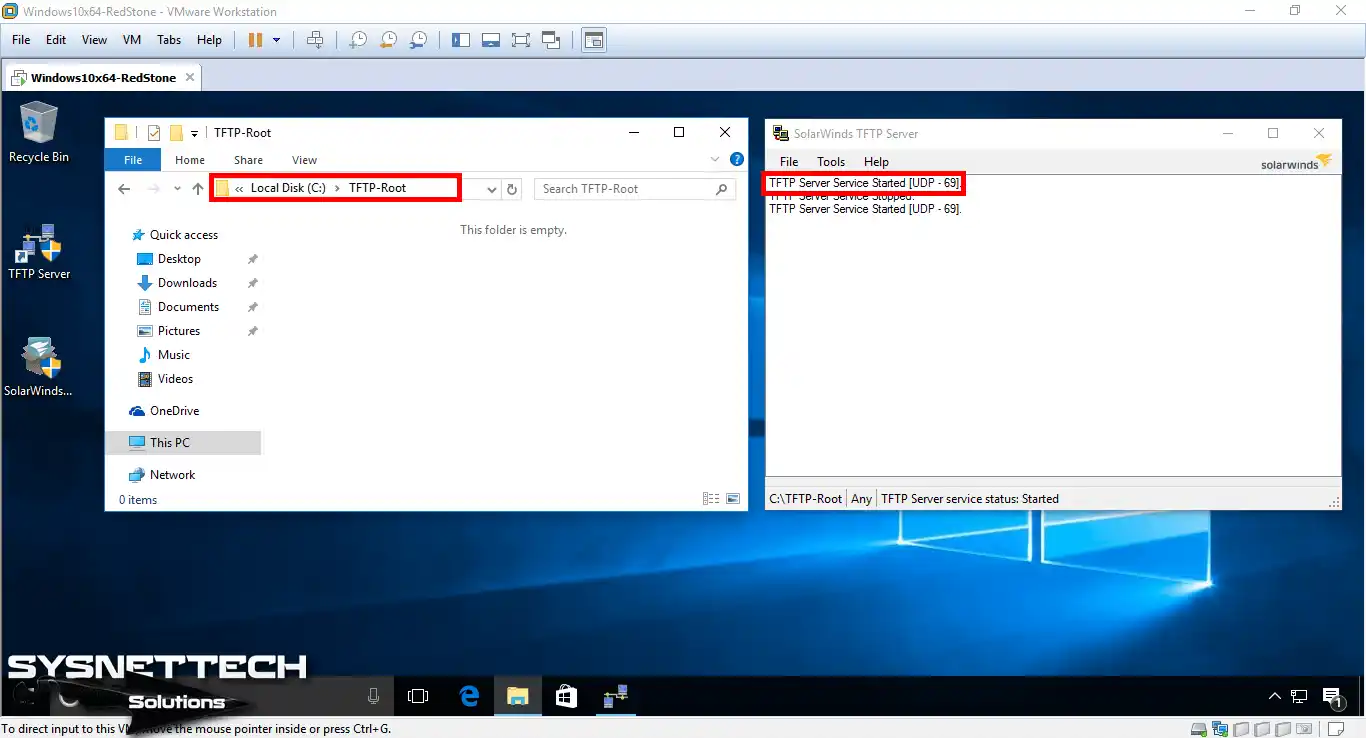
After you start the service, the system creates a TFTP-Root folder on the C:\ drive.
Step 5
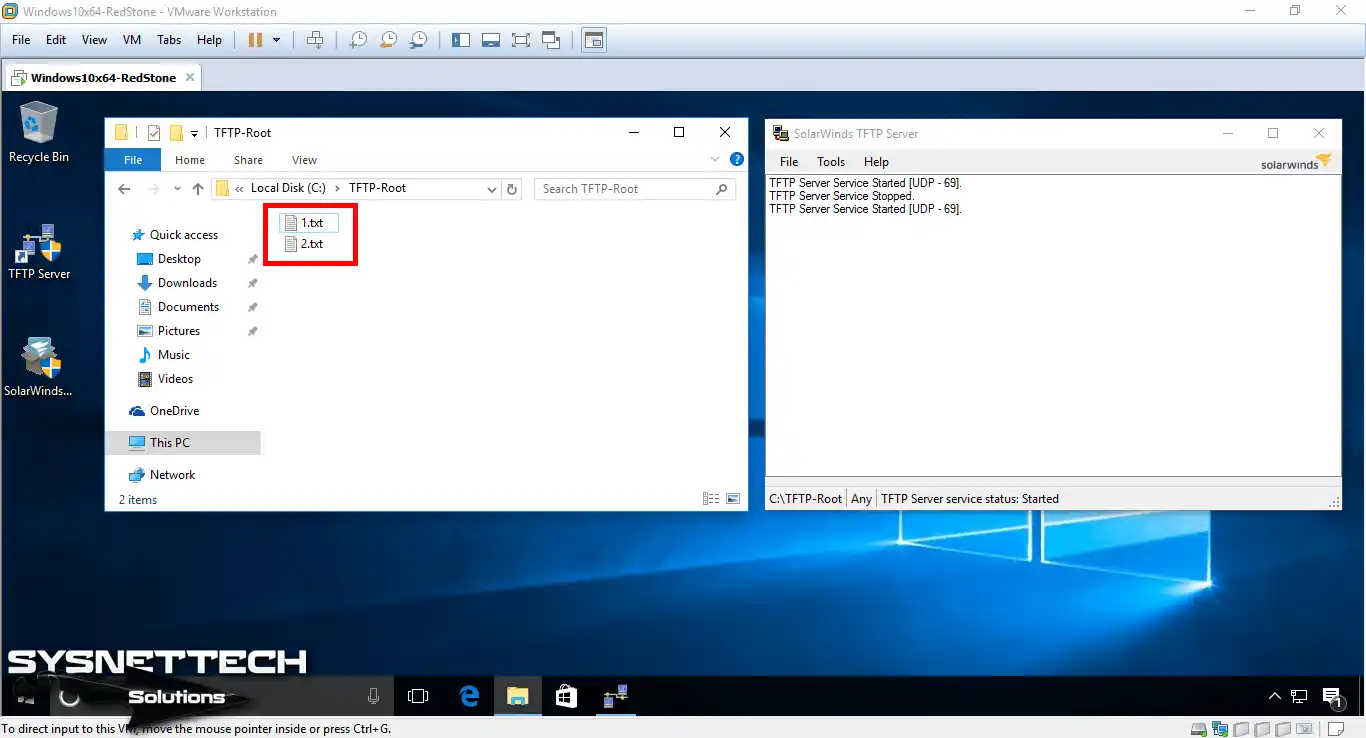
Create two text files in the TFTP-Root folder.
Enabling the Client
Step 1
After you install the server on the virtual machine, set up your host machine as the client.
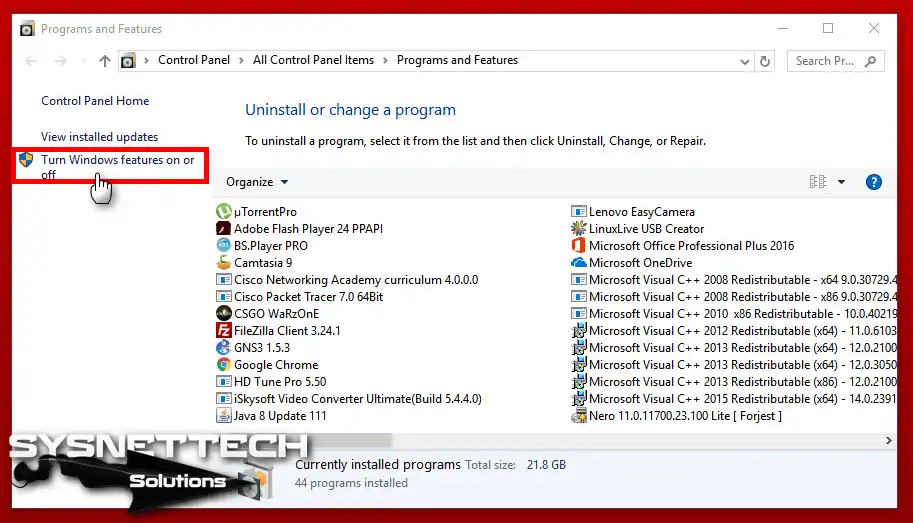
Therefore, go to Control Panel to enable the client. Then click “Turn Windows features on or off” in Programs and Features.
Step 2
The window shows many services. Scroll down to find the client service. Enable it, and then click OK.

Step 3
Click Close in the Windows features window.
Additionally, Telnet is not secure these days either. Still, it works for switch setup on local networks. You can follow similar steps to enable the Telnet protocol on Windows.

File Transfer via CMD
Step 1
Press Windows Key + R to open the Run window. Type CMD and press Enter.
Run the “tftp” command in the Command Prompt. That way, you check if the client service runs.

Step 2
To copy the text file you made to the host computer’s desktop, use this CMD command: “tftp -i 192.168.1.102 get 1.txt.”
tftp -i 192.168.1.102 get 1.txt

Step 3
You copied the 1.txt file from the server!

Step 4
Open the 1.txt file you copied. Write something in it and save the file. If the file is read-only, change it in file properties.

Step 5
To send the edited file to the server, run this CMD command: “tftp -i 192.168.1.102 put 1.txt.”
tftp -i 192.168.1.102 put 1.txt

Step 6
You completed the file transfer.

Step 7
Open the 1.txt file in the TFTP-Root folder. Then check the change.

Step 8
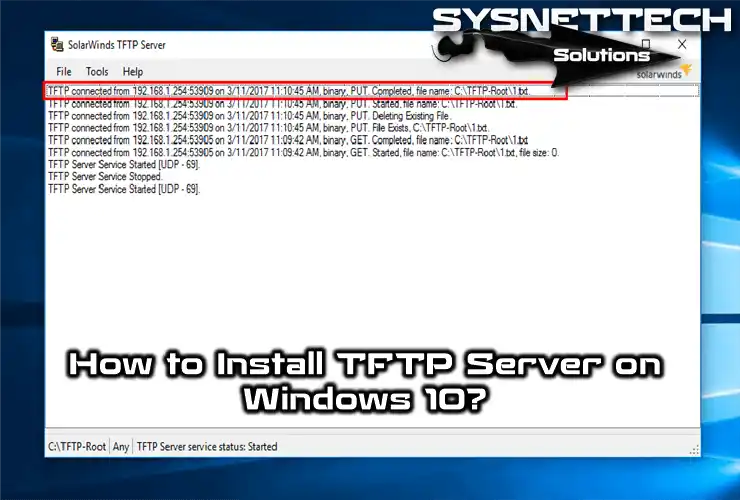
You can review logs of your server’s actions in the image below.

If you care about security, use more modern protocols. For example, a secure SSH connection over an encrypted channel makes far more sense.
To be clear, keep this tool only in a closed test setup. Always choose SSH or SFTP for live systems. Additionally, installing an SSH server on Windows 10 is just as easy.
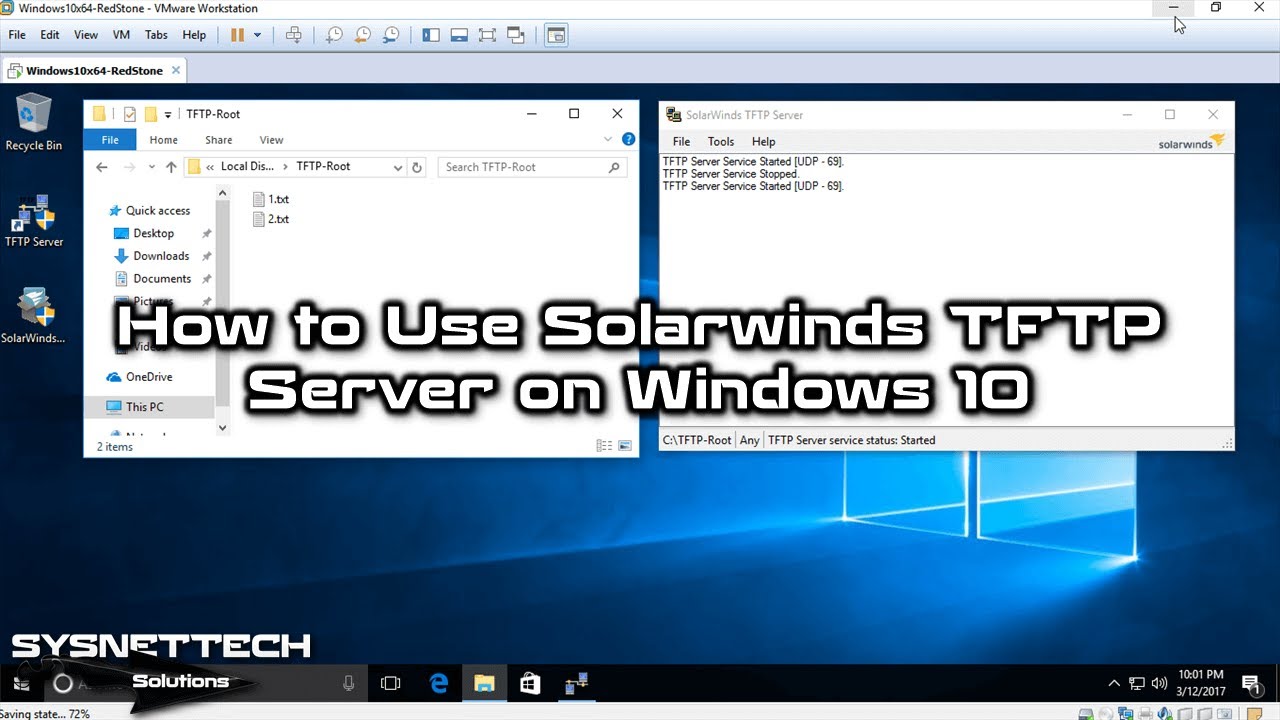
Video
Frequently Asked Questions About This Server
Do I need real hardware to set up a server?
Why is this protocol unsafe? When should I use it?
Is a virtual machine required for SolarWinds?
How do I enable the client feature on Windows 10?
What commands do I use to get and send files?
Where can I view logs of my actions?
Conclusion
In this article, we installed and set up SolarWinds, the best tool for this file transfer method in a network setup. Finally, we enabled the client on the host machine. Then we looked at how to move a file to the server. Thanks for following along!

Be the first to share your comment