
Bill Gates, an American businessman and co-founder of the Microsoft software company, is the manufacturer of Microsoft Windows, the world’s most used personal computer operating system.
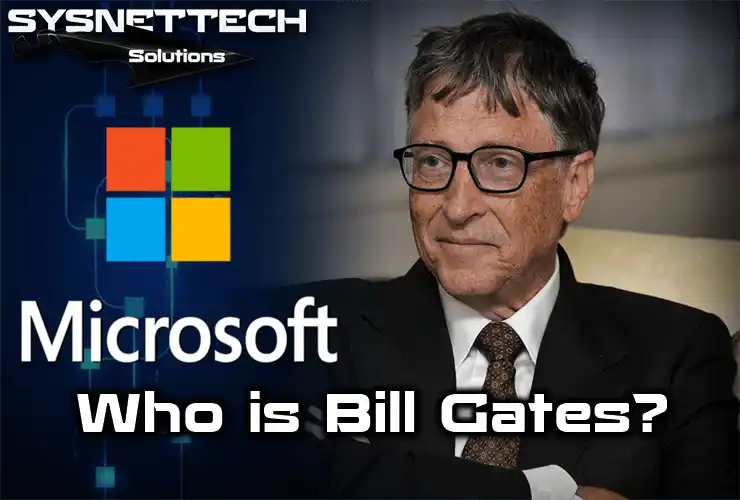
Bill Gates and Microsoft Story
Due to his policy of expanding the use of Microsoft products at all costs, he has been accused of a monopoly several times, and his company has been tried. For several years, he has had one of the most enormous personal fortunes in the world.
Biography
Bill Gates was born on October 28, 1955. He is the son of a leading lawyer, William Henry Gates II, a professor at Washington University, and the director of the First Interstate Bank, Mary Gates.
He lived with them and his two-year-old sister in Seattle, Washington. So, he was a regular student at a public school until the sixth grade.
Childhood
Bill Gates got a prize for every “A” in grade school. But his dad worried about his wild behavior. So, he sent him to Lakeside School.
Because this school’s plan was focused on rules, also, it also aimed to teach duty to students. His parents decided this place was perfect for Bill.
Bill first met a computer in 1968. At that time, he was in eighth grade. Lakeside School bought a computer network that year. This system is linked using a phone line.
Bill met his future partner, Paul Allen, here. He sold his first software when just 13 years old. So, he began earning his first money from programming.
University Period
Bill Gates went to Harvard from 1973 to 1976. He worked with his friend Paul Allen. They began making software by creating a small group.
They sold these programs to businesses and government groups. He started Microsoft on April 4, 1975, at Harvard. He quit school a year later. After that, he went to Albuquerque and did a deal with Altair.
He put his mind to selling the Basic computer language. The following year, he heard Apple needed a Basic translator. In 1980, he had a meeting with IBM people.
He did well in selling the DOS running system. He signed a PC-DOS sharing deal with IBM. This system was really called Q-DOS.
Microsoft had bought it for fifty thousand dollars. Seattle Computer Products later took them to court because Microsoft had hidden the deal.
Really, IBM did not buy MS-DOS. It only said yes to the sharing rights. IBM’s choice set Microsoft’s future.
Some say this choice was because of Gates’ mom, since she worked with IBM boss John Opel.
The Birth of Microsoft Windows
Bill Gates saw the picture screen on Apple’s Lisa computer. He quickly saw the promise of this picture world and the mouse.
Apple maker Steve Jobs was building the Macintosh when Gates saw him. Microsoft said it would make programs for Apple.
He also warned he would sell computer parts to IBM. Microsoft lawfully rented the mouse and picture screen tech.
Then, it started Windows, a direct rival to the Macintosh. Windows began in 1985 but was not steady until 1990. In the end, it became the regular picture screen for IBM-like computers.
By skill, it was not better than the LD systems. Really, it had rivals of higher quality. Windows’ win did not come from skill being better. This win was the end of the business plan and the selling way.
Microsoft’s business smarts were the key reason. In the 1990s, gains hit billions of dollars.
Microsoft became a single seller. By 1999, Gates’ wealth hit ninety billion dollars. The company became one of the top earners in the world.
In 1993, Microsoft put a web entry in its operating system. It joined this area by giving the Internet Explorer browser. This browser at first had many troubles.
But it got much better as time passed. After that, free choices like Mozilla Firefox came out. Firefox worked on various systems and soon gained a liking. Though it was not put on the Windows disc, it was loved by users.
Bill Gates Family
Bill Gates married Melinda Gates on January 1, 1993. Their wedding was done in secret in Hawaii. He did not want any pictures made. Because of this, he booked every hotel on the island.
The two had a girl called Jennifer on April 26, 1996. Together, they lead the Bill and Melinda Gates group. This group looks at health and school gaps.
It works most in poor places. For this work, they got the Princess of Asturias Prize in 2006.
Gates is the second-wealthiest person on the Forbes list. In 2010, his money passed fifty-three billion dollars.
On June 16, 2006, he made a big choice. He said he would leave his day-to-day job at Microsoft.
He aimed to give all his time to the group. On June 27, 2008, he gave control to boss Steve Ballmer. He gave seventy percent of his time to the group and thirty percent to Microsoft.
Bill and Melinda Gates Foundation
In 2005, Gates promised $750 million to the World Vaccine group. He talked with Bono and Tony Blair in Davos. “2005 must be a big change for poverty in Africa,” he said. Gates is often called the top giver.
In truth, his group is the world’s richest help group. It’s money is more than many small nations. The Los Angeles Times showed a problem.
The group puts money in firms that make dirty air. For example, it helped shot programs in the Niger Delta.
But it also has money in oil firms in the same area. It put $423 million in Shell, Exxon, and Total. These firms cause harmful dirt in the area.
Gates talked about moving countries while getting a prize in India. He called the US moving rules “very bad.”
He pushed for people with building degrees to remain. Plus, he made no same ask for other newcomers. This was tied to a wish to bring Indian skills to Microsoft.
Free Software Movement
In 1984, Richard Stallman wished to make a new operating system. He made a group of coders.
He aimed to give out programs freely. Also, he shared his thoughts in an email group. As time passed, many skilled coders joined this team.
In the end, the GNU/Linux system came to be in 1990. This system made the basis of Free Programs.
Stallman and the Free Software Foundation (FSF) named four freedoms. These freedoms focus on user rights.
- Using the program for any purpose.
- Access the source code to adapt it.
- To be able to distribute copies.
- To improve and make improvements open to everyone.
Bill Gates said free software is like today’s communism. This started a big talk among the coding community. Some did not like this idea.
Others felt good about it. They view free software as a force for money change. Really, how coders work is like a shared ownership model.
People work using tools for the group. The rule “give what you can, get what you need” is used. The free software way works best in a non-money economy.
But it is not a complete answer for society’s unfairness. Today, Microsoft is a massive company with many patents. In court, they called Linux their biggest enemy.
Secret inside papers were worrying. It came out that Microsoft used patents to block Linux.
To Gates, money and power mean taking control. He calls those who fight for software freedom communists. But these “communists” even got inside Microsoft. In 1991, he told Microsoft workers: “Watch out for the Linux danger.”
If people understood how patents would be given when most of today’s ideas were invented and patented, the industry would be completely frozen today. A future start-up company without a patent would have to pay the price chosen by the giants.
It turned out that Mr. Gates was now a communist. Microsoft has acknowledged that software patents are harmful until they become one of these giants.
Microsoft is now trying to use software patents to impose the price it chooses on consumers, and if end-users and people often disagree, Mr. Gates will call them “communists.”
Legal Issues For Microsoft
A Microsoft leader for Windows 98 said the government was blamed for writing notes. These notes were meant to show that Microsoft used unfair business practices.
US top lawyer Janet Reno led the case. James Barksdale, head of rival Netscape, also joined. David Colburn, from AOL, made a deal with Microsoft.
Steve McGeady is Intel’s leader for internet apps. The government said Microsoft tried to force Intel out.
Avie Tevanian leads Apple’s QuickTime work. Microsoft’s Netshow fought Apple’s products. The trial started in Washington on October 19 after a wait.
Many charges were listed: monopoly actions and blocking free trade. Microsoft’s deal with the Justice Department failed. The trial is a big US moment for market rules.
Past cases include ones against Rockefeller’s Oil and AT&T. Both were split by court order.
The result for Microsoft is less clear. Because tech changes fast, monopoly claims are complex.
Main Lawyers In The Trial
The Justice Department leads with 20 states. The law group has 24 lawyers, led by David Boies.
Boies won similar cases against IBM. Microsoft’s defense has strong lawyers and backers.
The company faced losses during the lengthy trial. Top lawyer John Warden is from a New York firm.
First Charge And Defense
Microsoft wanted to beat Netscape’s browser. The Explorer browser was built into Windows.
Being already there cut user choice. The company said it was just improving the product.
A higher court said putting Explorer in Windows 95 was legal.
Second Charge And Defense
Microsoft was blamed for planning to split the market in meetings and notes. A meeting with Netscape’s Barksdale was on June 21.
Microsoft said these were for tech talks. Often, they said it helped the public.
Third Charge And Defense
Microsoft pushed computer makers to add Explorer. It made internet firms favor the browser.
It was said they paid a bribe to Intuit’s head. Microsoft later ended these deals and fixed things.
Fourth Charge And Defense
Microsoft let Sun Microsystems use Java on Windows. It then made new products that broke with Java.
This hurt Sun’s market and was hidden. Microsoft said it was for new ideas and helping users.
The Trial And New Proof
Microsoft pressed Apple to add Explorer. A $150 million deal required Explorer to be added.
America Online also gave bad documents. Microsoft agreed to promise AOL the Windows logo. Gates’s words were shared on November 2, 1998.
The US’s richest man defended his control plans. The judge asked many questions about Apple. Gates said no to handing out media software.
The Trial And Gates’ Words
Gates spoke after four quiet weeks. He noted rival interests at an owner meeting and shared doubts about Microsoft’s owners.
He entirely denied Apple’s sabotage claims. Intel’s McGeady’s words caused debate. Microsoft’s side said it was expecting competition and sharing facts.
David Boies called McGeady a faithful witness. The notes had claims of Intel threats.
Funny Times And Trial Effects
The December 2, 1998, hearing was hilarious. Gates had trouble recalling his taped words.
It was said that Microsoft did not know Java’s growth. McGeady’s words relied on Netscape’s co-founder Jim Clark.
Without rivals, the case matters less. Owner support stays strong.

TolgaBagci
Hi, I'm Tolga, a computer expert with 20 years of experience. I help fix computer issues with things like hardware, systems, networks, virtualization, servers, and operating systems. Check out my website for helpful info, and feel free to ask me anything. Keep yourself in the loop about the newest technologies!